Meta and Google Join Forces to Revolutionize Android Development Through Instagram Direct UI Modernization

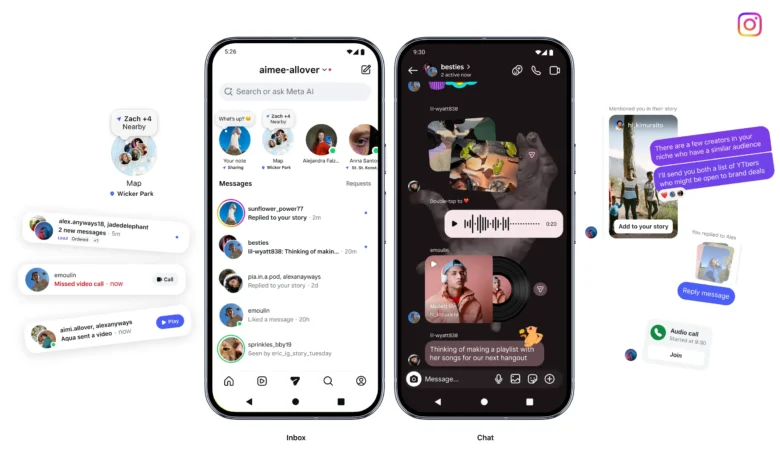
Engineering teams at Meta and Google have announced the successful completion of a massive infrastructure overhaul, transitioning the core architecture of Instagram Direct from the legacy Android View system to Jetpack Compose. This extensive migration represents far more than a routine user interface update; it establishes a new benchmark for large-scale application engineering, demonstrating how declarative UI frameworks can be deliberately engineered to synergize with artificial intelligence coding assistants.
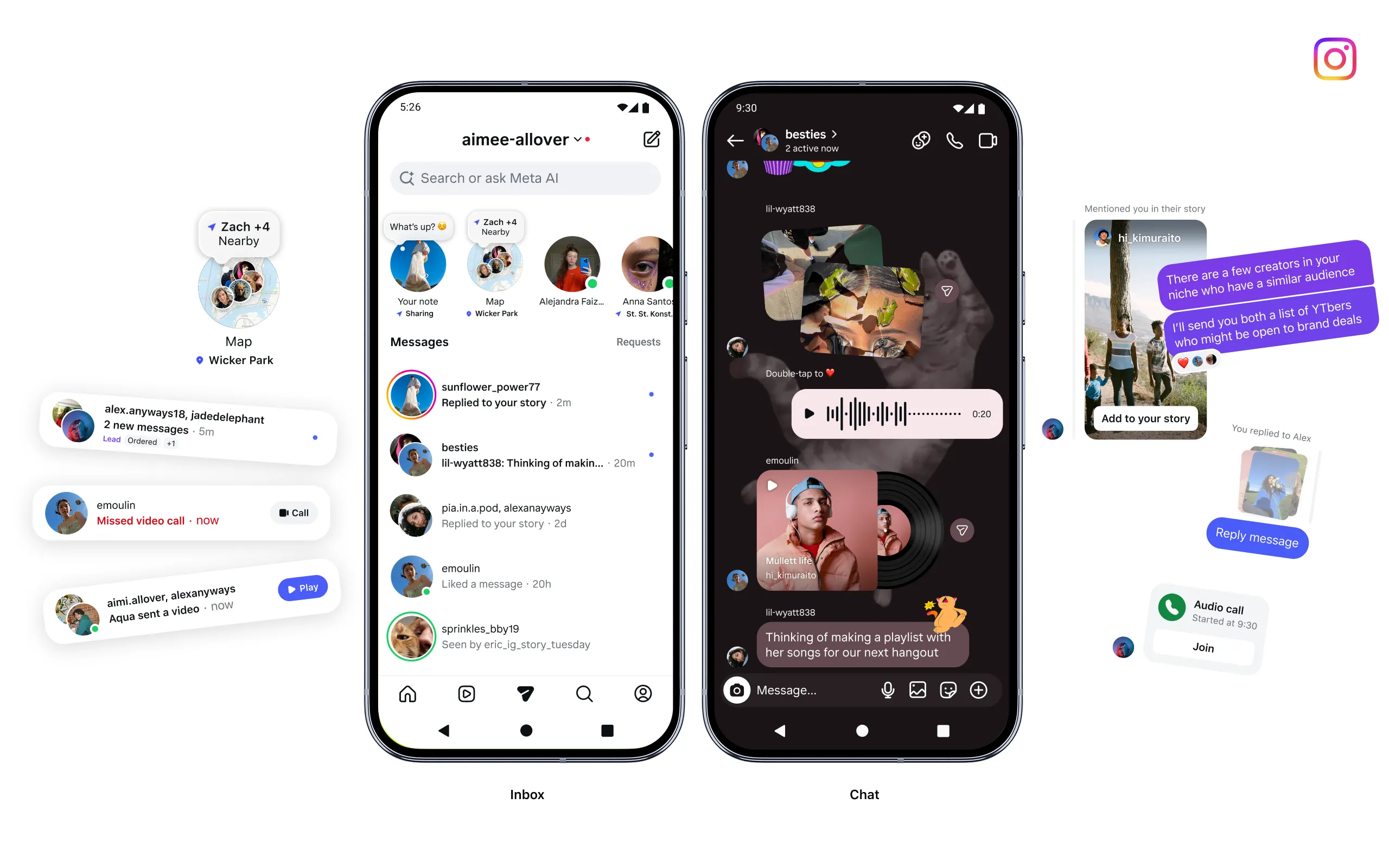
The undertaking involved rewriting one of the most critical, high-traffic surfaces within the Instagram ecosystem. Instagram Direct handles billions of messages daily, supporting complex conversational features across a codebase where individual UI components routinely render in over 160 distinct state permutations and single conversation screens manage more than 200 distinct message types. By addressing this complexity through a unified partnership, both tech giants have introduced foundational improvements that not only streamline Meta’s massive codebase but also enhance the broader Android developer ecosystem.
Background and Context of the UI Modernization
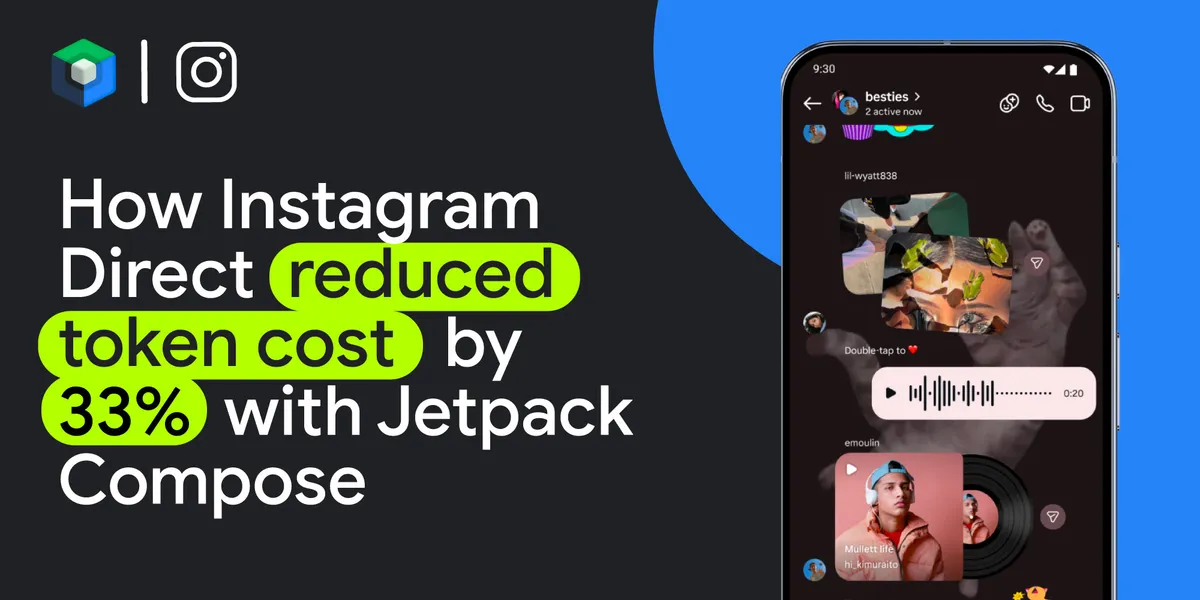
For years, the Instagram engineering team squeezed every possible micro-optimization out of the legacy Android View system. However, maintaining and expanding a heavily optimized legacy surface inevitably generates significant technical debt and engineering overhead. As software development shifts toward declarative user interfaces and AI-assisted coding workflows, older imperative architectures present notable friction.
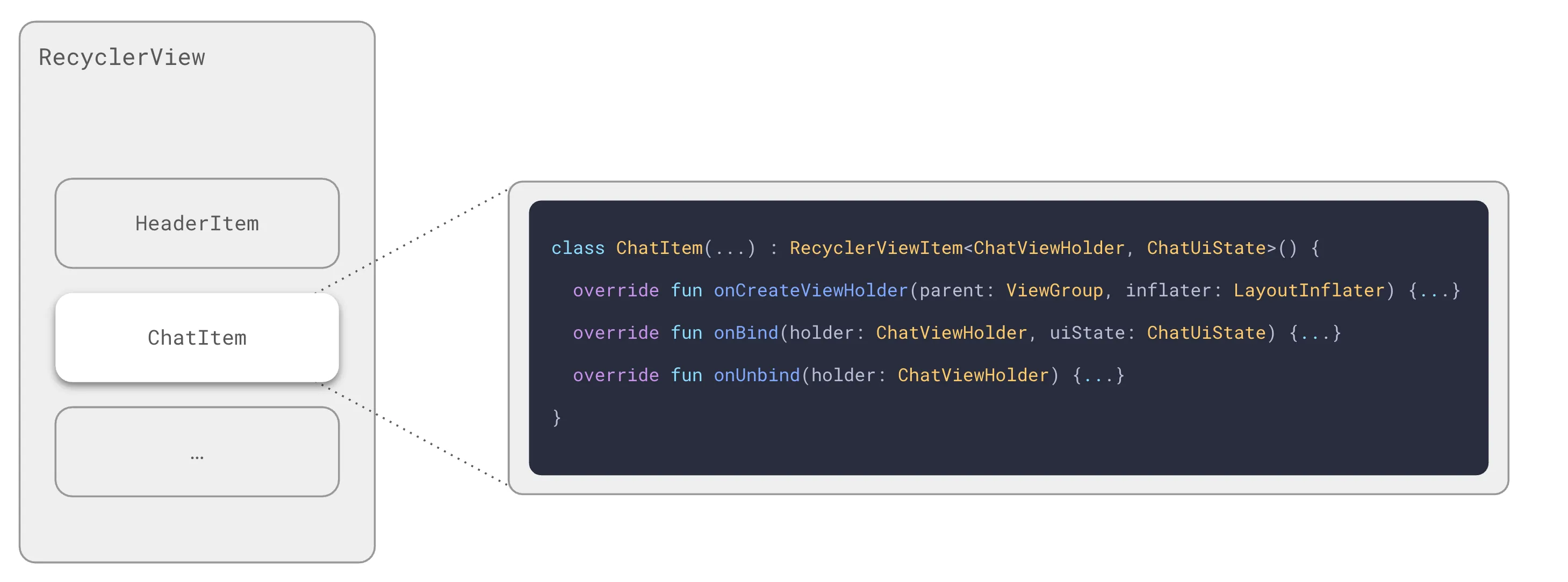
In a traditional imperative UI paradigm, developers must manually manage state changes and view hierarchies, creating complex web of side effects. When AI coding assistants attempt to reason through mixed declarative and imperative codebases, they frequently encounter ambiguities. This often leads to the generation of mutable states outside designated controllers, subtle bugs tied to view recycling in structures like RecyclerView, and architectural drift. Recognizing these hurdles, the Instagram Direct team set an ambitious goal: rather than simply retrofitting AI tools onto an aging codebase, they would redesign the architecture to be AI-native by design.
The Chronology of the Transition
The migration process required meticulous planning and execution to ensure zero disruption for the hundreds of millions of active users who rely on Instagram Direct daily. The engineering effort unfolded in several strategic phases.
Initially, the team established a shared knowledge base of reusable architectural conventions and guardrails. This ensured that multiple engineers working alongside AI agents maintained consistent workflows and best practices, preventing fragmented implementations across different parts of the application.
The migration itself was divided into structured stages for each screen. First, a lead engineer established the foundational architecture and resolved intricate edge cases. Once this groundwork was stable, other team members could rapidly implement the remaining UI components without needing to make foundational decisions themselves.
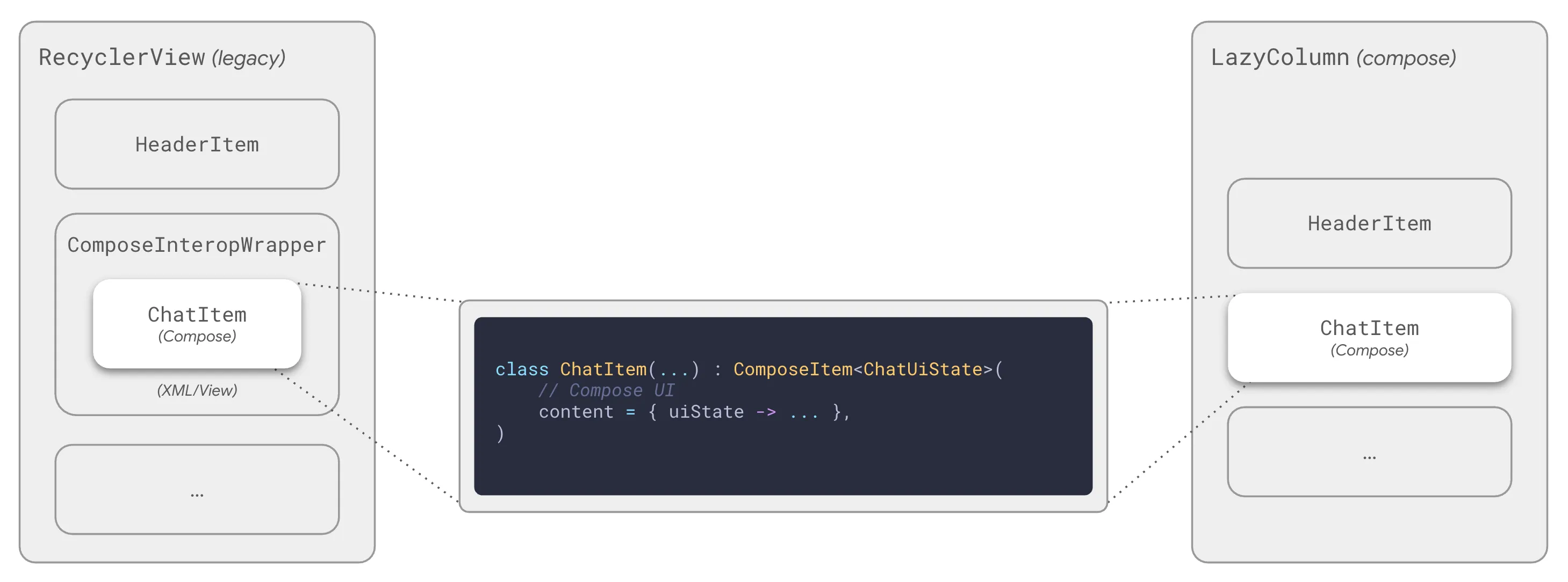
To mitigate risk, the transition bypassed quick-fix bridging methods, such as embedding Compose components directly inside legacy View hierarchies. Instead, the team maintained parallel systems while gradually rolling out updates in small, independent groups governed by rigorous A/B testing. Finally, the team replaced the legacy RecyclerView core architecture with Jetpack Compose’s native equivalent, the LazyColumn, ensuring an uninterrupted composition tree.
Empirical Results and Performance Data
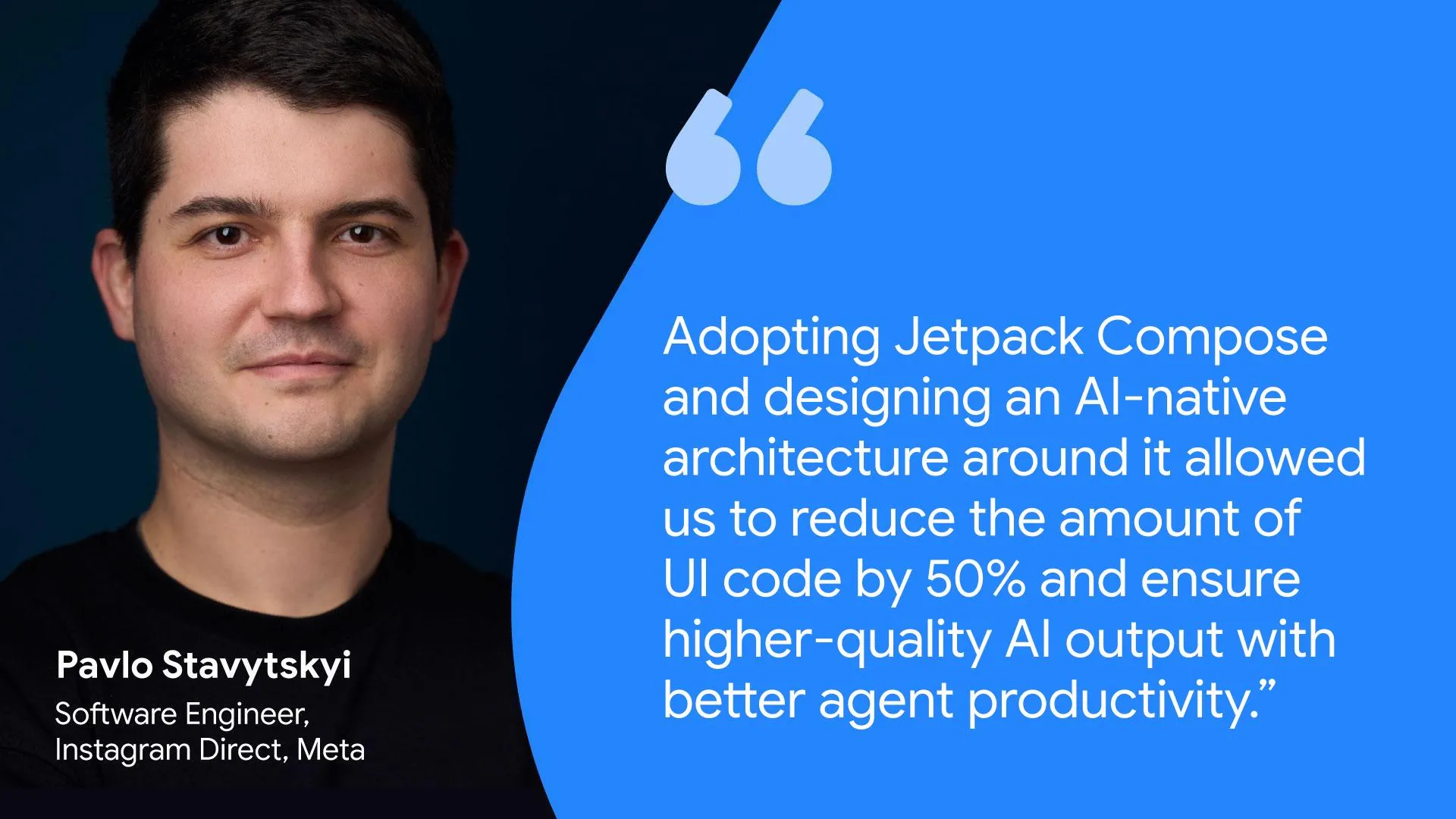
Internal data analysis conducted by Meta revealed profound efficiency gains across both human-AI collaboration and runtime performance metrics. By transitioning the Instagram Direct surfaces to Jetpack Compose, the team successfully reduced the total amount of UI code by 50 percent.
The reduction in codebase size directly correlated with enhanced performance for AI agent execution. Comparative benchmarks between AI agent sessions working on Compose UI versus identical tasks executed within the legacy Android View framework highlighted three key improvements:
- A 35 percent reduction in AI agent execution time per landed unit of output.
- 32 percent fewer exchanges between human engineers and AI agents.
- A 33 percent reduction in token costs for a typical agent session.
Furthermore, Meta tracked code quality using a risk score metric, which evaluates overall code health and the statistical likelihood of a change introducing production incidents. The data demonstrated that as files accumulate higher risk scores, AI agent resource efficiency typically declines. When a file’s accumulated risk score doubles, UI implemented with Android Views suffers a 30 percent drop in agent resource efficiency per landed character. In stark contrast, UI constructed with Jetpack Compose experiences a mere 9 percent reduction under the same conditions.
Collaboration Yields Ecosystem-Wide Technical Enhancements
The partnership between Google and Meta served as a catalyst for introducing advanced capabilities into Jetpack Compose itself, benefiting the wider Android development community. Because Instagram demands uncompromising performance standards to match or exceed legacy benchmarks, the engineering collaboration produced targeted framework innovations.
Chief among these additions is pausable composition, powered by LazyLayoutCacheWindows and visibility tracking APIs. Introduced in Compose 1.10 and augmented by the LazyLayoutCacheWindow feature from Compose 1.9, pausable composition allows expensive lazy-list items to be composed incrementally across multiple animation frames. This deliberate pacing effectively eliminates render jank during rapid scrolling. Internal testing at Meta demonstrated that combining pausable composition with a one-viewport LazyLayoutCacheWindow reduced large frame drops per minute by approximately 13 percent compared to standard Compose implementations.
Additionally, the introduction of the onVisibilityChanged API in Compose 1.9.0 provided large-scale surfaces with a reliable, built-in mechanism to track when a composable enters the visible screen area. This native solution replaced custom, hand-rolled impression logging systems, streamlining code maintenance across hundreds of files within Instagram Direct.
Startup performance was similarly optimized through the deployment of Baseline Profiles, which pre-compile critical code paths at install time. Because messaging serves as an entry point for many user sessions, the warm-up cost of the Compose runtime was absorbed early, yielding noticeable performance dividends across other surfaces throughout the Instagram application.
Implications for the Future of Android Development
The successful migration of Instagram Direct signals a paradigm shift in how large-scale enterprise applications can approach architectural modernizations. By viewing Jetpack Compose through the lens of AI-readiness rather than a simple visual refresh, Meta and Google have established a blueprint for future software development.
The convergence of declarative UI design and AI-assisted workflows reduces boilerplate, simplifies state management, and dramatically accelerates feature delivery without sacrificing operational stability. As engineering organizations increasingly integrate artificial intelligence into their development pipelines, the structural clarity inherent in frameworks like Jetpack Compose will likely become a prerequisite for scalable codebases.
Industry analysts note that the collaborative efforts between Meta and Google underscore the value of direct engagement between framework creators and hyper-scale consumers. By stress-testing Jetpack Compose at the scale of Instagram, both companies have ensured that the Android ecosystem is well-equipped to handle the demands of next-generation, AI-assisted software engineering.