Breakthrough in Silicon Quantum Computing: Researchers Achieve Over 99.99% Fidelity in Simultaneous Qubit Control

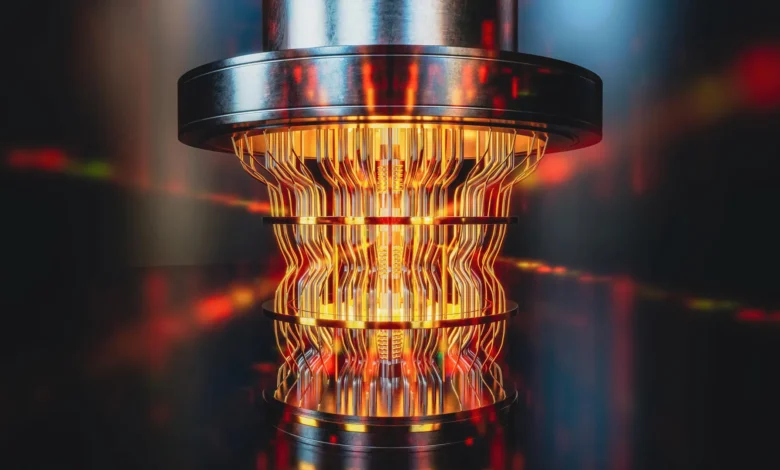
The landscape of quantum computing has moved one step closer to industrial viability, as an international team of researchers achieved unprecedented precision in controlling multiple silicon spin qubits simultaneously. Published in the journal Nature Physics, the study details how scientists at the RIKEN Center for Emergent Matter Science, alongside their academic collaborators, successfully overcame a long-standing hurdle in quantum architecture: the degradation of operational accuracy when scaling up parallel qubit operations.
By identifying a primary driver of operational interference known as the AC Stark shift, and deploying an innovative pairwise calibration technique, the research team maintained single-qubit gate fidelities exceeding 99.99% across an active array of five silicon spin qubits. This milestone marks a critical pivot point for silicon-based quantum processors, offering a viable pathway toward large-scale, fault-tolerant quantum computers built upon standard semiconductor fabrication techniques.
Background and Context: The Promise and Peril of Silicon Qubits
For decades, the pursuit of a practical quantum computer has been waylaid by the extreme fragility of quantum bits, or qubits. Unlike classical computing bits—which process binary information as discrete states of strictly 0 or 1—qubits leverage the laws of quantum mechanics, utilizing superposition to exist in combinations of both states simultaneously. This grants quantum computers the theoretical capacity to solve hyper-complex computational problems in chemistry, cryptography, and molecular modeling that would take conventional supercomputers millennia to process.
Among the competing modalities for building qubits—ranging from superconducting circuits and trapped ions to photonic systems—silicon spin qubits have emerged as a formidable contender. Silicon spin systems store information via the intrinsic spin of individual electrons confined inside silicon quantum dots.
The primary advantage of silicon spin qubits lies in their profound manufacturing synergy. Because they rely on the same fundamental semiconductor fabrication methods, cleanroom protocols, and lithographic techniques used to mass-produce everyday commercial computer chips, silicon quantum architectures possess a built-in industrial advantage. Proponents argue that leveraging existing multi-billion-dollar semiconductor infrastructure will ultimately make silicon quantum processors easier and more cost-effective to manufacture at scale compared to esoteric hardware paradigms requiring extreme cryogenic vacuum chambers or exotic materials.
Yet, this architecture has historically faced an acute bottleneck: scaling. While researchers could routinely achieve high-fidelity control over isolated, single qubits, scaling up the system to manipulate multiple qubits concurrently inevitably triggered a cascade of operational errors. As more qubits were activated via shared control lines, interference and cross-talk caused their precision to plummet, rendering large-scale quantum algorithms unfeasible.
The Chronology of Discovery: Pinpointing the AC Stark Shift
To understand how the RIKEN team resolved this impediment, one must examine the physics of microwave-driven control. In silicon spin architectures, precise external microwave signals are deployed to manipulate the spin states of electrons, executing quantum logic gates. However, when multiple qubits are commanded via shared microwave lines, these control signals inadvertently interact with the surrounding physical environment.
The research team, spearheaded by project manager Seigo Tarucha under Japan Science and Technology Agency’s (JST) Moonshot Goal 6, embarked on a systematic investigation to isolate the root causes of multi-qubit infidelity. Through meticulous empirical experimentation conducted by PhD researcher and first author Yi-Hsien Wu, the team traced the bulk of the operational errors to the AC Stark shift.
The AC Stark shift occurs when oscillating microwave control fields inadvertently modify the effective energy levels of a nearby qubit. This shift introduces unwanted, dynamic phase changes into the quantum state of the qubit. In a single-qubit setup, these fluctuations can be mitigated; however, when multiple qubits are driven simultaneously, overlapping microwave fields compound the problem, generating severe phase errors that disrupt delicate quantum operations.
Faced with this scaling wall, the researchers devised a pragmatic calibration methodology. Traditionally, eliminating control interference in multi-qubit systems would require an exponentially complex calibration matrix—testing and adjusting every conceivable combination of interacting qubits simultaneously. Recognizing that such an approach is computationally intractable for large-scale processors, the RIKEN team developed a streamlined alternative: pairwise calibration.
By calculating and compensating for unwanted phase shifts through calibrations performed strictly between pairs of qubits, the scientists successfully neutralized the AC Stark interference. Supervised by RIKEN research scientist and co-first author Leon Camenzind, the team integrated this novel calibration protocol with enhanced device geometries and meticulously shaped microwave control pulses.
Supporting Data and Empirical Results
The empirical results of the new methodology proved decisive. When tested in isolation, each of the five silicon spin qubits in the array demonstrated single-qubit gate fidelities well above 99.99%, with the top-performing qubit achieving an exceptional fidelity approaching 99.999%. In quantum information science, fidelity quantifies how accurately an executed operation matches the theoretical ideal, where 100% represents a flawless execution.
Crucially, the high fidelity endured under stress testing. When three qubits were operated simultaneously, the system maintained an operational fidelity above 99.99%. Furthermore, when all five qubits within the array were driven concurrently, overall accuracy remained steady at approximately 99.9%.
While this marks a monumental improvement, the study also transparently cataloged the remaining physical limitations of the system. Although the pairwise calibration technique effectively suppressed AC Stark shifts, residual errors persisted. The researchers identified these remaining accuracy losses as drive-induced decoherence—a phenomenon driven by the higher microwave power intensities required to sustain simultaneous multi-qubit operations. Unlike phase shifts, decoherence involves the irreversible loss of quantum phase relationships. Industry analysts note that overcoming this secondary hurdle will likely require targeted refinements in device materials and electromagnetic shielding.
Industry Implications and Expert Perspectives
The successful demonstration of parallel, high-fidelity control over multiple silicon spin qubits carries profound implications for the commercial trajectory of quantum computing. A central engineering debate in quantum hardware design concerns wiring and control architecture. Giving every individual qubit on a processor its own dedicated, independent control line creates an intractable routing nightmare, often referred to as the "wiring bottleneck," which prevents processors from scaling beyond a few dozen qubits.
By proving that high-fidelity control can be sustained using shared microwave lines without catastrophic degradation in precision, the RIKEN study validates a scalable architectural blueprint. Shared control lines drastically reduce the physical complexity of hardware integration, opening a practical pathway toward processors featuring thousands, or eventually millions, of interconnected qubits.
"This shows that high-fidelity control can be maintained even when several qubits are operated at the same time and represents an important step toward scaling up silicon-based quantum processors," stated Leon Camenzind, emphasizing the broader significance of the findings.
Yi-Hsien Wu elaborated on the operational efficiency of their breakthrough: "Rather than requiring an entirely separate calibration procedure for every possible combination of qubits, our method uses calibrations between pairs of qubits to compensate for the unwanted phase shifts."
Looking forward, the ultimate objective of the global quantum research community is the realization of fault-tolerant quantum computing—machines equipped with error-correction protocols robust enough to execute complex, long-running calculations despite environmental noise and hardware imperfections. Because quantum states are inherently fragile, building fault-tolerant architectures requires absolute, dependable control over massive arrays of interconnected qubits.
Seigo Tarucha contextualized the research within this grand strategy, noting, "Our long-term goal is to build a fault-tolerant quantum computer based on silicon spin qubits, and reliable parallel control is an essential step toward that goal."
Outlook: Paving the Way for Future Quantum Processors
As research institutions and enterprise technology giants race to commercialize quantum computational hardware, breakthroughs that bridge the gap between theoretical physics and industrial manufacturing hold immense value. By demonstrating that silicon spin qubits can achieve near fault-tolerant precision thresholds—approaching the crucial 99.9% to 99.99% benchmark—while operating concurrently via shared infrastructure, the RIKEN team has cleared a vital obstacle.
Combined with silicon’s inherent compatibility with established semiconductor fabrication plants, this methodological advance signals that the horizon of scalable, industrially produced quantum computers may arrive sooner than previously anticipated. As engineering teams refine device designs to mitigate drive-induced decoherence, the foundational framework for the next generation of high-performance quantum processors is steadily falling into place.