Google Launches Gemini 4 Argon for Android Development with Advanced Autonomous Execution and Jetpack Compose Integration


The landscape of mobile software engineering is undergoing a fundamental transformation as development workflows shift from traditional assistive code completion to fully autonomous, multi-step agent execution. Google has officially announced the global rollout of Gemini 4 Argon, a cutting-edge model engineered to handle complex, deep-work tasks across multiple domains, including software development, finance, cybersecurity, and scientific research.
Starting today, Android developers worldwide can integrate Gemini 4 Argon directly into their local development environments. The release marks a major milestone in Google’s broader strategy to incorporate flexible, high-performance artificial intelligence agents into its core developer tooling ecosystem. By providing native support across Google Antigravity, Android Studio Canary, Google AI Studio, and Firebase AI Logic, the company is positioning the new model as a primary engine for next-generation application design and automated software maintenance.
Evolution Toward Autonomous Development Workflows
For years, artificial intelligence assistants in software engineering have primarily operated reactively, offering inline code suggestions, debugging single lines of logic, or generating basic boilerplate code upon request. While these tools have successfully reduced minor redundancies, developers have still been required to manually orchestrate complex architectural changes, manage multi-file dependencies, and execute rigorous closed-loop testing cycles.
Gemini 4 Argon is designed to bridge this operational gap through significant advancements in long-horizon autonomous execution. The model possesses an enhanced capacity to plan, execute, and iteratively self-correct complex software tasks over extended periods. Rather than simply writing a snippet of code and pausing for human review, Argon can operate within closed-loop build environments where it detects compiler errors, analyzes stack traces, refactors necessary classes, and re-runs builds independently until the desired functional state is achieved.
This leap in autonomy is underpinned by deep architectural improvements in the underlying Gemini model family. Google’s research teams have optimized the model’s reasoning capabilities, allowing it to maintain context across massive codebases and execute sophisticated, multi-step refactoring operations without human intervention at every intermediate step.
UI Sophistication and Production-Ready Jetpack Compose
Beyond backend logic and automated build corrections, Gemini 4 Argon demonstrates a high degree of design craft specifically tailored for modern Android user interface development. The mobile ecosystem has increasingly standardized around declarative UI frameworks, with Jetpack Compose serving as the industry benchmark for native Android development.
Argon is natively optimized to generate production-ready Jetpack Compose code straight out of the box, incorporating complex design patterns, fluid motion physics, and advanced shader-backed visual effects. In traditional development environments, translating intricate UX design specifications into performant, responsive Compose layouts often requires significant manual fine-tuning of animations, state management, and rendering pipelines.
By leveraging Argon’s specialized UI generation capabilities, developers can prompt the agent to build intricate, highly polished interface components that adhere to modern Material Design guidelines. The resulting code is structurally sound, highly readable, and optimized for performance across a diverse range of Android device form factors, significantly reducing the time required to bring complex visual concepts from prototype to production.
Flexible Integration via Google Antigravity and the Android CLI
To ensure seamless adoption, Google has integrated Gemini 4 Argon across a diverse array of surfaces, accommodating various developer preferences ranging from visual integrated development environments (IDEs) to command-line interfaces.
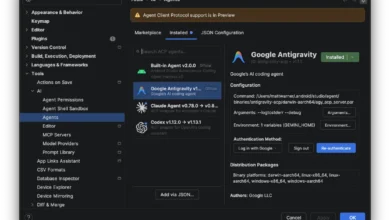
At the center of this ecosystem is Google Antigravity, a dedicated platform available as a standalone desktop application for macOS, Windows, and Linux, as well as an integrated extension within Android Studio Canary. For developers who prefer working locally through the terminal, the official Android CLI plugin serves as the operational engine connecting the AI agent directly to local Android build tools, SDKs, and custom developer scripts.
The integration allows the agent to execute programmatic commands, manage project configurations, and interact with local device emulators or physical test hardware. Developers can initialize and configure their agentic workspaces through multiple standardized pathways:
- Visual Configuration: Setting up the environment natively via the Antigravity Desktop application or Android Studio Canary for Google AI Ultra subscribers.
- Terminal CLI Integration: Installing the official plugin via the command line interface using the setup instruction:
agy plugin install android-cli-plugin - Generic Terminal Agent Deployment: Initializing the workspace for any compatible terminal agent using the command:
android init
This multi-surface availability ensures that engineering teams are not locked into a single proprietary workflow, preserving total choice and flexibility regarding the models and agents they choose to deploy in their daily pipelines.
Ecosystem Availability and Global Rollout
The rollout of Gemini 4 Argon spans several key tiers within Google’s developer ecosystem, ensuring broad accessibility based on individual project requirements and subscription models:
- Google Antigravity: Google AI Ultra subscribers gain immediate access to Gemini 4 Argon within the standalone desktop application and through the terminal CLI.
- Android Studio: Native integration is rolling out to early-access channels, allowing developers to utilize the model directly inside their primary IDE workflows.
- Google AI Studio: Developers subscribed to the Google AI Ultra tier or operating on the paid tier of the Gemini API can test and build with Argon using the interactive Playground and Build environments within Google AI Studio.
- Firebase AI Logic: Global developers on the paid tier of the Gemini API can deploy Gemini 4 Argon on the client-side to embed intelligent, context-aware features directly into mobile and web applications via Firebase AI Logic.
To assist developers in familiarizing themselves with the new ecosystem, Google has published official quickstart repositories and documentation on platforms such as GitHub, encouraging the developer community to share their implementation feedback and early projects publicly via official channels on X (@AndroidDev) and LinkedIn.
Broader Implications for the Software Engineering Industry
The introduction of Gemini 4 Argon and its deep integration into Android Studio and Google Antigravity highlights a broader macroeconomic and technological shift within the software industry. As AI models transition from conversational novelties to autonomous agents capable of managing complex, closed-loop development tasks, the role of the software engineer is evolving from a manual coder to an architectural director and quality assurance overseer.
Industry analysts note that tools capable of autonomous build self-correction and advanced UI generation can drastically compress product lifecycles, enabling smaller engineering teams to ship sophisticated, highly polished applications at unprecedented velocities. However, this shift also places a greater premium on robust code review practices, security auditing, and architectural governance, as the volume of AI-generated code entering production environments continues to escalate.
By opening these capabilities to the global Android developer community, Google is establishing a competitive benchmark for agentic development environments. As adoption rates climb, the success of platforms like Antigravity and models like Gemini 4 Argon will likely measure not only in lines of code generated, but in the sustained stability, performance, and user experience quality of the applications built upon them.