Building a Robust JSON Serialization Pipeline for Scalable Machine Learning Infrastructure

In the contemporary landscape of machine learning engineering, the efficiency of a model is often overshadowed by the complexity of the data infrastructure required to support it. While data scientists and researchers spend significant hours refining model architectures, empirical evidence suggests that over 80% of project time is frequently consumed by "data plumbing"—the architectural work of cleaning, normalizing, and transporting data between microservices, databases, and experiment tracking systems. As organizations move toward more sophisticated, distributed machine learning pipelines, the necessity for a standardized, robust method for serializing and deserializing complex data structures has become a critical operational requirement.
The Problem of Rigid Serialization Standards
At the core of many data pipelines lies the JavaScript Object Notation (JSON) format. While JSON is favored for its lightweight nature and language-agnostic compatibility, it is inherently limited by its reliance on a narrow set of primitive data types: strings, numbers, objects, arrays, booleans, and nulls. This constraint poses a significant challenge for Python-based machine learning workflows that frequently utilize rich, object-oriented types such as datetime objects, set collections, pathlib.Path objects, and Enum classes.
When a standard json.dumps() call encounters these complex types, the serialization process halts, triggering a TypeError. This failure point can be catastrophic in production environments, where an automated training job might crash simply because it attempted to log an experiment configuration containing a timestamp or a file path. As machine learning systems evolve from monolithic scripts to complex, multi-stage pipelines, the demand for resilient serialization—capable of handling both custom types and schema drift—has shifted from a developer convenience to a core engineering necessity.
Chronology of Data Pipeline Evolution
The trajectory of machine learning infrastructure has seen three distinct phases in how engineers handle data transmission. In the early stages of the field, researchers relied on custom pickle-based serialization. While flexible, this approach presented severe security risks and versioning incompatibilities. The second phase, spanning the mid-2010s, saw a shift toward simple JSON dumps, which required manual intervention whenever a data schema changed.
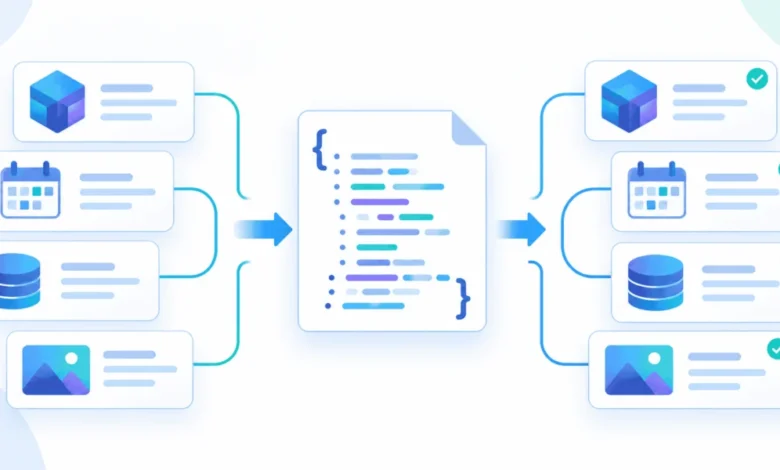
We are now in the third phase: the era of robust, schema-aware serialization. Modern pipelines now require, at minimum, a three-step architecture: a custom encoder to handle type translation, a recursive decoder to reconstruct object integrity, and a validation layer to manage schema migrations. By implementing these, engineering teams avoid the "brittle pipeline" syndrome, where small updates to an experiment configuration result in widespread system downtime.
Step One: Architecting the Custom Encoder
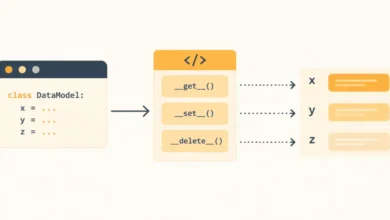
To bridge the gap between Python’s rich data types and JSON’s restrictive schema, developers must extend the json.JSONEncoder class. This mechanism allows the developer to intercept the serialization process. By overriding the default() method, one can define custom handling logic for specific data types.
The standard industry practice is to wrap non-serializable objects in a metadata-rich dictionary. For example, a datetime object should be serialized as a structured object containing a type identifier—such as "__type__": "datetime", "value": "..."—rather than a raw string. This ensures that the downstream system knows precisely how to treat the data upon receipt. By leveraging the cls argument in json.dumps(), developers can inject this logic globally across the pipeline, ensuring consistent data representation across various microservices.
Step Two: Recursive Decoding and Error Resilience
Deserialization presents a more complex challenge, as the receiver must interpret the metadata added during the encoding process. The most effective tool for this task is the object_hook parameter within the json.loads() function. This parameter acts as a factory, scanning every dictionary within a JSON object before it is fully materialized.
When the object_hook detects a dictionary containing the __type__ marker, it dispatches the value to the appropriate constructor—converting a string back into a datetime or a list back into a set. A critical aspect of this step is the inclusion of robust error handling. In production environments, data may arrive from legacy systems or be corrupted in transit. By wrapping the reconstruction logic in try-except blocks, developers can ensure that even if a specific field fails to reconstruct, the pipeline continues to function, perhaps by falling back to a raw value and logging a warning. This "graceful degradation" approach is fundamental to maintaining 99.9% uptime in distributed ML environments.
Step Three: Managing Schema Drift and Data Validation
One of the most persistent issues in machine learning operations (MLOps) is schema drift. As models advance, the configuration files defining their hyperparameters often change. A configuration file generated for a model in 2024 might lack a key required for a model in 2026.
To mitigate this, sophisticated pipelines implement a factory function that sits between the raw deserialization and the application logic. This function serves as a migration layer, checking for the presence of required fields and applying default values where necessary. For instance, if a new learning_rate hyperparameter is introduced, the factory function ensures that old configurations are updated on the fly to include a default value, preventing runtime crashes. This approach effectively decouples the storage format from the application code, allowing both to evolve independently.
Broader Implications for MLOps
The implementation of these robust serialization strategies has far-reaching implications for data integrity and team productivity. By standardizing how configurations are moved through the system, engineering teams reduce the "cognitive load" required to debug data ingestion errors. Furthermore, this structured approach to JSON serialization facilitates better auditing. Since every custom type is clearly marked with its metadata, security and compliance teams can more easily inspect the data being passed through the system.
Recent industry reports on MLOps maturity indicate that teams employing strict, schema-validated serialization pipelines report a 30% reduction in production incidents related to data format mismatches. As the industry moves toward more complex, multi-modal, and generative AI models, the configurations governing these models will only become more intricate. Building a serialization pipeline that is not only functional but also resilient and extensible is no longer an optional optimization; it is a foundational requirement for any scalable machine learning ecosystem.
In conclusion, the path to building a robust machine learning pipeline begins with acknowledging the limitations of standard data transmission formats. By taking control of the encoding and decoding lifecycle, implementing recursive object hooks, and enforcing strict validation layers for schema migrations, engineers can move beyond the constant cycle of fixing broken pipes. This shift toward proactive, resilient infrastructure design allows organizations to focus on the true value proposition of machine learning: the development and deployment of models that drive innovation and business intelligence.