AWS Weekly Roundup: Agentic Evolution and Infrastructure Advancements Defining the Cloud Frontier

The landscape of cloud computing underwent a significant shift this week as AWS introduced a series of updates centered on the practical deployment of autonomous agents and the fortification of core infrastructure. The focus of the industry has moved beyond the mere capability of large language models (LLMs) and toward the integration of these models into existing enterprise workflows. By enabling AI agents to leverage established AWS tools—such as Step Functions and extensive API libraries—without requiring architectural overhauls, AWS is lowering the barrier to entry for intelligent automation. Simultaneously, the introduction of post-quantum security measures and performance optimizations for GPU sharing and container startup times signals a continued commitment to enterprise-grade efficiency and security.
OpenAI GPT-6.1 Terra Arrives on Amazon Bedrock
A major development in the generative AI sector is the general availability of OpenAI’s GPT-6.1 Terra on Amazon Bedrock. This model represents a strategic shift in the GPT-6 product family, positioning itself as the go-to solution for high-volume, everyday enterprise workloads.
According to internal performance benchmarks provided by OpenAI, the Terra model demonstrates a marked improvement in efficiency. In the "Agents’ Last Exam" evaluation, GPT-6.1 Terra outperformed the previous iteration, GPT-5.6 Terra, by 15 percentage points while maintaining parity with the more powerful GPT-6 Astra. Perhaps most significantly, the model completes tasks at speeds three times faster than its predecessors. From a cost-efficiency perspective, the model is priced at a 50% discount for input and output tokens compared to the GPT-6.1 Sol and GPT-5.6 Terra models.
The integration supports up to 1 million input tokens, incorporating both text and image processing capabilities. By making this model accessible via Bedrock APIs, ChatGPT Work, and Codex, AWS and OpenAI are clearly targeting developers who require reliable, cost-effective performance for routine automation tasks rather than specialized, high-latency reasoning.
Bridging the Gap Between AI Agents and Enterprise Workflows
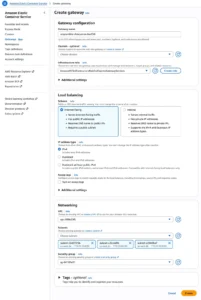
The most significant architectural shift announced this week is the ability to utilize AWS Step Functions as a native tool for AI agents via the Amazon Bedrock AgentCore Gateway. This development addresses a long-standing challenge in the industry: how to allow agents to interact with existing business logic without manually re-coding legacy workflows.
By leveraging the Model Context Protocol (MCP), agents can now trigger complex Step Functions—such as refund processing, eligibility verification, or compliance approvals—exactly as they were originally designed. This is a critical distinction in enterprise IT, where the "agentic" goal is to automate execution while maintaining strict procedural adherence. Because the workflow sequence is defined within Step Functions, the model acts as an orchestrator rather than a participant in the logic flow, ensuring that institutional guardrails remain intact.
This approach was validated in a recent case study involving MoEngage, which exposed approximately 400 internal REST API operations to AI agents. By utilizing the AgentCore Gateway, the organization bypassed the need for complex, manual tool mapping. The implementation highlights a crucial efficiency in prompt engineering: rather than flooding an agent with a massive, token-heavy catalog of tools, agents can now search for tools by describing the specific task, a method that saved the company an estimated six months of platform engineering labor.
Strengthening Security: The Post-Quantum Transition
As the industry prepares for the advent of cryptographically relevant quantum computers, AWS has begun integrating post-quantum resilience into its foundational services. This week, AWS Key Management Service (KMS) introduced support for ML-KEM (Module-Lattice-Based Key-Encapsulation Mechanism) for post-quantum key encapsulation.
This launch is a direct response to the "harvest now, decrypt later" threat, where malicious actors intercept encrypted traffic today with the intent of decrypting it once quantum computing technology matures. By supporting all three NIST FIPS 203 parameter sets, AWS allows users to establish shared secrets using post-quantum algorithms. The implementation ensures that private keys remain within FIPS 140-3 Level 3 validated Hardware Security Modules (HSMs). Furthermore, Amazon Aurora PostgreSQL has adopted post-quantum TLS key exchange for version 18 and higher, providing a multi-layered security posture for databases.

Operational Efficiency: GPU Sharing and Container Optimization
In the realm of infrastructure management, AWS has introduced two key optimizations aimed at reducing costs and improving resource utilization.
First, Amazon ECS now supports GPU sharing via NVIDIA Multi-Process Service (MPS). Historically, running containerized workloads on GPUs often resulted in underutilization, as small-model inference tasks rarely require the full capacity of a modern GPU. With this update, multiple ECS tasks can run concurrently on a single GPU. Users can define specific memory requirements and compute caps per container, allowing for more granular scaling. This is particularly beneficial for organizations serving multiple small models simultaneously, as it reduces the need for redundant hardware provisioning.
Second, AWS Lambda has implemented Seekable OCI (SOCI) lazy loading. Previously, Lambda functions had to pull an entire container image before execution could begin. With SOCI, the platform fetches only the necessary files for the initial startup, reducing cold-start times by up to 70%. Benchmarks from related SageMaker AI training jobs show that lazy loading can compress startup times from over three minutes to between 3 and 11 seconds, a significant leap in performance for serverless architectures.
Cross-Region Identity Propagation and EKS Auto Mode
The AWS IAM Identity Center has expanded its capabilities to include cross-Region trusted identity propagation. This change removes a significant architectural bottleneck that previously forced administrators to either consolidate services into a single Region or rely on overly broad IAM roles that lacked user-level visibility. Now, user identities can travel with requests across Regions, enabling more precise auditing and granular access control.
Concurrently, Amazon EKS Auto Mode has gained support for the Kubernetes Gateway API. This allows developers to define traffic routing (HTTP, gRPC, header-based routing) directly through Gateway and HTTPRoute resources. Because EKS Auto Mode automatically provisions the underlying AWS load balancing infrastructure, this integration simplifies the operational burden on DevOps teams, allowing them to focus on application logic rather than load balancer configuration.
Real-World Application: The Case of Nubank
The practical impact of these tools is evident in the recent success of Nubank, a major financial institution serving over 140 million customers. Faced with the challenge of managing over 300 critical business flows, Nubank utilized the AWS DevOps Agent to automate disaster recovery evidence collection.
The results are striking: the time required to complete a test cycle dropped from 4.3 hours to approximately 40 minutes, while flow coverage increased fourfold. In one instance, the agent executed a synthetic traffic test that terminated over 900 EKS instances using the AWS Fault Injection Service (FIS), providing the exact evidence required for regulatory compliance. This serves as a primary example of how agentic workflows, when paired with robust infrastructure, transition from experimental concepts to essential business tools.
Looking Ahead: re:Invent 2026
As the 2026 calendar year draws to a close, the focus of the global developer community shifts to AWS re:Invent in Las Vegas, scheduled for November 30 to December 4. With over 2,200 sessions planned, the event is expected to provide further clarity on the long-term roadmap for both AgentCore Gateway and the broader integration of generative AI into cloud-native environments. As organizations continue to move from the "exploration" phase of AI to the "deployment" phase, the emphasis will remain on the reliability, security, and scalability of these agentic systems.
In summary, the past week’s developments reflect a mature phase of cloud development. By focusing on API-driven agent orchestration, post-quantum security readiness, and resource efficiency through GPU sharing and lazy loading, AWS is providing the essential framework for enterprises to operate at scale in an increasingly automated world. These updates are not merely iterative; they represent a fundamental realignment of cloud infrastructure to support the next generation of intelligent, autonomous business operations.