Android Developer Summit Expands Ecosystem Foundations with Advanced Jetpack Compose, Multi-Device Tooling, and Agent-Ready Architectures

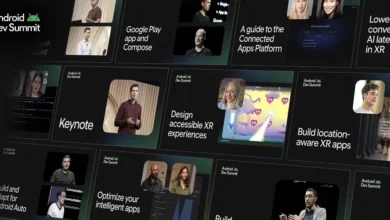
The modern Android ecosystem has evolved far beyond the traditional smartphone, encompassing an expansive array of form factors including foldable devices, tablets, wearables, in-car displays, extended reality (XR) hardware, and emerging desktop-class environments like Googlebook. Navigating this multi-device reality requires a fundamental shift in software engineering principles, moving away from fragmented, device-specific codebases toward a unified, adaptive development paradigm. At the recent Android Developer Summit, Google’s Android engineering teams detailed comprehensive updates to the platform’s core architecture, UI frameworks, navigation systems, and developer tooling designed to help engineers seamlessly scale applications across every screen size.
The centerpiece of this multi-device strategy remains Jetpack Compose, which has firmly established itself as the standard UI toolkit across the entire Android operating system. By moving past the legacy View system, developers gain a single, cohesive target that significantly reduces the friction of maintaining separate user interfaces for vastly different hardware configurations. However, building adaptive layouts presents distinct technical challenges. When physical screens fold, windows are dynamically resized, or applications transition fluidly between mobile and desktop environments, traditional layout assumptions frequently fail, risking lost user state and disjointed user experiences. To address these vulnerabilities, the Android Developer Summit introduced deep enhancements across both UI rendering and application architecture.
Advancing Core Foundations and Moving Beyond the UI
With the upcoming stable release of Compose 1.13, Google is expanding the developer toolkit to natively support adaptive design patterns through new layout components such as Grid and Flexbox. These additions allow user interfaces to automatically adjust their structural hierarchy based on available screen real estate rather than relying on brittle, hardcoded dimensions. Furthermore, Compose 1.13 introduces advanced graphical capabilities, including progressive blur effects and mesh gradients. According to performance engineering sessions at the summit, these high-end visual features have been meticulously optimized to execute without compromising battery life or lowering frame rates, ensuring that visually rich applications remain fluid and responsive.
Alongside visual rendering updates, text editing within Jetpack Compose has undergone a massive architectural overhaul. The introduction of a completely rewritten BasicTextField relies on a buffer-driven architecture powered by TextFieldState. This fundamental redesign successfully eliminates input method editor (IME) race conditions while enabling robust, rich-text formatted editing mechanics. For engineering teams, maintaining low startup latency and smooth 60-to-120 frames-per-second performance while introducing these complex features is paramount. Google highlighted advanced profiling techniques using Perfetto and recomposition tracing, giving developers the diagnostic clarity needed to identify and eliminate costly architectural anti-patterns.
Perhaps the most significant architectural leap discussed at the summit is the introduction of Jetpack AppState, currently available in alpha. AppState successfully brings the reactive snapshot system native to Compose out of the immediate UI layer and directly into the application’s core architecture. Through the Transform API, developers can derive reactive state seamlessly from standard State and Flow inputs utilizing automatic read tracking and plain Kotlin control flow. Additionally, AppState introduces StateStore, a keyed container designed to share observable state across disparate application components—including activities, background services, widgets, and App Functions—with optional persistence managed via DataStore. This architectural elevation simplifies complex state management pipelines and guarantees that every surface of an application remains precisely synchronized.
Designing Robust Navigation and Input Systems for Diverse Form Factors
As modular application architectures grow increasingly complex, navigation and user input mechanisms must remain entirely predictable across every possible entry point and screen size. Addressing this need, Jetpack Navigation 3 arrives with native, type-safe deep linking built directly on top of a developer-owned back stack. Leveraging Kotlin Serialization, developers can map incoming URIs and system intents directly to strongly typed navigation keys. This capability allows teams to customize how complex arguments are parsed and lazily construct synthetic back stacks, ensuring that physical or gestural back navigation always feels natural to the user, regardless of how deep into the application hierarchy they have navigated.
Concurrently, user input handling has evolved far beyond traditional touchscreen interactions to accommodate multi-modal workflows. The layered input system in Jetpack Compose now extends seamlessly to support trackpads, physical mice, and external hardware controllers. Developers were provided with comprehensive technical guidance on managing complex pointer lifecycles, hover states, and hardware-specific events across varying form factors, ensuring that desktop and laptop users experience the same level of precision as mobile users.
Scaling Interfaces Across Large Screens, Desktop Environments, and Beyond
The proliferation of foldable phones, tablets, and laptop-class devices demands that interfaces adapt intelligently rather than simply stretching mobile layouts to fill larger display areas. The summit emphasized that building genuinely adaptive software requires combining Jetpack Navigation 3, the platform WindowManager, and intelligent agentic workflows. These tools collectively assist developers in refactoring standard mobile layouts into responsive, multi-pane experiences with minimal manual overhead.
Expanding beyond traditional mobile boundaries also unlocks entirely new ecosystem opportunities, exemplified by early engineering initiatives on Googlebook. Crafting desktop-class software environments requires robust support for physical peripherals, advanced window management, and pointer-driven workflows. During the summit, early platform partners such as Notability and Logitech shared practical engineering strategies regarding the optimization of pointer interactions and external hardware integration. These real-world case studies provided valuable blueprints for teams looking to transition their mobile applications into high-productivity desktop environments.
Accelerating Development with Agent-Ready Tooling and Android Skills
To help engineering teams implement these sophisticated architectural patterns with greater speed and precision, Google introduced new agent-ready developer tooling. Utilizing Android skills within Gemini in Android Studio or running the Android CLI alongside other compatible coding agents allows developers to delegate routine refactoring tasks. These automated skills are explicitly designed to handle heavy architectural lifting while remaining strictly compliant with official Adaptive App Quality Guidelines.
The convergence of these announcements at the Android Developer Summit underscores a pivotal transitional era for the platform. By unifying UI development through Jetpack Compose, extending reactive state management via Jetpack AppState, enforcing type-safe routing with Navigation 3, and empowering coding agents with specialized skills, Google is providing the comprehensive infrastructure required to build resilient, high-performance applications capable of thriving across an increasingly diverse hardware landscape. Developers can access more than 50 on-demand technical sessions and detailed code walkthroughs via the official Android Developer Summit App Foundations playlist to begin integrating these advanced frameworks into their production pipelines.
Related posts: