React Native 0.86 Official Release Brings Edge-to-Edge Android Support and Transitions to the New React Foundation

The React Native ecosystem reached a significant milestone today with the official release of version 0.86, a technical update that prioritizes stability, platform modernization, and structural independence. This release, which follows the 0.83 iteration, continues the framework’s strategic pivot toward a more predictable upgrade cycle, characterized by a notable absence of user-facing breaking changes. As the mobile development landscape continues to evolve under the pressure of rapid OS updates and shifting architectural standards, version 0.86 serves as both a functional improvement for Android developers and a symbolic turning point for the framework’s governance.
A New Home for a Growing Ecosystem
The release of 0.86 coincides with a major administrative transition: the migration of the core React Native repository, alongside related projects like React, Metro, and Yoga, from the Meta (formerly Facebook) GitHub organization to the newly established React organization. This shift is not merely cosmetic; it represents the formalization of the React Foundation, an independent, non-profit entity dedicated to the long-term stewardship of the React ecosystem.
For the developer community, this transition underscores a commitment to decentralization. By moving under the umbrella of an independent foundation, the React project seeks to ensure that the framework remains accessible and neutral, fostering a sustainable development environment that is less reliant on the internal priorities of a single corporate entity. While GitHub will continue to manage redirects for all existing URLs, issues, and pull requests to ensure a seamless transition for active contributors, the move signals that the framework has matured into a global public good.
Android 15 and the Edge-to-Edge Standard
One of the most anticipated features in React Native 0.86 is the implementation of comprehensive edge-to-edge support for Android 15 and beyond. As Google continues to push for a more immersive user interface experience, enforcing edge-to-edge rendering—where apps draw content behind the system bars—has become a requirement for modern Android development.
Previously, developers often struggled with inconsistencies when OS-level enforcement of edge-to-edge mode conflicted with manual configuration in Gradle properties. Version 0.86 resolves these conflicts by providing a robust, native-level integration. By handling the complexities of system window insets and status bar transparency, the framework now ensures that React Native applications behave predictably even when the OS mandates full-screen content rendering. This reduction in "configuration debt" allows developers to focus on UI design rather than debugging low-level Android layout issues, a critical necessity as the Android ecosystem moves toward tighter UI/UX requirements.
DevTools and the Developer Experience
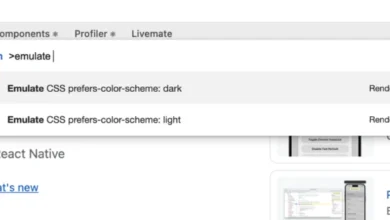
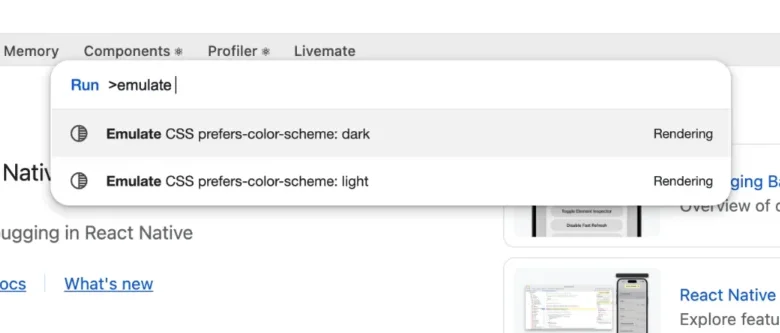
React Native DevTools has received a targeted update in this release, specifically focusing on workflow efficiency. The introduction of light and dark mode emulation via the Command Palette—accessible through the cmd or ctrl + shift + P shortcut—represents a significant improvement in testing capabilities.
Before this update, developers were required to toggle system-wide settings on their physical devices or emulators to verify how their applications responded to theme changes. By allowing this state to be managed directly within the DevTools interface, the 0.86 release enables rapid, iterative design checks. This functionality, while temporary and resetting upon disconnection, provides a sandbox-like environment that mirrors web development standards, bridging the gap between browser-based debugging and mobile native development.
Chronology of Stability and Evolution
The trajectory of React Native over the past year has been defined by a concerted effort to minimize the "upgrade tax" that historically plagued the framework. The release cadence has moved away from disruptive, monolithic updates toward smaller, more frequent, and stable releases.

- Q1-Q2 2024: The focus shifted toward the "New Architecture," specifically stabilizing the Fabric renderer and TurboModules.
- Q3 2024: Introduction of stricter versioning policies to identify and categorize breaking changes, leading to the 0.83 release.
- Q4 2024: Finalization of the React Foundation governance model and the migration of repositories.
- Today: Version 0.86 arrives with zero user-facing breaking changes, confirming the success of the recent architectural stabilization phase.
This timeline reflects a strategic shift from rapid experimentation to a "production-first" mindset. Large-scale enterprise applications, which often rely on React Native for cross-platform consistency, benefit immensely from this predictability. When a framework offers an upgrade path that requires no code changes, as is the case with 0.86, it significantly lowers the barrier to entry for adopting the latest security patches and performance optimizations.
Supporting Data and Community Contribution
The 0.86 release is the result of a massive collaborative effort involving 97 individual contributors who collectively submitted over 596 commits. This volume of activity highlights the sustained health of the open-source project. In an era where many open-source frameworks face maintainer burnout, React Native’s ability to attract and integrate such a high number of contributions suggests that the transition to the React Foundation has successfully incentivized community participation.
The breakdown of these contributions includes:
- Infrastructure & Dependencies: Updates to native build systems to accommodate newer Android SDK requirements.
- JSI (JavaScript Interface): Enhancements to the C++ layer that allows for higher-performance communication between JavaScript and native modules.
- Accessibility: Continued refinement of screen-reader support and touch target accessibility, ensuring compliance with global standards.
- Rendering & Layout: Improvements to the Yoga layout engine to minimize layout thrashing and improve frame rates during animations.
Broader Implications for the Mobile Market
The implications of this release extend beyond the immediate features. By aligning React Native more closely with web specifications and standardized native interfaces, the framework is positioning itself as a durable solution for the next decade of mobile development.
The integration of JSI improvements in 0.86 is particularly noteworthy. As mobile applications grow in complexity—incorporating heavy machine learning inference, real-time data streaming, and complex animations—the overhead of the "bridge" that once defined React Native has become a bottleneck. The ongoing work to enhance the C++ interface between the JavaScript engine and the native side is effectively transforming React Native into a framework that rivals native code in performance, while retaining the velocity of JavaScript development.
Furthermore, the decision to maintain a strictly non-breaking release policy in 0.86 suggests that the core team has achieved a level of internal architectural maturity where new features can be added via additive, rather than subtractive, changes. This is a critical marker for the "enterprise-readiness" of a framework, providing the stability required by companies managing applications with millions of active users.
Moving Forward: Upgrading and Support
As of today, version 0.86 is the new stable baseline for the framework. Consequently, version 0.83.x has been moved to an unsupported status. For developers managing existing projects, the path to upgrading is documented through the React Native Upgrade Helper, a tool that continues to be the industry standard for visualizing diffs between versions.
For those initiating new projects, the command line interface has been updated to reflect the latest release: npx @react-native-community/cli@latest init MyProject --version latest. Additionally, the Expo team has announced that 0.86 will be available through their canary release channel, allowing developers using the Expo ecosystem to begin testing the new Android edge-to-edge features immediately.
In conclusion, React Native 0.86 is a testament to the framework’s evolution from a proprietary tool to an independent, community-driven ecosystem. By focusing on stability, Android platform alignment, and developer efficiency, this release provides a solid foundation for the future of cross-platform development. As the React Foundation begins its tenure, the industry will be watching to see how this governance structure influences the next generation of mobile software engineering, but if the 0.86 release is any indication, the framework remains on a trajectory of growth, reliability, and technical excellence.
Related posts: