Unlocking the Hidden Geometry of Light: International Researchers Discover How Beams Can Naturally Develop Spinning Patterns in Free Space


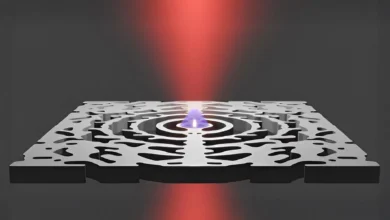
In a groundbreaking finding that challenges decades of established optical physics, an international team of researchers has uncovered a previously hidden capability of light. The discovery demonstrates that carefully prepared light beams can independently develop complex spinning and twisting patterns as they travel through empty space, entirely bypassing the need for traditional external aids such as specialized lenses, mirrors, or engineered materials.
Led by scientists at the University of East Anglia (UEA) in the United Kingdom, in close collaboration with research partners in South Africa—specifically at the University of the Witwatersrand in Johannesburg—the study sheds light on a fundamental geometric structure embedded within light itself. Published in the prestigious scientific journal Light: Science & Applications under the title "Topological Control of Chirality and Spin with Structured Light," this discovery opens up unprecedented avenues for how physicists manipulate optical fields. By revealing that light can govern its own internal rotation through inherent topological features, the research team has unlocked a completely new tuning knob for optical engineering, with broad implications stretching from medical diagnostics to quantum computing and high-capacity telecommunications.
The Fundamentals of Structured Light and Optical Chirality
To understand the significance of this recent breakthrough, one must examine how physicists traditionally categorize and manipulate light. In classical physics, light is most commonly visualized as traveling in straight lines as electromagnetic waves. However, advanced optics has long recognized the existence of "structured light," a specialized field where the brightness, phase, wavefront shape, and direction of a light beam are meticulously tailored at the source.
Among the most fascinating manifestations of structured light are optical vortices. These are beams whose wave fronts twist around the central axis of propagation much like a corkscrew. Because each individual twist can carry distinct packets of information, optical vortices have become critical components in experimental high-speed internet frameworks, secure optical communications systems, and ultra-sensitive microscopic sensors.
Beyond linear propagation and corkscrew twists, light also exhibits polarization—a property describing the oscillation of its electric field vectors. When these oscillations follow a circular or elliptical path, the light beam generates a physical phenomenon known as spin. This spin possesses chirality, a scientific term denoting handedness. Much like human hands, which are exact mirror images of one another yet cannot be perfectly superimposed, chiral light beams can exhibit either left-handed or right-handed rotational behavior.
In nature and industry, chirality is of paramount importance. Many fundamental biological molecules, including vital pharmaceutical compounds, exist in left-handed (levrorotatory) and right-handed (dextrorotatory) configurations. Although these enantiomers share identical chemical compositions, their interactions within biological systems can be drastically different; one form of a drug might cure an ailment while its mirror-image counterpart could prove ineffective or even toxic. Traditionally, scientists have relied on specialized polarizers, quarter-wave plates, tight-focusing lenses, and metamaterials to produce and isolate chiral light capable of distinguishing between these molecular twins. The new UEA-led discovery proves that nature can achieve this feat autonomously through proper beam preparation.
Chronology and Experimental Breakthroughs
The genesis of this discovery lies in theoretical modeling that eventually demanded empirical verification. For years, physicists understood that interactions between a light beam’s spatial shaping (such as an optical vortex) and its polarization properties could theoretically give rise to localized spin phenomena. However, prevailing academic consensus held that these interactions were exceptionally weak. Under normal laboratory conditions, such emergent behaviors were believed to be negligible, impossible to isolate, or entirely dependent on heavy, precision-engineered optical hardware to force the light into submission.
The international research team challenged this assumption by examining what happens when a light beam is configured into a precisely balanced initial state. Rather than relying on external obstacles or materials to twist the beam mid-flight, the researchers engineered the starting profile of the light such that its internal energy distribution was delicately poised.
The experimental phase, spearheaded by University of East Anglia researcher Dr. Kayn Forbes and University of the Witwatersrand MSc student Light Mkhumbuza, yielded startling results. When the carefully prepared beam was projected into free space, it initially registered zero net spin at the point of origin. Yet, as the beam propagated forward, distinct, highly localized regions of left-handed and right-handed spin spontaneously emerged and physically separated from one another within the beam profile.
Describing the mechanics of the observation, Light Mkhumbuza noted that the phenomenon unfolds almost as if the rotational property was inherently encoded within the beam, remaining dormant before revealing itself strictly through the natural act of propagation. This dynamic evolution confirmed that the beam’s internal architecture, rather than external interference, dictates where and how chiral regions manifest.
Topological Control: The Mathematical Blueprint of Light
To decode the physics behind this unexpected behavior, the research consortium applied topology—a branch of mathematics dedicated to studying the properties of geometric objects that remain invariant under continuous deformations, such as stretching, twisting, or bending.
To explain topological invariance to a broader audience, Dr. Isaac Nape of the University of the Witwatersrand utilized a classic mathematical analogy. He pointed to a coffee mug and a doughnut (torus), explaining that one object can be continuously morphed into the other without tearing the material because both share a singular defining feature: a hole. That invariant hole serves as a fundamental topological signature.
In the context of the newly studied light beams, the researchers discovered that structured light possesses its own topological characteristics encoded directly into the spatial arrangement of its polarization states. This underlying structural pattern functions as an immutable mathematical fingerprint. Even as the light beam expands, shifts, and alters its macroscopic shape during long-distance propagation, its core topological framework remains intact. This persistent geometry acts as an internal lawgiver, dictating how different microscopic regions of the optical field must evolve.
By leveraging this topological blueprint, scientists no longer need to depend on fragile physical filters or bulky optical components to manipulate light’s handedness. Instead, by adjusting the initial topological parameters of the laser source, researchers can directly dictate how and where chirality materializes downstream. Dr. Nape aptly characterized this capability as providing scientists with an entirely "new tuning knob for light."
Official Responses and Scientific Implications
The academic community has received the publication with considerable enthusiasm, viewing it as a paradigm shift in foundational optics. While direct commercial implementations will require extensive engineering development, the theoretical framework establishes a robust foundation for next-generation technologies.
"Our work shows that light can naturally develop this handed behavior all on its own," stated Dr. Kayn Forbes during an overview of the findings. "You just have to prepare it in the right way. Most people think of light as traveling in straight lines, but by carefully arranging its brightness, shape, and direction, we open up entirely new regimes of behavior."
Dr. Forbes emphasized the practical advantages of bypassing traditional hardware constraints. Because the observed phenomena do not rely on fragile materials, expensive metamaterials, or precision-engineered micro-optics, the resulting systems could ultimately prove far more robust, cost-effective, and scalable for industrial integration.
"For something so familiar, light is proving to be far richer, stranger, and more powerful than anyone imagined," Dr. Forbes added. "And astonishingly, this new behavior has been there all along—just waiting to be seen."
Potential Applications in Medicine, Communications, and Quantum Technology
The transition from fundamental physics discovery to applied technology often spans years, yet the potential use cases identified by the UEA and South African research team span several critical high-tech sectors:
-
Advanced Medical Diagnostics and Pharmaceutical Research
Because biological molecules and therapeutic compounds frequently exhibit distinct chiral forms, the ability to generate highly sensitive, self-organizing chiral light beams could revolutionize chemical screening. Enhanced optical detection methods could allow pharmaceutical laboratories to differentiate between enantiomers with unprecedented precision, accelerating drug safety evaluations and improving the early detection of disease-specific biomarkers. Furthermore, these principles could enable miniaturized optical sensors capable of analyzing complex biological fluids without the need for cumbersome laboratory machinery. -
High-Capacity Telecommunications and Data Transmission
Modern global communication infrastructure relies heavily on fiber-optic networks capable of transmitting vast quantities of data via light pulses. By exploiting light’s internal topology—encoding additional streams of information into distinct twisting, vortex, and spinning states—telecommunications engineers could exponentially increase the data capacity of single laser beams. This spatial multiplexing technique represents a crucial stepping stone toward meeting the ever-growing global demand for higher bandwidth and faster internet connectivity. -
Quantum Computing and Secure Information Networks
In the realm of quantum technology, maintaining the integrity of delicate quantum states (qubits) remains a formidable challenge, as environmental noise and interference easily disrupt information transfer. Topological properties are inherently resilient against minor perturbations—a characteristic already celebrated in topological insulators in solid-state physics. Translating topological protection into optical systems could safeguard delicate quantum information, laying the groundwork for robust, unhackable quantum networks. -
Optical Tweezers and Micro-Manipulation
The precise application of light forces—often referred to as optical tweezers—is widely used in biophysics to trap and manipulate microscopic particles, individual cells, and cellular machinery without physical contact. The ability to control spin and chirality through internal beam geometry provides researchers with finer, more versatile tools for interacting with microscopic matter.
A New Chapter in Optics
The discovery that light can autonomously orchestrate its own spinning and chiral patterns via hidden topological structures marks a significant milestone in modern physics. By challenging long-held assumptions regarding the weakness of internal optical interactions and the necessity of external hardware, the research team has demonstrated that our understanding of light is far from complete.
As laboratories around the world begin to replicate and build upon these findings, the theoretical framework established by the University of East Anglia and the University of the Witwatersrand will likely catalyze a new wave of optical engineering. Whether destined for faster data networks, more sensitive medical diagnostics, or resilient quantum architecture, the revelation that light possesses an innate, self-revealing geometry ensures that the future of optical science remains exceptionally bright.