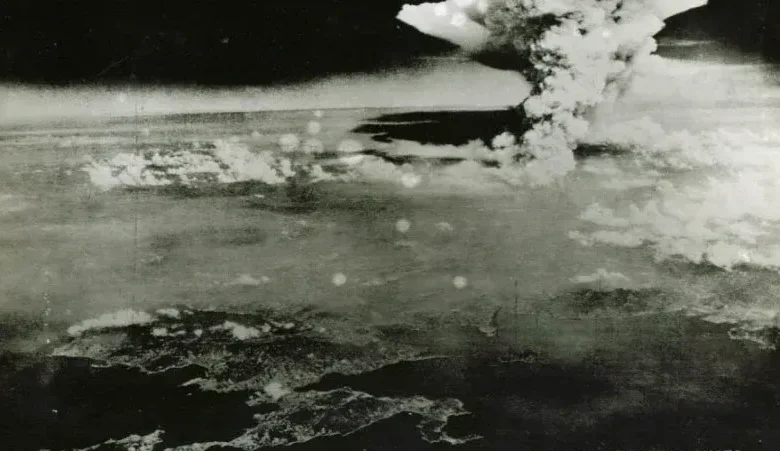
The catastrophic events of August 6, 1945, remain etched in human history as a turning point in warfare and scientific ambition. When the United States dropped the "Little Boy" atomic bomb on Hiroshima, it marked the first time nuclear energy was unleashed as a weapon. While the immediate devastation of the city is well-documented, recent archival research into the flight logs of the Enola Gay—the B-29 Superfortress that carried the weapon—has uncovered a chilling two-word notation: "cloud gone." This seemingly innocuous phrase, recorded by the crew, has provided modern researchers with critical data regarding the height of the mushroom cloud, further underscoring the terrifying potential for a global "nuclear winter."
The Pre-Detonation Fear: Atmospheric Ignition
Before the Hiroshima mission, the scientific community involved in the Manhattan Project was gripped by a different, existential fear. J. Robert Oppenheimer, the theoretical physicist who led the laboratory at Los Alamos, along with colleagues such as Arthur Compton, grappled with a theoretical possibility that a nuclear explosion might trigger a self-sustaining thermonuclear reaction in the Earth’s atmosphere.
The concern was rooted in the physics of hydrogen. As Compton later recounted in 1959, the scientists were worried that the extreme heat generated by a fission bomb could ignite the hydrogen in the atmosphere or perhaps even nitrogen, causing a chain reaction that would incinerate the planet. "Is it possible," Oppenheimer wondered, "that the nitrogen in the atmosphere could also be triggered by an atomic explosion?" While calculations eventually suggested that the probability of such an event was near zero, the underlying anxiety persisted among the scientists right up until the Trinity test. The Hiroshima detonation was, in many ways, the first live-fire experiment to prove that the atmosphere would not ignite.
Chronology of the Hiroshima Mission
The mission began in the early morning hours of August 6, 1945. The Enola Gay, piloted by Colonel Paul Tibbets, took off from Tinian Island. At 08:15 local time, the bomb was released over Hiroshima. The blast, equivalent to approximately 15 kilotons of TNT, leveled the city and unleashed a firestorm of unprecedented magnitude.
Following the drop, the crew of the Enola Gay and its escort aircraft did not immediately depart the area. They remained in the vicinity to observe and document the effects of the weapon. George Caron, the tail gunner, provided a harrowing eyewitness account: "I could see the city, and the city was covered by a low, roiling mass. It was like boiling molasses, spreading wide to the foothills, covering the entire city. Then there was fire; I could see flames breaking through the layer that covered the city."
It was at 10:52 a.m., roughly two hours and 37 minutes after the detonation, that the crew noted "cloud gone" in their flight logs. At this point, the aircraft was approximately 750 to 765 kilometers away, flying at an altitude of about 7.6 kilometers. This entry has become the cornerstone of a new, sophisticated study published in the journal Geophysical Research Letters, which seeks to quantify the height of the smoke column generated by the blast.
Reconstructing the Atmospheric Impact
The "cloud gone" observation is significant because it indicates the moment the massive smoke plume from the Hiroshima firestorm dropped below the line of sight of the Enola Gay crew, likely due to atmospheric refraction or the dissipation of the top of the cloud. Researchers utilized this data point in conjunction with historical weather logs to model the behavior of the plume.
By running 100,000 simulations, the research team accounted for how light behaves as it travels through the atmosphere, influenced by the specific weather conditions of that day in 1945. Their findings suggest that the smoke column reached altitudes far higher than previously estimated. With a 95% confidence level, the team concluded that the column of smoke rose above 11.3 kilometers. The median estimate places the top of the plume at 12.1 kilometers, with a greater than 50% probability that it reached even higher.
This altitude is critical. Particles injected into the upper troposphere and lower stratosphere have a significantly longer residence time than those released at lower altitudes. The fact that the Hiroshima column reached such heights provides empirical evidence for the mechanisms behind a "nuclear winter."
Understanding the Nuclear Winter Scenario
The term "nuclear winter" refers to a climate-driven catastrophe that would follow a large-scale nuclear war. In this scenario, the massive amount of soot and smoke injected into the upper atmosphere by burning cities would block sunlight, leading to a precipitous drop in global temperatures. This cooling would result in widespread crop failure, ecosystem collapse, and the potential mass starvation of the human population.
The study highlights that Hiroshima is the only historical instance of a nuclear strike that triggered a large-scale firestorm of this nature—unlike the subsequent bombing of Nagasaki, which, due to the city’s topography and the nature of the blast, did not generate a comparable firestorm. Consequently, the Hiroshima event serves as a unique, albeit grim, case study for climate scientists.
The researchers noted that the "cloud gone" observation did not establish a maximum height for the column; it only provided a lower bound for the visibility. This means the actual atmospheric impact could have been even more severe than the models suggest, further cementing the reality that the thermal energy released during the blast was sufficient to launch material into the stratosphere.
Broader Implications and Scientific Context
The implications of this research extend far beyond historical record-keeping. In an era where nuclear tensions have resurfaced, the physical reality of how nuclear weapons affect the global climate is once again a subject of urgent scientific scrutiny.
- Strategic Stability: The data reaffirms that the environmental cost of nuclear warfare is not limited to the blast zone. The global interconnectedness of the atmosphere means that even a "limited" nuclear exchange could have devastating global consequences.
- Climate Modeling: The precision of the 100,000-simulation model demonstrates how modern computational power can be used to re-examine historical events, turning eyewitness accounts into quantitative data.
- Existential Risk: The transition from the "atmosphere ignition" fears of the 1940s to the "nuclear winter" fears of the 21st century highlights a shift in scientific focus—from the immediate destruction of the planet by the bomb itself to the slow, systematic destruction of the biosphere by the resulting climate disruption.
The study concludes that the Hiroshima detonation remains a sobering reference point. For any nation-state, the threshold of deploying such a weapon is not merely a military decision but a choice that potentially affects the global climate system. The phrase "cloud gone" serves as a reminder that the actions of 1945 continue to provide warnings for the future. As humanity continues to grapple with the existence of nuclear arsenals, the physical, atmospheric, and ecological data from Hiroshima stands as a testament to the scale of the power that was unleashed—a power that, if used on a larger scale, could fundamentally alter the conditions for life on Earth.
The rigor of this new research serves to bridge the gap between human history and planetary science. By turning back to the flight logs of the Enola Gay, researchers have not only clarified a moment in the past but have also reinforced the scientific consensus on the catastrophic environmental risks posed by nuclear conflict. The "cloud" may have long since dissipated, but the lessons contained within its rise and fall remain as pertinent today as they were over three-quarters of a century ago.