Jetpack Compose November 2026 Stable Release Delivers Major Graphics, Performance, and Material 3 Enhancements


The Android development ecosystem has reached another major milestone with the official stable release of Jetpack Compose for November 2026. Bringing core libraries up to version 1.13 via the Bill of Materials (BOM) version 2026.11.01, this update represents months of rigorous engineering, developer feedback integration, and architectural refinement. As Android applications grow increasingly complex and span a diverse array of form factors—from foldable devices to desktops—this release introduces pivotal tools aimed at boosting visual fidelity, state management efficiency, and rendering performance.
Adopting this latest stable release requires developers to upgrade their project configurations to utilize Kotlin 2.2 or newer, alongside a compileSdk of 37.1. By raising the baseline requirements, the Android UI toolkit team has unlocked advanced platform capabilities while deprecating legacy components that previously hindered long-term maintenance and architectural scalability.

Background Context and Architectural Evolution
Jetpack Compose has steadily replaced the traditional Android View system as the preferred paradigm for native UI development since its initial stable rollout. Over the years, Google’s Android UI team has focused on bridging performance gaps, expanding layout flexibility, and refining the declarative programming model. The November 2026 release arrives at a time when cross-platform consistency and fluid, AI-integrated user interfaces are paramount.
The transition from Compose version 1.12 to 1.13 underscores a concerted effort to prune experimental APIs, reduce cognitive load for developers, and establish a cohesive design language. With Material 3 version 1.5.0 now completely stable and experimental annotations slashed by over fifty percent, the framework signals a mature, production-ready environment. Concurrently, the deprecation of legacy frameworks such as Material 2, ConstraintLayout Compose, and value-based text fields establishes a clear, unfragmented path forward for modern Android engineering teams.
Graphics Enhancements: Progressive Blur and Morphing Shapes
Visual polish is a central theme of the Compose 1.13 release, bringing advanced rendering primitives directly into the core foundation library. Among the standout additions is progressive blur, implemented via Modifier.blur and BlurRadiusSpec. This feature allows developers to create smooth, tactile depth-of-field effects by transitioning elements seamlessly from sharp to blurred. Utilizing linear gradients, radial focal spotlights, or custom AGSL RuntimeShaders, developers can now achieve sophisticated visual layers—such as frosted glass headers or dynamic focal points—without writing complex custom rendering code.

Furthermore, Compose 1.13 introduces PolygonShape and MorphPolygonShape directly into the androidx.compose.foundation:foundation package. Previously, implementing dynamic shape morphing—such as animating a button smoothly from a circle into a multi-pointed star—required manual integration with the lower-level androidx.graphics:graphics-shapes library. By baking these shapes into the foundation layer, developers can utilize them natively with Modifier.clip and animate them via progress lambdas during the draw phase, bypassing costly recompositions.
Graphics performance has also received substantial under-the-hood optimization. Rendering static icons is now noticeably more efficient thanks to VectorPainter, which automatically shares and reuses rasterized draw caches across painters rendering identical static ImageVector instances. Coupled with a faster, more performant implementation of Modifier.border that natively supports runtime shaders across all shape types, applications can maintain high frame rates while featuring rich, dynamic aesthetics.
Text Modernization and State-Based Architecture
Text handling in Jetpack Compose undergoes a fundamental paradigm shift in version 1.13. The traditional value-based BasicTextField and Material 2 TextField APIs have been officially deprecated, paving the way for the robust, state-based BasicTextField coupled with TextFieldState. This architectural overhaul addresses historical performance bottlenecks by introducing a synchronous state model that natively supports saving and restoring formatted styles, undo/redo history, and change tracking buffers without experimental caveats.

For developers working with Material 3, migration to the state-based TextField and OutlinedTextField overloads is strongly encouraged to take advantage of improved typing performance and future framework updates. Additionally, legacy text utilities like VisualTransformation are being phased out in favor of streamlined alternatives such as OutputTransformation and InputTransformation, the latter of which includes built-in length-limiting filters.
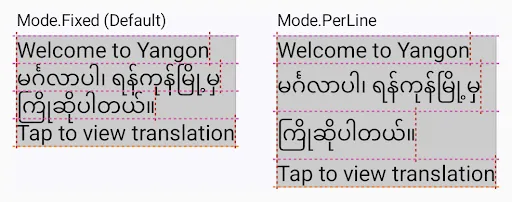
Multilingual typography also benefits from this release through the introduction of LineHeightStyle.Mode.PerLine. When rendering mixed font sizes or tall scripts—such as Burmese, Khmer, or Thai—within a single paragraph, uniform line spacing historically caused text collisions. The new per-line calculation mode ensures that lines with taller glyphs dynamically expand to fit their natural bounds without clipping adjacent text. Variable font flexibility has similarly improved with the addition of merge overloads to FontVariation.Settings, enabling developers to override specific font axes dynamically without rebuilding entire settings configurations.
Performance Optimization, Diagnostics, and Benchmarks
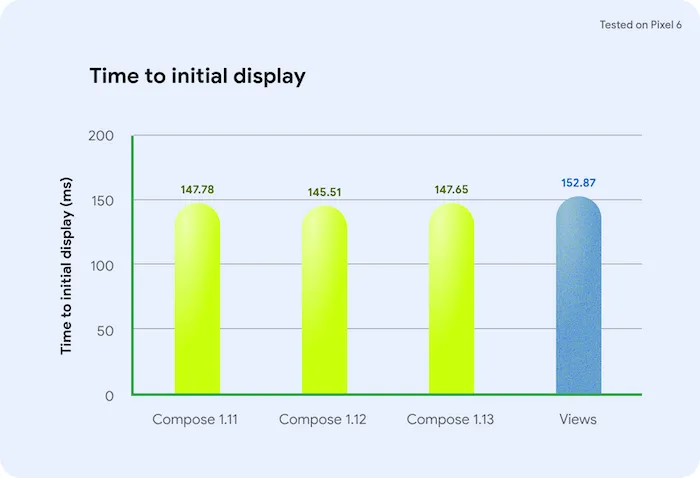
Performance remains a cornerstone of the Jetpack Compose roadmap. Version 1.13 matches previous baseline startup and scrolling benchmarks with a zero percent jank rate on standard test hardware like the Pixel 6. Cold startup metrics continue to showcase Compose outperforming traditional Views in Time to Initial Display, clocking in at 147.65 milliseconds compared to 152.87 milliseconds for Views.
To help engineering teams proactively identify and resolve bottlenecks, Google has introduced several powerful diagnostic tools:
- ComputedStateOf: A lightweight alternative to
derivedStateOf,computedStateOfis designed for condition checks and filtered state calculations derived from frequently changing sources like scroll positions. By omitting result caching, it reduces overhead when calculations are frequently invalidated. - Recomposition Tracking in Perfetto: This diagnostic capability augments existing composition tracing by recording string representations and stack traces for state reads and writes, allowing developers to pinpoint the exact lines of code triggering unwanted recompositions.
- Performance Static Analysis Skill: Integrated with the Android CLI, this zero-setup code auditing tool evaluates projects against seven key performance categories, ensuring adherence to best practices across pull requests and CI pipelines.
Layouts, Adaptive Design, and Animation
Layout capabilities have expanded with the official stabilization of FlexBox and Grid layouts. First introduced in earlier experimental releases, these containers offer production-ready, performant alternatives for wrapped grids and adaptive designs, effectively superseding legacy FlowRow and FlowColumn implementations. FlexBox now includes a maxItemsInEachLine configuration to give developers finer control over wrapping behavior.
Concurrently, ConstraintLayout and MotionLayout in Compose have been deprecated as modern layout containers, shared element APIs, and built-in animations provide more streamlined, native alternatives. In the realm of lists, the stabilization of LazyLayoutCacheWindow introduces robust caching and window-based prefetching across lists, grids, and staggered grids, significantly improving off-screen composition performance.

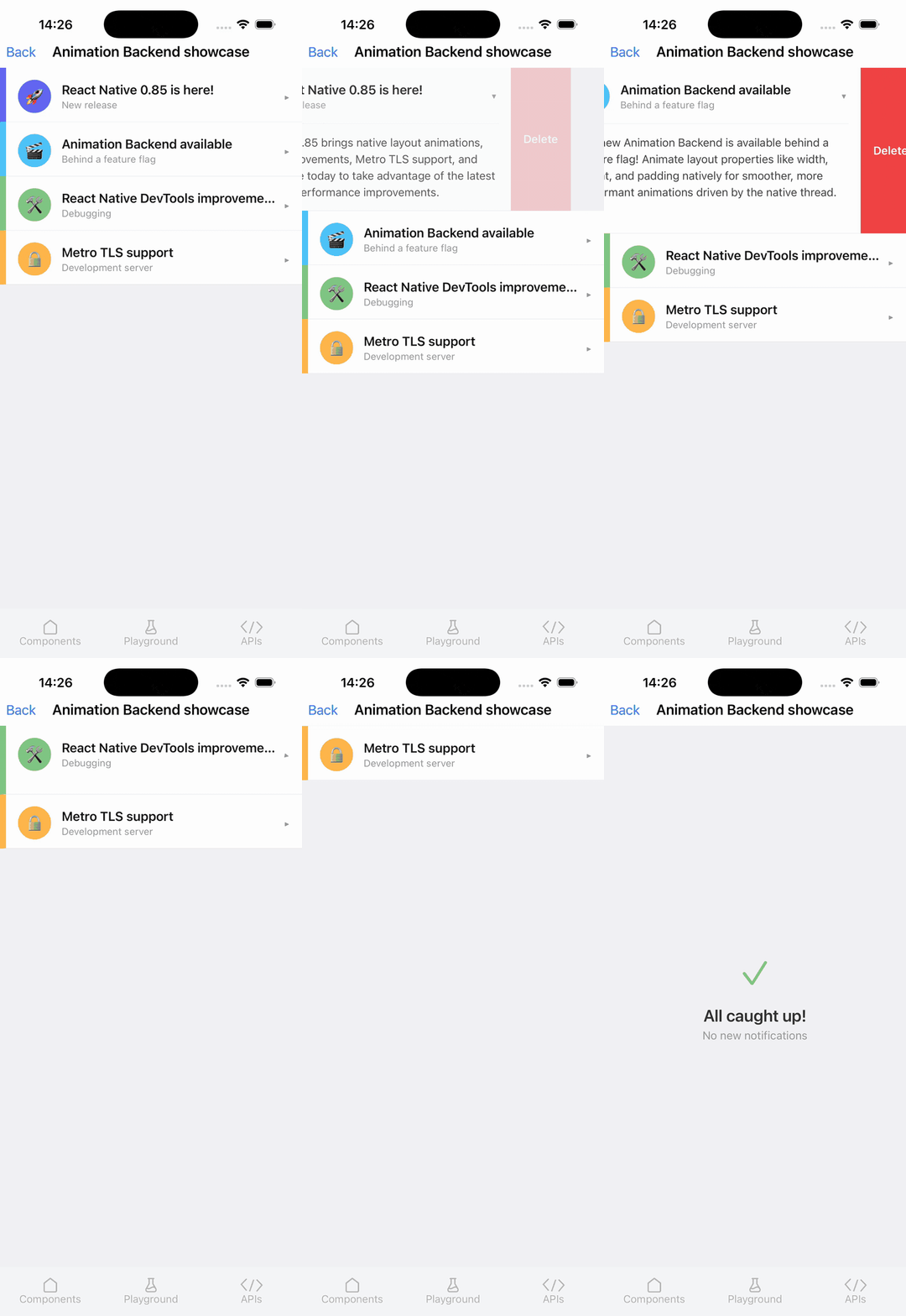
Animation tooling receives a major boost with the stabilization of DeferredTransition and the introduction of CapturedAnimatedVisibility. Traditional visibility animations often required retaining exiting content states until animations completed, occasionally leading to UI flickering or crashes when underlying data became null. CapturedAnimatedVisibility solves this by capturing a snapshot of the final frame the moment visibility becomes false, allowing developers to clear underlying states immediately while maintaining a smooth, 7-to-8-percent faster exit animation.
Ecosystem Expansion: Web Interoperability and A2UI Renderers
Addressing long-standing interoperability challenges, the November 2026 release introduces a
new alpha Compose Web library (androidx.web:web:1.0.0-alpha01). Designed to streamline WebView migration, this library eliminates legacy scroll stutter and state loss issues associated with embedding web content via AndroidView.
Furthermore, the release introduces the Jetpack Compose A2UI renderer (androidx.compose.material3:material3-a2ui), implementing the open Agent-to-UI protocol. This component empowers runtime large language models (LLMs) to generate rich, interactive user interfaces that render natively as Compose components without executing arbitrary code, marking a significant step forward in AI-driven application architecture.
Industry Implications and Future Outlook
The stabilization of Jetpack Compose 1.13 and Material 3 1.5.0 marks a definitive turning point for Android application development. By aggressively deprecating legacy patterns—ranging from Material 2 and ConstraintLayout to value-based text fields—Google is guiding the developer community toward a unified, high-performance, and type-safe UI architecture.
The emphasis on advanced graphics primitives like progressive blur and polygon morphing demonstrates that Compose is no longer merely playing catch-up with traditional views, but actively pioneering new possibilities for mobile and cross-device design. As organizations update their BOM mappings to version 2026.11.01 and adopt modern workflows, the Android ecosystem is well-equipped to deliver more fluid, responsive, and visually striking applications across phones, foldables, and desktops alike.