React Native 0.85 Officially Released Featuring New Animation Backend and Enhanced Developer Tooling

The release of React Native 0.85 marks a significant milestone in the evolution of the cross-platform mobile development framework, introducing architectural refinements aimed at improving performance, security, and long-term maintainability. Developed by Meta in collaboration with a broad community of contributors, this version represents a shift toward deeper integration of animation logic within the core framework, alongside critical updates to developer tooling and dependency management. The release includes over 604 commits from 58 contributors, underscoring the ongoing maturity of the ecosystem as it transitions away from older, legacy dependencies.
The Evolution of the Animation Engine
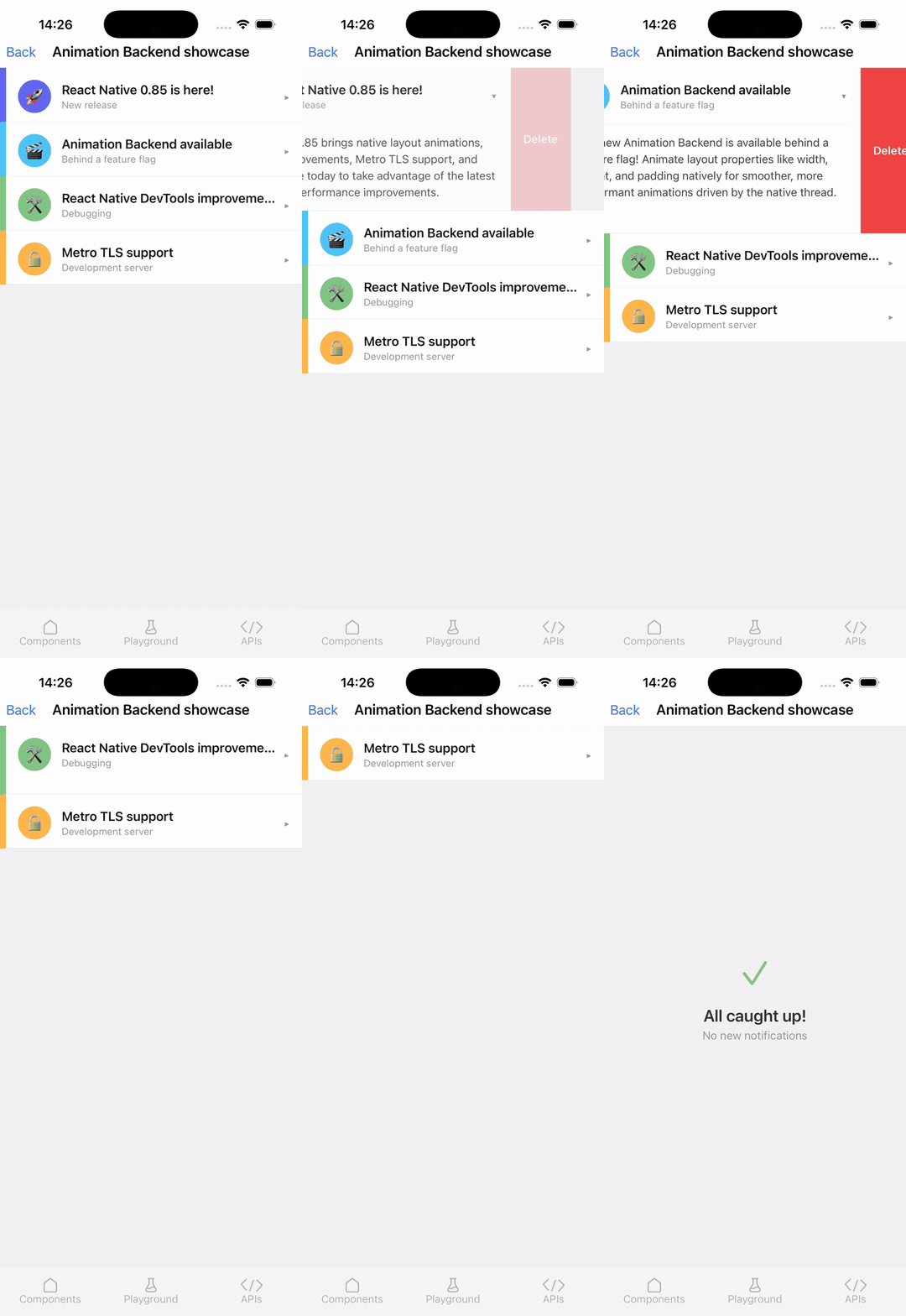
Central to this release is the introduction of the new Shared Animation Backend, a structural overhaul engineered in partnership with Software Mansion. Historically, animation performance in React Native has been bifurcated between the standard Animated library and the third-party Reanimated library. By migrating the core animation reconciliation logic directly into the React Native core, the new backend creates a unified engine that stabilizes how animations are processed under the hood.
This transition addresses long-standing limitations regarding layout prop animation. Previously, animating properties like Flexbox and position via the native driver was constrained, often forcing developers to choose between performance and visual complexity. With the 0.85 implementation, these constraints are effectively removed, allowing for high-performance layout transitions that run natively without the overhead of the JavaScript-to-bridge communication bottleneck. This development is particularly significant for complex user interfaces where layout shifts—such as expanding menus or accordion lists—previously suffered from frame drops or synchronization issues.
The integration is designed to be future-proof, ensuring that Reanimated remains compatible with upcoming React Native versions. This move toward core-level animation support reflects a broader industry trend of moving critical performance logic closer to the hardware layer, minimizing reliance on high-frequency communication between the JavaScript thread and the native UI thread.
Enhancements to Developer Experience and Security
Beyond architectural changes, React Native 0.85 places a strong emphasis on the security of the development environment. The update introduces native TLS (Transport Layer Security) support for the Metro bundler. Previously, configuring secure connections for local development environments—a requirement for testing modern APIs that mandate HTTPS—required complex workarounds or third-party proxy solutions.
By allowing developers to pass a TLS configuration object directly within the metro.config.js file, the framework now facilitates the use of locally-trusted certificates, such as those generated via the mkcert utility. This allows for seamless development and testing of features like WebSockets (WSS) and secure API calls, aligning the local development loop more closely with production-grade security standards.
The update also brings improvements to React Native DevTools. By optimizing the interface and enhancing native tab integration, particularly on macOS, the development team has aimed to reduce the friction associated with debugging complex state trees and layout hierarchies. These tools remain essential for the growing number of enterprise-scale applications that rely on React Native to manage thousands of components across multiple platforms.
Strategic Shifts in Dependency Management
In an effort to reduce the bloat of the primary package and provide better modularity, the core team has extracted the Jest testing preset into a standalone package: @react-native/jest-preset. This architectural decision follows a pattern of "unbundling" the framework, allowing projects to update their testing suites independently of the core React Native version. While this requires a minor configuration change—updating the jest.config.js file—the long-term benefit is a lighter core footprint and increased flexibility for teams using custom testing configurations.

Concurrent with this modularization, the framework has formally dropped support for end-of-life (EOL) Node.js versions. React Native 0.85 now requires a minimum of Node.js v20.19.4. This decision is driven by the necessity to maintain compatibility with modern security patches and language features provided by recent Node.js LTS (Long Term Support) releases. By enforcing a higher baseline, the core team aims to mitigate vulnerabilities associated with outdated runtime environments.
Chronology and Lifecycle Context
The release of version 0.85 follows a predictable but rigorous release cadence. With this launch, version 0.82.x has reached its end of support, necessitating that active projects begin the migration process to maintain security compliance. The framework’s support policy is designed to ensure that developers are never more than a few iterations behind the latest stable release, balancing the need for rapid innovation with the stability required by large-scale commercial applications.
For teams managing legacy codebases, the transition to 0.85 involves more than just a version bump. The removal of deprecated APIs, such as StyleSheet.absoluteFillObject, serves as a final push to clean up technical debt within the ecosystem. While the removal of such utilities may cause breaking changes in older projects, it reflects the project’s commitment to a cleaner, more predictable API surface.
Industry Implications and Future Outlook
The shift toward a unified animation backend and the focus on secure, modular tooling indicate that React Native is prioritizing stability for enterprise adoption. In an industry where performance is often the deciding factor between native and cross-platform solutions, the ability to achieve fluid, 60-fps layout animations using native drivers is a significant competitive advantage.
Analysts suggest that these changes represent the "polishing phase" of the React Native New Architecture. With the core infrastructure largely stabilized, the focus has shifted toward refining the developer experience and ensuring that the framework can be easily integrated into high-security, high-performance environments. The collaboration with Software Mansion and the emphasis on open-source community contributions highlight a decentralized but coordinated development model that allows the framework to scale alongside the needs of its users.
For those using the Expo platform, the upcoming SDK 56 will incorporate these changes, providing a streamlined path for developers to access the benefits of 0.85 without manual configuration overhead. This continues the trend of abstraction, where the complexity of framework maintenance is increasingly handled by the underlying platform provider, allowing product teams to focus on feature development.
Conclusion and Best Practices for Upgrading
As React Native 0.85 becomes the new stable standard, the core team encourages developers to utilize the React Native Upgrade Helper, an essential tool for identifying the delta between versions. The transition to the new Jest preset and the updated Node.js requirements should be prioritized to avoid build-time errors.
The successful delivery of this release, characterized by a massive volume of community-driven commits, serves as a testament to the health of the React Native ecosystem. By addressing technical debt and providing native-level performance enhancements, version 0.85 positions the framework to remain a dominant force in mobile development for the foreseeable future. The focus now turns to the upcoming 0.85.1 release, which will officially enable the experimental animation backend for broader adoption, providing a further boost to the visual fidelity of React Native applications. As the industry moves toward more complex, data-heavy mobile interfaces, the optimizations introduced in this version provide the necessary foundation for the next generation of mobile software.
Related posts: