Google Unveils Advanced Android Intelligence System and Agentic AI Tools to Redefined Cross-App User Experiences

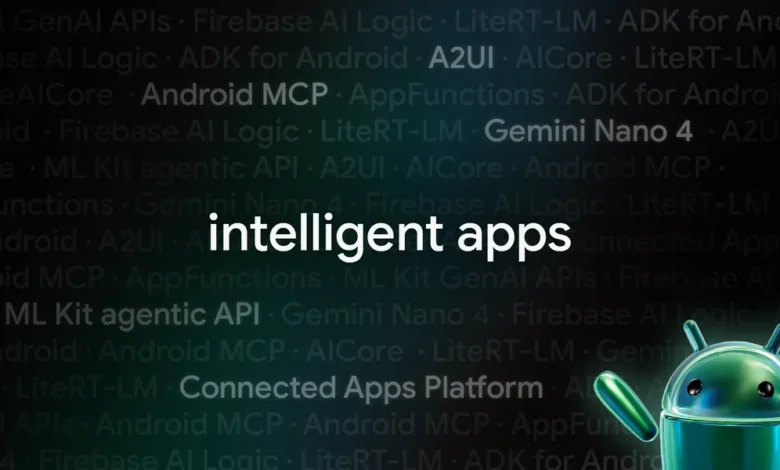
The landscape of mobile computing is undergoing a profound paradigm shift, transitioning from rigid app-based navigation to fluid, intent-driven interactions powered by artificial intelligence. Modern users increasingly expect to express high-level, multi-step goals—such as booking a complex travel itinerary or coordinating schedules across disparate software programs—and rely on on-device AI agents to orchestrate the workflow seamlessly. Addressing this evolution, Google has officially introduced a comprehensive suite of developer tools, APIs, and architectural frameworks designed to integrate intelligent, agentic capabilities deeply into the Android ecosystem.
Unveiled during major developer showcases, these new resources empower software engineers to connect their applications directly with the Android intelligence system, bridge local device functions with advanced cloud models, and project dynamic user interfaces on demand. By lowering the barrier to entry for agentic design, Google aims to standardize how artificial intelligence operates across smartphones, wearables, extended reality (XR) glasses, televisions, and connected automobiles.
The Architectural Foundation: Connecting Apps with the Android Intelligence System
At the heart of Google’s latest developer initiative is the Android intelligence system, a foundational architecture engineered to balance powerful automated assistance with robust user privacy and data protection. As mobile users demand more proactive support—ranging from contextual reminders to autonomous task execution—developers require standardized mechanisms to expose their app functionalities safely to AI models like Gemini.
To achieve this, Google has embraced open industry standards, most notably the Model Context Protocol (MCP). Android MCP, underpinned by the new AppFunctions Jetpack library, serves as a unified, native tool-calling framework for the Android operating system. This framework allows AI agents running locally on a device to interact securely with application features without compromising sensitive user data.
When designing architectures for modern AI integrations, developers traditionally weigh the benefits of local versus cloud processing. Google’s hybrid approach addresses this by positioning Android MCP as the premier native solution for use cases involving end-to-end encryption, sensitive local device storage, physical hardware and sensor integration, or offline execution where server endpoints are unavailable. Conversely, remote MCP servers provide broader, cross-platform reach for cloud-centric operations. Developers can now implement remote MCP, Android MCP, or a strategic combination of both, tailoring the connectivity layer to the specific privacy and performance requirements of their application journeys.
Bringing Intelligence In-House: On-Device Agents and the ML Kit GenAI Expansion
As silicon capabilities advance, on-device machine learning is taking on heavier computational loads. With the introduction of Gemini Nano version 4, Google is significantly expanding its ML Kit Generative AI APIs, allowing developers to construct fully realized agentic workflows directly on local hardware.
The integration relies on two primary pillars: direct model access via the Prompt API and the newly introduced Agentic API. While direct model access gives developers granular control over prompt engineering and inference parameters, the Agentic API provides a turnkey orchestration layer. This specialized API automatically executes requested functions, maintains secure conversation histories, manages the iterative agent loop, and enforces built-in safety guardrails. To demonstrate these capabilities in a practical environment, Google has published the "Jetpacker" code sample on GitHub, offering a blueprint for developers seeking to embed localized agentic loops into their mobile software.
Complementing on-device intelligence, workflows that necessitate heavier computation can leverage Firebase AI Logic. This service acts as a seamless bridge between local and cloud processing, enabling applications to harness advanced cloud models such as Gemini 4 while seamlessly falling back to Gemini Nano for offline or low-latency tasks. To safeguard production environments against abuse and unexpected financial overhead, Firebase integrates security measures such as App Check, server prompt templates, and customizable spend caps.
Perhaps one of the most visually striking advancements in on-device AI presentation is the introduction of the Jetpack Compose A2UI renderer, currently available in alpha. Featured prominently during live keynote demonstrations via a functional booking assistant, A2UI allows AI agents to dynamically generate and stream rich, interactive native user interfaces directly from a lightweight JSON protocol. Rather than relying on static screens or text-based chat responses, agents can literally "speak UI," constructing bespoke interfaces on the fly to match the immediate intent of the user.
Expanding Reach: The Connected Apps Platform and Gemini Search Integration
Beyond individual device interactions, consumer behavior across Google surfaces is pivoting rapidly from passive information retrieval to active task execution. Users no longer simply search for services; they expect to initiate and complete transactions directly from search results and conversational interfaces.
To capitalize on this shift, Google has launched the Connected Apps Platform. This infrastructure bridges the gap between high-intent consumers and third-party software, marrying the local execution power of Android MCP with the cross-platform scale of remote MCP servers.
Initial testing of the platform is being facilitated through Gemini Apps Developer Mode, allowing developers to prototype and validate their integrations locally. For production deployment, Google has opened a preview waitlist. Initially, capacity is restricted to a curated selection of production-ready applications across supported categories, with broader, self-service access scheduled to roll out in subsequent phases. This phased rollout ensures stability, security, and high fidelity as the ecosystem scales to accommodate millions of daily interactions.
Strategic Implications for the Mobile Software Industry
The comprehensive toolchain announced by Google signals a definitive turning point for mobile application development. For over a decade, the standard design pattern dictated that human users manually navigate hierarchical user interfaces, tapping through menus and inputting data field by field. The rise of agentic architectures flips this model upside down, transforming software applications from static destinations into modular, callable tools designed for consumption by artificial intelligence.
For enterprises and independent developers alike, adopting frameworks like Android MCP and ML Kit’s Agentic API is no longer an experimental luxury, but a strategic imperative. Applications that fail to expose structured, machine-readable functions risk becoming invisible in an ecosystem where AI assistants increasingly intermediate user intent. Conversely, early adopters who integrate tools like the Jetpack Compose A2UI renderer and the Connected Apps Platform stand to capture significant user engagement by offering frictionless, zero-click transactional pathways.
Roadmap and Next Steps for Developers
Google’s extensive release cycle provides a clear, actionable roadmap for engineering teams eager to embrace the intelligence era. Developers can begin by prototyping on-device agents using the latest ML Kit GenAI workflows, pairing them with direct model access and Android device skills. For teams testing preview models, participation in the AIcore Developer Preview program is strongly encouraged to ensure optimal compatibility.
Furthermore, running custom machine learning models can be streamlined using LiteRT within Google Play Services, while cloud-based inference can be established immediately via Firebase AI Logic. Prototyping native device integrations requires implementing Android MCP through the AppFunctions skill and sample agent framework. Finally, developers seeking broad visibility across Google’s search and conversational surfaces should apply for the Connected Apps Platform developer preview.
As the boundaries between operating systems, cloud infrastructure, and artificial intelligence continue to blur, Google’s latest developer offerings provide the necessary scaffolding to build the next generation of intelligent, responsive, and deeply integrated mobile applications.