AWS Lambda now supports GPU instances for Event Functions on Lambda Managed Instances | Amazon Web Services

The Evolution of Serverless Compute
For years, developers have faced a binary choice when deploying machine learning models: sacrifice agility by building and maintaining custom GPU clusters, or compromise on performance by relying solely on CPU-bound serverless functions. The traditional "serverless" model—characterized by its ability to scale to zero and handle sporadic traffic—was historically ill-suited for the memory and throughput demands of modern GPUs.
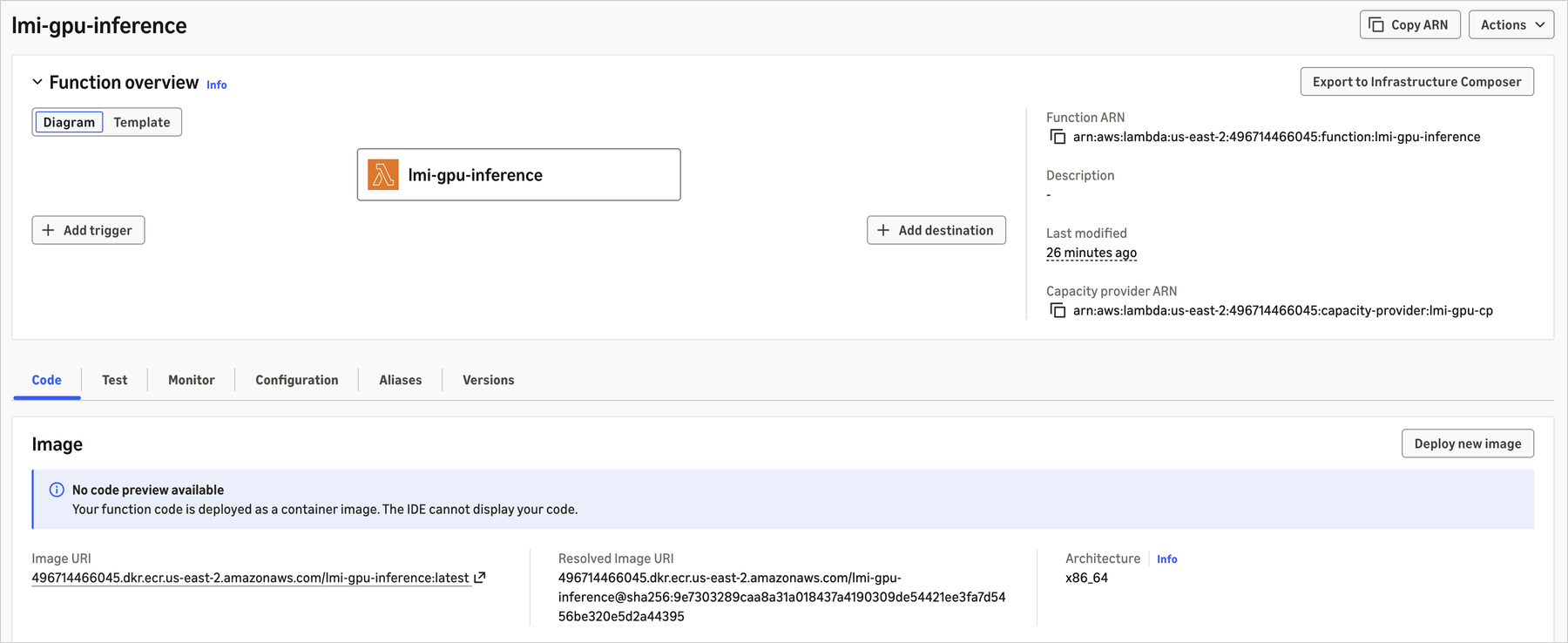
The introduction of GPU support for Lambda Managed Instances (LMI) fundamentally alters this dynamic. By allowing developers to deploy OCI-compliant container images directly to G-series GPU instances, AWS has eliminated the need for manual orchestration tasks. Users are no longer responsible for provisioning EC2 instances, configuring CUDA driver versions, or reconciling library dependencies. Instead, the Lambda service handles the underlying plumbing, including scaling, networking, and event integration, effectively treating GPUs as a native, elastic resource.
Eliminating the Operational Overhead
One of the most significant pain points in modern cloud architecture has been the "manual management" of specialized hardware. Traditionally, deploying a model for inference required a multi-step orchestration process: selecting the right instance type, installing the appropriate drivers and libraries, writing custom scaling logic to avoid over-provisioning, and manually stitching together event sources.
With this new capability, the deployment process is reduced to a container-based workflow. Developers package their inference environment—which can utilize pre-configured base images for vLLM, PyTorch, or SGLang—and define the function parameters. Lambda then manages the provisioning of G4dn, G5, G6, G6e, and other G-series instances. Because these functions operate within the existing Lambda programming model, they can be triggered by any of the 200+ native AWS event sources, including Amazon S3, SQS, and API Gateway. This integration is seamless, allowing developers to build sophisticated pipelines where an S3 upload triggers an automated media transcoding or image recognition task without the developer ever provisioning an explicit compute cluster.
Addressing the Utilization Paradox
A core motivation behind this shift is the economic inefficiency of dedicated GPU hardware. Historically, GPU-based inference was often relegated to large, always-on clusters. If the incoming request volume was low, the GPU remained idle, yet the user continued to pay for the full capacity of the underlying instance.

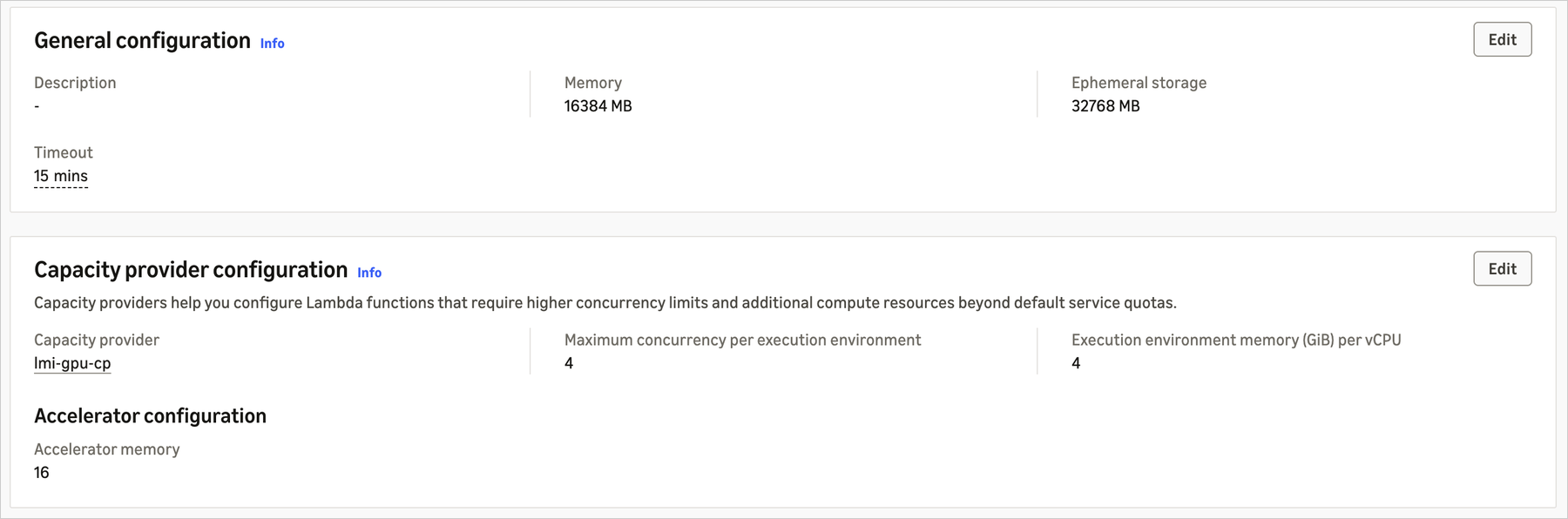
The new serverless implementation addresses this "utilization paradox" in two ways. First, Lambda’s concurrency management allows for multiple requests to be processed by a single execution environment. By leveraging per-environment concurrency settings, organizations can pack more inference requests onto a single GPU, significantly increasing throughput per dollar spent. Second, because these functions scale according to actual demand, organizations are billed only for the compute time utilized, rather than for the persistent overhead of a running cluster. This is particularly advantageous for businesses running intermittent AI tasks, such as real-time document summarization, object detection, or batch media processing.
Technical Specifications and Performance
The integration supports robust hardware configurations. Functions can leverage up to 32 GB of ephemeral storage and support container images up to 32 GB in size. Crucially, the implementation utilizes Seekable OCI (SOCI) lazy loading, which allows a function to begin executing before the entire container image has been fully downloaded. This capability can reduce cold-start times by as much as 70%, a critical factor for latency-sensitive applications.
The runtime environment also supports extended timeouts of up to 90 minutes for asynchronous and event-source-mapped invocations. This extension is a major upgrade from the standard 15-minute Lambda limit, enabling the execution of complex, multi-step inference jobs that require significant time to process, such as high-resolution video transcoding or long-form document analysis.
Chronology and Deployment Strategy
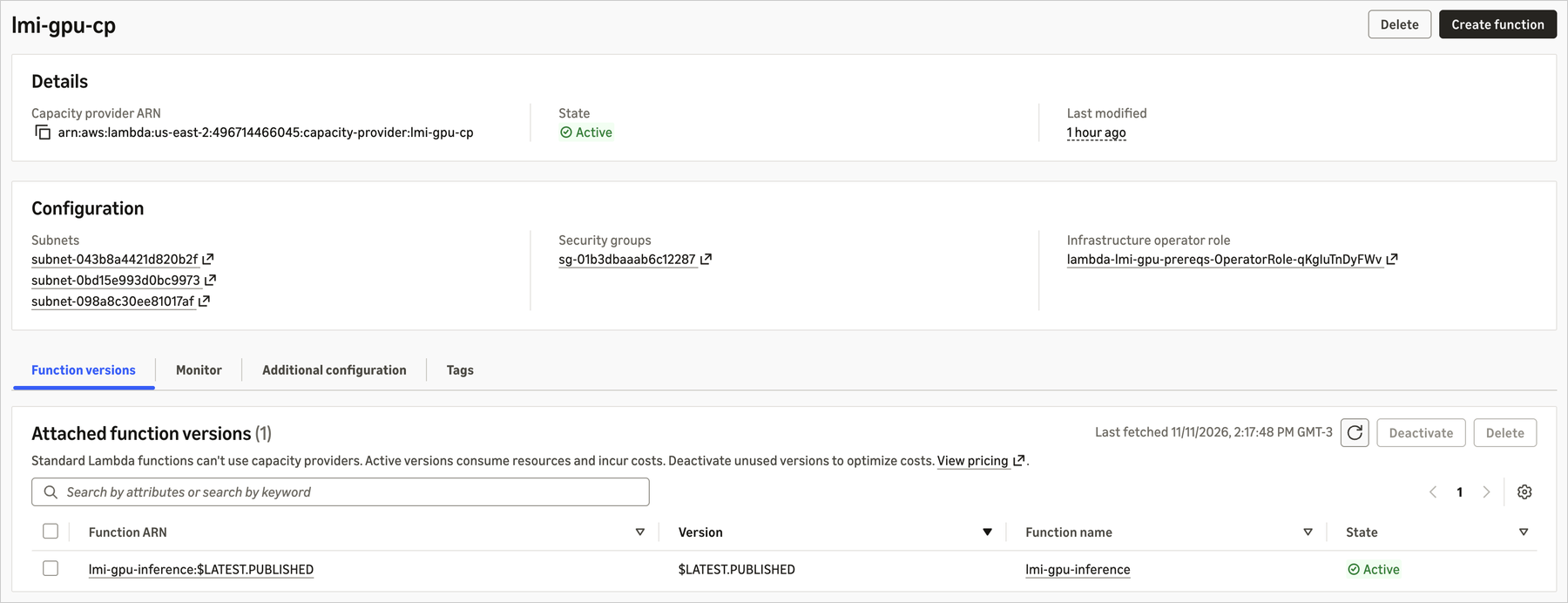
The rollout follows a period of intense industry demand for "serverless AI." For early adopters, the deployment workflow follows a predictable, code-first path. A typical lifecycle begins with the creation of a capacity provider, which specifies the instance types and scaling constraints. Next, the developer builds a container image—often using a pre-configured vLLM base image—and pushes it to Amazon Elastic Container Registry (ECR).
Once the function is created, the user specifies the model path (such as an S3 bucket or a Hugging Face repository) and configures the memory and accelerator requirements. Upon publishing a version, Lambda manages the model’s "warm-up" phase, ensuring that the engine is ready to handle traffic. During this phase, the system optimizes GPU memory allocation, allowing for concurrent requests to share model weights, thereby minimizing the memory footprint and accelerating response times.
Market Implications and Strategic Impact
This move is widely viewed as a direct challenge to the high barrier to entry for AI deployment. By lowering the "ops-tax" associated with GPU management, AWS is enabling smaller development teams to deploy high-performance models that were previously out of reach due to infrastructure complexity.
Industry analysts note that this capability positions AWS to capture a larger share of the "inference-at-the-edge" market. While large-scale training of foundation models typically requires dedicated, long-running clusters, the vast majority of enterprise AI use cases—such as RAG (Retrieval-Augmented Generation) pipelines, customer support chatbots, and personalized content generation—are inference-heavy. By making these workloads serverless, AWS is moving the industry toward a state where AI capabilities are treated as a commodity component of a standard application stack, rather than an infrastructure project in their own right.
Integration with the Broader Ecosystem
The new GPU-enabled functions are designed to work in concert with other AWS services, such as Lambda Durable Functions, which handle the orchestration of long-running workflows. In an agentic architecture, for example, a CPU-based Lambda function might handle the logic of tool-calling and decision-making, while the GPU-accelerated function handles the heavy lifting of the model inference.
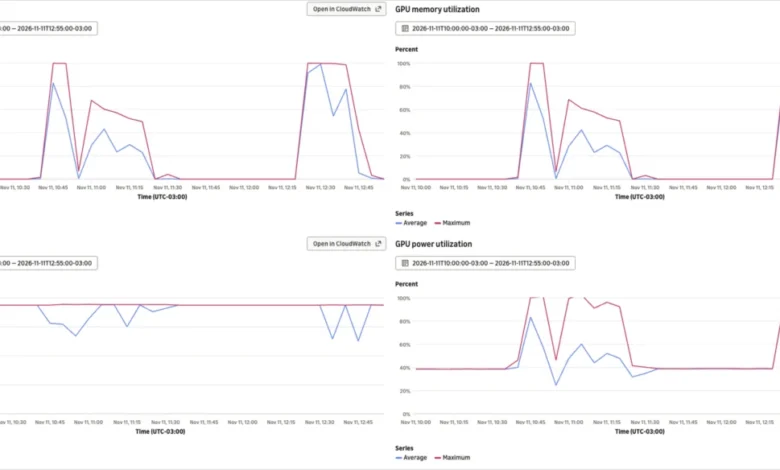
Furthermore, the monitoring stack is fully integrated. Metrics for GPU utilization, memory usage, and power consumption are automatically reported to Amazon CloudWatch, allowing developers to debug performance bottlenecks with the same tools they use for standard code. This transparency is vital for cost-control, as it allows operators to identify which models are underutilizing their allocated GPU resources and adjust their concurrency settings accordingly.
Future Outlook
As of the current launch, the service supports the G-series instance family, with plans for further expansion to other GPU-accelerated architectures. The pricing model—a combination of the underlying EC2 instance fee plus a 9.75% management fee—provides a predictable cost structure that is compatible with existing Savings Plans and Reserved Instances.
This development serves as a milestone in the trajectory of cloud-native computing. By folding GPU compute into the serverless paradigm, AWS has removed one of the last remaining hurdles to widespread, efficient, and scalable AI adoption. For developers, the message is clear: the infrastructure complexity that once defined high-end machine learning is rapidly becoming a managed service, allowing teams to focus on model logic and application utility rather than the intricacies of CUDA kernels and driver maintenance. As more organizations integrate these tools into their CI/CD pipelines, the speed at which AI-enabled features reach production is expected to accelerate significantly.