Google Unveils Major Android XR Milestones and Launches Stable Production Tools at the Android Developer Summit

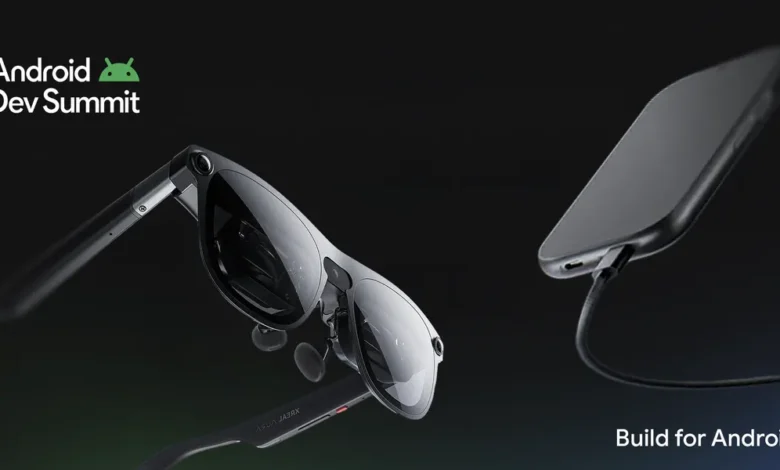
The intersection of augmented reality, spatial computing, and mainstream mobile architecture reached a significant threshold during the recent Android Developer Summit. Google officially announced the stabilization of its core Jetpack XR libraries, introduced production-grade developer tooling for major real-time 3D engines, and highlighted the debut of the XREAL AURA—the market’s first wired extended reality (XR) glasses powered by the Android XR platform. This sweeping set of releases marks a critical shift for the mobile ecosystem, moving spatial computing from experimental developer previews into a robust, scalable commercial reality.
For years, spatial computing and augmented reality development faced severe fragmentation, forcing developers to build proprietary applications for siloed hardware ecosystems. By establishing a shared Android foundation, Google aims to unify this landscape. Applications built for traditional Android environments can now function out of the box on day-one hardware like the XREAL AURA, providing developers with an immediate launchpad to transition from standard two-dimensional interfaces to fully immersive spatial interactions.
The Chronology of Android XR Evolution
The path to the Android Developer Summit announcements has been carefully calibrated over several years. Google’s initial forlays into virtual and augmented reality—such as Cardboard and Daydream—laid early groundwork but ultimately struggled with consumer adoption due to hardware limitations and a lack of unified software support. Recognizing the need for a comprehensive, long-term architecture, Google pivoted toward spatial computing with the development of Android XR.
In late 2023 and throughout 2024, the tech giant began distributing early preview SDKs to select development partners, testing foundational concepts like ARCore integration and Jetpack scene management. The subsequent rollout of device emulators inside Android Studio allowed engineers to test spatial layouts without needing physical headsets. The culmination of this multi-year engineering effort arrived at the Android Developer Summit, where core libraries graduated from experimental previews to stable, production-ready status, backed by hardware partnerships that bring lightweight smart glasses to consumers.
Hardware Integration and the XREAL AURA Launch
At the center of the hardware announcements is the XREAL AURA, a pair of wired XR glasses weighing under 95 grams. Designed for all-day comfort and lightweight portability, the device relies on a dedicated compute puck while leveraging Android XR’s underlying architecture. Because the glasses run on a shared Android base, developers do not need to rewrite their existing applications from scratch. Instead, standard mobile software displays natively on day one, allowing engineering teams to progressively layer in custom 3D elements, spatial audio, and context-aware UI designs.
Industry analysts have noted that lightweight, glasses-form-factor devices represent the most viable path toward mass consumer adoption of spatial computing. Bulky, standalone headsets have historically faced resistance in professional and casual settings due to weight, thermal constraints, and social awkwardness. By partnering with hardware manufacturers like XREAL, Google is positioning Android XR as an operating system capable of scaling across diverse form factors—ranging from glanceable optical see-through glasses to fully immersive virtual environments.
Stabilizing Core Jetpack XR Foundations and Developer Tooling
To support this expanding hardware ecosystem, Google has elevated its core development stack to production stability. The transition of the Jetpack XR SDK libraries to a stable release means developers using Kotlin and Compose can now rely on long-term API stability and predictable performance metrics.
Key components of this stable release include Jetpack SceneCore, which allows developers to build and manipulate complex 3D scene graphs using native code. Additionally, ARCore for Jetpack XR provides robust environment perception, while the XR Runtime standardizes session management across various device specifications. To further lower the barrier to entry, Android Studio now includes stable XR emulators. These virtual devices enable developers to build, iterate, and visually validate spatial layouts directly from standard laptops, eliminating the immediate hardware acquisition barrier that often stifles niche software development.
Technical demonstrations at the summit highlighted how these APIs handle complex tasks, such as animating glTF models, manipulating subnodes, utilizing custom physically based rendering (PBR) materials at runtime, and generating real-time procedural 3D meshes natively in Kotlin.
Anchoring Digital Experiences to the Physical World
A central challenge in augmented and mixed reality is persistence—ensuring that digital objects remain fixed in specific physical locations across multiple user sessions. Google addressed this by stabilizing the Geospatial APIs within ARCore for Jetpack XR. By combining visual positioning services with local device perception, these APIs allow developers to anchor digital content to real-world coordinates with high precision.
For users wearing wired XR glasses like the XREAL AURA, this capability unlocks contextual, location-aware interactions. Optical see-through user interfaces, built using Jetpack Compose Glimmer, can display glanceable information tethered to specific physical landmarks. Meanwhile, teams utilizing third-party game engines can leverage Spatial Entities, Cloud Anchors, and Geospatial APIs to map physical spaces, persist 3D asset placements, and synchronize shared multi-user experiences across multiple devices. Early enterprise and gaming demonstrations, such as Contract XR’s puzzle-solving application Jigsaw Night, illustrate how multiple users can occupy the same physical room, manipulate shared virtual puzzle pieces, and collaborate seamlessly through lightweight eyewear.
Scaling Across Familiar 3D Engines
Recognizing that many developers already rely on established real-time rendering pipelines, Google introduced the Android XR Engine Hub. Now fully stable, the Engine Hub streamlines setup, configuration, and optimization workflows across major industry engines, including Unity, Godot, and Unreal Engine.
The Engine Hub simplifies project scaffolding by pre-configuring OpenXR extensions and validated project settings, drastically reducing the time required to initialize a spatial computing project. Furthermore, the platform delivers native profiling workflows. Developers can capture and inspect system traces, monitor thermal limits, and analyze frame budgets across CPU and GPU cores directly within their preferred engine interface.
This engine interoperability ensures that studios can port existing 3D titles to Android XR form factors with minimal friction. By embedding Godot and Unity as libraries inside native Jetpack Compose applications via OpenXR Spatial Containers, developers can blend traditional Android UI elements with high-performance 3D graphics.
Multimodal Interactions and On-Device Artificial Intelligence
As spatial computing converges with artificial intelligence, hardware design is increasingly moving toward multimodal interactions that blend visual displays with audio-first experiences. Google introduced several tools to assist developers in architecting these intelligent eyewear applications.
The integration of the ML Kit Gen AI Text-to-Speech API allows applications to generate natural-sounding voices powered by on-device AI. Coupled with new design guidelines for audio-first interfaces—including specialized sound cues known as Earcons—developers can guide users through complex augmented environments without overwhelming their visual field. Advanced implementations leverage Jetpack Projected, ML Kit, and on-device models like Gemini Nano to build hands-free, conversational applications capable of interpreting context and responding via spatial audio.
Fact-Based Analysis of Market Implications
Industry observers view Google’s latest Android XR rollouts as a calculated strategic maneuver to challenge competitors in the spatial computing market. While Apple established an early benchmark for high-end, high-cost spatial hardware with Vision Pro, and Meta dominated the consumer gaming space with Quest headsets, Google is taking a platform-agnostic approach.
By providing a stable, scalable operating system that accommodates everything from lightweight glasses to heavy headsets, and by integrating deeply with existing engines like Unity and Unreal, Google is attempting to replicate the foundational strategy that made standard Android the dominant mobile OS globally. Lowering development friction through stable emulators and familiar Kotlin tooling incentivizes independent developers and major studios alike to invest in the ecosystem.
Outlook and Next Steps for Developers
The release of stable Jetpack XR libraries, engine integration tools, and hardware availability through devices like the XREAL AURA signal that the Android XR ecosystem has matured past its exploratory phase. Software engineers and enterprise development teams now possess the necessary framework to deploy production-ready spatial applications.
Google has encouraged developers to update to the latest stable release of Android Studio, integrate the stable Jetpack XR dependencies, and explore the Android XR Engine Hub plugins. Comprehensive documentation, technical walkthroughs, and on-demand session recordings from the Android Developer Summit are currently accessible via the official Android XR Developer Site and associated video playlists, providing a clear roadmap for the future of spatial computing on Android.