AWS Weekly Roundup: Generative AI, Security Automation, and Infrastructure Evolution

The rapid integration of generative AI into traditional industries, alongside critical advancements in proactive cybersecurity and cloud infrastructure management, defines the latest wave of announcements from Amazon Web Services (AWS). From the agricultural heartlands of Brazil to the complex security landscapes of enterprise software, these developments signal a shift toward operational autonomy and linguistic accessibility. As the latency between software vulnerability disclosure and active exploitation shrinks to near-zero, AWS is positioning its ecosystem to handle both the user-experience demands of frontline workers and the defensive requirements of modern digital infrastructure.
Bridging the Digital Gap in Traditional Agribusiness
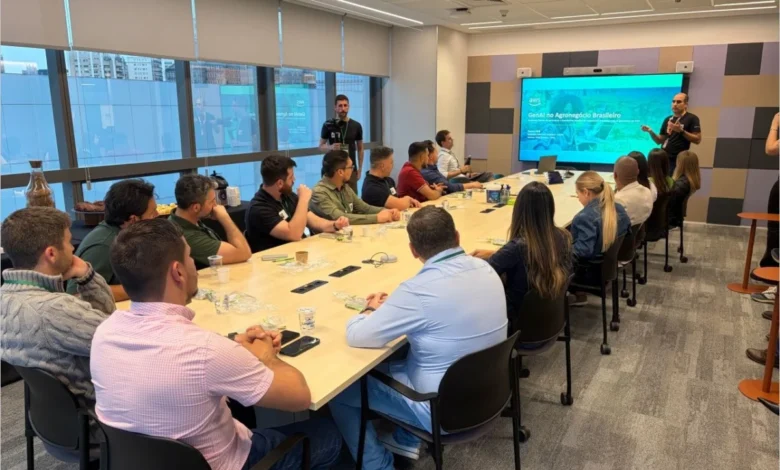
A recent presentation to technology leaders in the Brazilian agribusiness sector highlighted a pivotal shift in how generative AI is being deployed. The core challenge for the agricultural industry is not the viability of AI, but rather the interface of its application. For professionals operating heavy machinery in remote fields, traditional screen-based interfaces are often impractical. Consequently, the reliance on voice-based interaction is moving from a novelty to a necessity.
In direct response to this demand, AWS has upgraded the Amazon Polly Generative engine. The platform now includes 14 new voices across nine locales, most notably introducing Brazilian Portuguese options "Leo" and "Carolina." This expansion brings the total catalog to 57 voices across 11 languages. By integrating these more natural, expressive voices, AWS is enabling agricultural developers to build hands-free, voice-activated interfaces that facilitate real-time data access for workers in the field. This development serves as a prime example of how "traditional" markets are increasingly driving the technical requirements for advanced generative AI deployment.
The Shrinking Window of Vulnerability: AWS Continuum
The cybersecurity landscape has undergone a paradigm shift, underscored by evidence that the gap between a vulnerability’s discovery and its active exploitation has effectively vanished. Data from Amazon Threat Intelligence confirms this, citing a specific PHP2Shell exploitation attempt documented on October 17, 2026—four days before the official public disclosure of CVE-2026-109618 and CVE-2026-109619. By the time these vulnerabilities were disclosed on October 21, proof-of-concept exploits were already circulating twelve hours before the official embargo lift.
In response, AWS has launched AWS Continuum, a service designed to move vulnerability management from passive scanning to active, end-to-end remediation. Unlike traditional scanners that provide static lists of flaws, Continuum constructs a "context graph" of an organization’s repositories and AWS environment. It prioritizes findings based on their proximity to business-critical systems and provides isolated, sandboxed proof-of-concept code to verify exploitability. By ranking threats based on real-world risk rather than generic severity scores, Continuum aims to streamline the patch management lifecycle. While current remediations require human approval before a pull request is merged, the architecture allows for future, autonomous fix classes gated by high-confidence thresholds.
Decoupling Infrastructure and Application: Amazon ECS Gateway
Managing the intersection of networking and application logic has long been a source of friction for platform and developer teams. With the introduction of Amazon ECS Gateway, AWS is decoupling these responsibilities. Platform teams now manage the underlying network infrastructure—including subnets, security groups, TLS certificates, and AWS WAF web ACLs—at the gateway level. Meanwhile, application developers can independently "opt-in" by adding a gateway connector to their service definitions.
The economic implications of this architecture are significant for resource optimization. A single Application Load Balancer (ALB) can now support up to 25 services, with the gateway managing up to 10,000 clusters. By allowing for incremental adoption via the UpdateService command, teams can transition to this model without disrupting existing load balancers. This architectural shift reduces the operational burden on developers while maintaining centralized governance over network security.
Hardware Neutrality and AI Model Customization
AWS continues to expand its AI hardware and software ecosystem, most notably with the public beta release of TorchNeuron. This open-source PyTorch backend allows developers to execute models on AWS Trainium instances by changing a single line of configuration (.to('neuron')) rather than rewriting code. This move toward hardware abstraction is intended to prevent "vendor lock-in," allowing developers to shift workloads between varied compute resources without significant re-engineering.
Complementing this is the evolution of Amazon SageMaker AI. The platform now offers training sessions that allow users to control the post-training loop—including custom loss functions and reward signals—without the complexity of managing GPU infrastructure. SageMaker handles the underlying distributed execution, fault recovery, and checkpointing, with pricing tied strictly to token processing. The integration of high-performing models such as Muse Glimmer, Qwen 3.8, and Ministral 3 underscores a commitment to model diversity and accessibility for enterprise users.
Advancements in Bedrock and Data Migration
The Amazon Bedrock service has also received a significant update with the introduction of native support for structured outputs for Anthropic Claude models. By ensuring schema-compliant JSON output, developers can bypass the error-prone processes of custom parsing and post-processing. This reliability is critical for high-stakes automation tasks, such as financial report analysis and clinical note parsing, where data integrity is paramount.
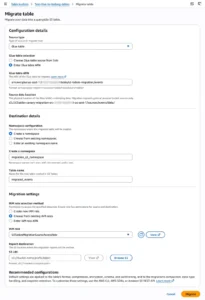
In the database management sphere, AWS has introduced zero-downtime online migration for Amazon ElastiCache Serverless. Organizations running self-managed Valkey or Redis OSS on Amazon EC2 can now transition to managed serverless environments without service interruption. This capability was recently validated in a massive-scale migration by U.S. Bank, which successfully moved 119 TB of data from Oracle Exadata to Amazon RDS for Oracle. The migration utilized a config-driven pipeline involving Oracle XTTS and AWS DataSync, resulting in a baseline copy completed in seven days with zero data loss and minimal cutover windows.

Expanding the Agentic Frontier
The rise of "agentic" workflows—systems where AI agents perform actions on behalf of users—has prompted the release of the AWS Agent Registry. This managed catalog allows orchestrators to discover, instantiate, and execute agent skills at runtime rather than hard-coding capabilities at build time. By querying the registry for available tools, agents can dynamically adapt to changing requirements.
Concurrent research into "tokenomics" for coding agents highlights the financial complexities of this new era. As coding assistants rely on re-processing growing transcripts of code, the cost structure deviates from traditional inference. AWS-backed research now provides open-source tooling for companies to benchmark the cost-to-quality ratio of various models and hosting strategies on their own codebases, providing a clearer view of the operational expense associated with autonomous development tools.
Looking Toward re:Invent 2026
As the industry prepares for AWS re:Invent, scheduled for November 30 to December 4 in Las Vegas, the focus remains on the rapid consolidation of these disparate services into unified, autonomous workflows. With over 2,200 sessions planned, the event is expected to further clarify how security-first architectures and AI-driven automation will redefine the enterprise cloud experience.
For the Brazilian agribusiness leaders and global enterprise architects alike, the trajectory is clear: the focus is shifting from "what can we build" to "how can we secure and scale it" in an environment where speed-to-market is measured in hours, and the interface of the future is as much about human-centric accessibility as it is about machine-centric efficiency. The successful integration of these tools—from Polly’s voice synthesis to Continuum’s proactive security—demonstrates that the next phase of cloud computing will be characterized by intelligence that is both deeply embedded and increasingly invisible to the end user.