Bengkulu, Indonesia – In an unprecedented move demonstrating a profound commitment to local economic development and social welfare, the Provincial Government of Bengkulu strategically leveraged the excitement of the FIFA World Cup 2026 Final viewing party by purchasing every single product offered by participating Micro, Small, and Medium Enterprises (UMKM). The massive public viewing event, held on Sunday, July 19th, in the bustling Simpang Lima area of Bengkulu City, transformed a global sporting spectacle into a powerful engine for local commerce and community solidarity. Thousands of these locally produced goods were subsequently distributed free of charge to the scores of citizens who gathered to witness the final showdown between Spain and Argentina, underscoring the provincial administration’s innovative approach to governance.
Governor Helmi Hasan articulated the dual objectives behind this initiative, emphasizing that such public gatherings transcend mere entertainment. "Momentum like this not only fosters a sense of togetherness but also effectively drives the regional economy through the activities of our UMKM actors," Governor Hasan stated in Bengkulu on Sunday. His remarks highlighted a deliberate strategy to integrate large-scale public events with tangible economic benefits for the local populace, particularly for the vital UMKM sector. The enthusiastic turnout of thousands of residents at Simpang Lima, transforming the iconic city intersection into a vibrant hub of shared passion, provided the perfect backdrop for this unique government intervention. The event successfully created a space for camaraderie, bringing together citizens from all walks of life in a shared celebration of sport and community spirit.
A Deep Dive into Economic Empowerment: The UMKM Lifeline
The decision to acquire all UMKM products at the viewing event is more than a philanthropic gesture; it is a calculated economic stimulus designed to provide immediate relief and long-term advantages to Bengkulu’s small businesses. Micro, Small, and Medium Enterprises are widely recognized as the backbone of Indonesia’s economy, contributing significantly to the Gross Domestic Product and absorbing a substantial portion of the workforce. In Bengkulu, as in many other regions, these enterprises often face formidable challenges, including limited access to capital, insufficient market exposure, intense competition, and difficulties in scaling up production or distribution networks.
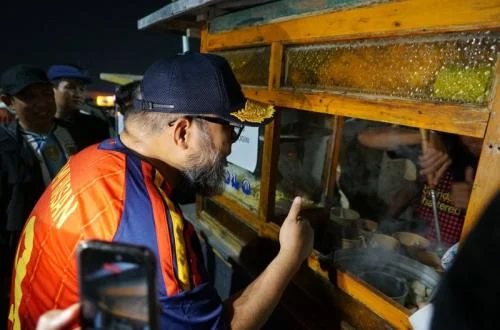
The provincial government’s direct procurement model at the World Cup final viewing directly addresses several of these critical issues. By purchasing all products, the government provided an instant cash injection to participating UMKM, alleviating immediate financial pressures and allowing them to reinvest in their businesses. This move eliminated the sales risk traditionally associated with public events, guaranteeing income for the entrepreneurs regardless of individual consumer purchasing power. Furthermore, the mass distribution of these products served as an unparalleled marketing campaign. Each item, whether a local snack, a handcrafted souvenir, or a traditional beverage, became a tangible advertisement for Bengkulu’s diverse entrepreneurial talent. For many UMKM, this represented their largest single transaction and most extensive product exposure to date, potentially opening doors to new customer bases and future orders.
Approximately 150 local UMKM, spanning various sectors from culinary delights like traditional cakes and packaged snacks to artisanal crafts such as woven goods, batik, and small decorative items, participated in the event. The estimated total value of the products purchased by the provincial government reportedly exceeded IDR 1.5 billion (approximately USD 95,000), a substantial sum that provided a significant boost to the local economy in a single day. This strategic investment underscores a proactive government policy aimed at fostering a robust and resilient local business ecosystem, moving beyond conventional subsidy models to create direct market opportunities.
The Grand Spectacle: A Chronology of Community Engagement
The success of the FIFA World Cup 2026 Final viewing party, intertwined with its economic development agenda, was the culmination of extensive planning and multi-agency collaboration.
Pre-Event Planning and Mobilization:
Weeks prior to the final match, the Bengkulu Provincial Government, under the guidance of Governor Helmi Hasan, initiated comprehensive planning. The vision was not merely to host a viewing party but to transform it into a major community and economic event. Key provincial agencies, including the Department of Cooperatives and UMKM, the Department of Trade, and the Department of Communication and Information, worked in concert to identify and register eligible UMKM. Criteria were established to ensure product quality, local origin, and variety. Simultaneously, a robust coordination team was formed, involving critical partners such as TVRI Bengkulu, RRI Bengkulu, LKBN ANTARA Biro Bengkulu, Telkomsel, PLN (the state electricity company), the Indonesian National Armed Forces (TNI), and the Indonesian National Police (Polri). This inter-agency synergy was crucial for managing the logistical complexities of a large-scale public gathering. Security protocols were meticulously planned, traffic management strategies for Simpang Lima were devised, and power supply assurances from PLN were secured to prevent any disruptions to the live broadcast. Public announcements via local media channels and social platforms actively encouraged both UMKM participation and public attendance, building anticipation for the grand event.
The Day Unfolds: July 19th, 2026:
As dawn broke on Sunday, July 19th, the Simpang Lima area began its transformation. UMKM vendors arrived early to set up their stalls, displaying their diverse array of products. The air was thick with the aroma of local delicacies and the palpable excitement of the impending match. Hours before kick-off, a festive atmosphere permeated the area, with local performers providing entertainment, further enhancing the community spirit.
A significant pre-match activity, highlighting the event’s social welfare dimension, involved the distribution of basic necessities (sembako) to hundreds of underprivileged families (kaum dhuafa). This act of charity, personally overseen by Governor Helmi Hasan, the Mayor of Bengkulu, and members of the Regional Leadership Communication Forum (Forkopimda), underscored the holistic approach of the provincial government – blending celebration with social responsibility.
As the crowd swelled to an estimated 25,000 people, transforming Simpang Lima into a sea of enthusiastic football fans, Governor Hasan made his pivotal announcement regarding the purchase of all UMKM products. The announcement was met with resounding applause from both the vendors, who expressed visible relief and gratitude, and the public, who cheered the government’s commitment to local businesses.
When the whistle blew, signaling the start of the FIFA World Cup 2026 Final between Spain and Argentina, the collective roar of the crowd reverberated through the city. Giant LED screens strategically placed around Simpang Lima ensured optimal viewing for everyone. The atmosphere was electric, a testament to the unifying power of sport. Following the match, which saw Spain emerge victorious after a thrilling contest, the festive mood continued with the distribution of door prizes to lucky attendees, further solidifying the sense of appreciation and participation. The event concluded smoothly, with security and public service personnel ensuring an orderly dispersal of the crowd.
Beyond Football: A Catalyst for Social Welfare
While the economic uplift for UMKM was a primary objective, the Bengkulu Provincial Government also ensured that the World Cup final viewing served as a platform for direct social assistance. The pre-match distribution of basic necessities packages (sembako) to hundreds of disadvantaged individuals was a powerful demonstration of the government’s commitment to inclusive development. These packages, typically containing essential food items like rice, cooking oil, sugar, and instant noodles, provided tangible support to vulnerable households. This initiative not only addressed immediate needs but also reinforced the government’s role as a protector and provider for its citizens, fostering goodwill and strengthening the social fabric of the community.
The inclusion of various door prizes, ranging from electronic gadgets to household appliances, added another layer of excitement and appreciation for the attendees. This small gesture served to acknowledge the public’s enthusiastic participation, making the event feel more interactive and rewarding for everyone involved. Such initiatives collectively contributed to a positive public perception of the government, showcasing a leadership that is both responsive to economic needs and empathetic to social welfare.
A Province United: Widespread Viewing Points and Collaboration
The grand viewing event at Simpang Lima was just one of many, reflecting a province-wide wave of enthusiasm for the FIFA World Cup. TVRI Bengkulu, the regional public television broadcaster, played a crucial role in facilitating this widespread engagement. According to Jusarman, Chairman of the Business Development Planning and Control Team and PIC for the "Bola Gembira" World Cup Viewing Registration at TVRI Bengkulu, more than 120 official viewing points were established across all regencies and cities in Bengkulu Province. This extensive network allowed communities in even remote areas to partake in the global spectacle, fostering a shared experience across geographical divides.
Jusarman noted a significant increase in public interest, particularly as the tournament approached its climax. He reported that during the semi-final matches, viewing locations facilitated by TVRI Bengkulu alone attracted over 1,000 spectators per site. This number was anticipated to surge for the final, a prediction that was borne out by the massive crowds observed at Simpang Lima and other locations. The success of this broad outreach was a direct result of robust collaboration. TVRI Bengkulu partnered with RRI Bengkulu (the national radio broadcaster), LKBN ANTARA Biro Bengkulu (the national news agency), Telkomsel (a major telecommunications provider), PLN, TNI, and Polri. This collective effort ensured not only the smooth technical broadcast but also comprehensive security, reliable power supply, and efficient information dissemination across the province. Data on all viewing locations was shared with the police and PLN to ensure adequate security presence and an uninterrupted power supply throughout the matches, highlighting the meticulous coordination behind such large-scale public events.
The FIFA World Cup 2026 Final viewing party in Bengkulu City was attended by a distinguished array of officials, including members of the Bengkulu Provincial Forkopimda, the Mayor of Bengkulu, heads of various provincial and city organizational units, and a diverse cross-section of society. Their presence underscored the event’s significance as a unifying platform, bringing together political leaders, administrative officials, and ordinary citizens in an atmosphere of peace, order, and collective joy.
Leadership Vision: Governor Helmi Hasan’s Perspective
Governor Helmi Hasan’s vision extends beyond mere event management; he sees public gatherings as strategic opportunities for holistic regional development. His statement, "Momentum like this not only fosters a sense of togetherness but also effectively drives the regional economy through the activities of our UMKM actors," encapsulates a governing philosophy that prioritizes inclusive growth. For Governor Hasan, the World Cup final was not just about football; it was about leveraging collective passion to create tangible benefits for the community. He consistently champions initiatives that empower local businesses, recognizing their crucial role in creating jobs and stimulating local economies.
His playful prediction for the final, favoring the Spanish national team, added a personal touch to his engagement, making him more relatable to the passionate crowd. This blend of statesmanship and approachability is characteristic of his leadership style, which seeks to connect directly with the aspirations and daily lives of Bengkulu’s citizens. The governor’s active participation in the pre-match activities, including the distribution of aid, further solidified his image as a leader deeply invested in the welfare of his people.
Voices from the Ground: UMKM and Community Reactions
The impact of the provincial government’s initiative resonated deeply with those directly affected. Ibu Siti Aminah, a purveyor of traditional Bengkulu snacks and handicrafts, expressed her profound gratitude. "This is truly unexpected and incredibly generous. Usually, we worry about whether our products will sell out at big events. But today, the government bought everything! This gives us so much hope and capital to continue our business. We feel truly supported." Her sentiment was echoed by many other UMKM vendors, who saw the initiative as a lifeline and a powerful endorsement of their hard work and products. The direct financial injection meant immediate relief and the capacity to restock or even expand their operations.
Community members also lauded the event and the government’s approach. Bapak Budi Santoso, a lifelong resident of Bengkulu who attended the viewing with his family, remarked, "It was an incredible night. The atmosphere was electric, and seeing so many people come together was wonderful. And then, to receive local products for free, and to know the government bought them from our own people – that’s something special. It shows our leaders truly care about us and our economy." The free distribution of products not only provided immediate utility to the recipients but also fostered a deeper appreciation for local goods, potentially converting casual recipients into future paying customers for the UMKM.
Economic Analysis: Short-Term Gains, Long-Term Potential
From an economic perspective, the Bengkulu Provincial Government’s intervention at the FIFA World Cup 2026 Final viewing party represents a textbook example of direct fiscal stimulus with significant social returns. In the short term, the immediate purchase of UMKM products provided a crucial liquidity injection into numerous small businesses. This cash flow enabled vendors to cover operational costs, pay their employees, and potentially purchase more raw materials, creating a micro-economic ripple effect within the local supply chain. The guaranteed sale also mitigated risk for entrepreneurs, encouraging participation and fostering a sense of security in an often volatile market.
Beyond the immediate financial transaction, the mass distribution of products offered invaluable brand exposure. Each item served as a free sample and a promotional tool, potentially generating future demand. Economists refer to this as a form of "demand-side intervention" combined with "supply-side support." While the government directly supported the supply (UMKM), the free distribution effectively stimulated future demand by introducing products to a wider audience. If even a fraction of the recipients become repeat customers, the long-term benefit to the UMKM could far outweigh the initial government expenditure. This model could also inspire other regions to explore similar, creative procurement strategies that directly benefit local economies through public events.
Shaping Bengkulu’s Future: Implications and Way Forward
The Bengkulu Provincial Government’s strategic use of the FIFA World Cup 2026 Final viewing party holds significant implications for future governance and development in the region. Firstly, it establishes a compelling precedent for leveraging major public events not just for celebration, but as integrated platforms for economic empowerment and social welfare. This innovative approach could serve as a blueprint for other provinces in Indonesia and beyond, demonstrating how creative public policy can yield multi-faceted benefits.
Secondly, the initiative significantly bolsters Bengkulu’s social capital. By bringing together diverse communities, providing aid to the vulnerable, and supporting local businesses, the government fostered a stronger sense of shared identity, collective pride, and mutual support. Such events contribute to building resilient communities capable of navigating challenges together.
Looking ahead, sustaining this momentum will be crucial. The provincial government could explore creating dedicated online and offline platforms for these UMKM to continue showcasing their products. Regular market facilitation events, business development training, and access to microfinance schemes could further solidify the gains made. The success of this World Cup initiative also highlights Bengkulu’s potential as a vibrant, community-oriented region, which could indirectly boost tourism and investment interest.
In conclusion, the FIFA World Cup 2026 Final viewing in Bengkulu transcended a mere sporting event. Through the visionary leadership of Governor Helmi Hasan and the collaborative efforts of multiple agencies, it transformed into a powerful demonstration of integrated governance, successfully weaving together economic stimulus, social welfare, and community engagement. The cheers for Spain’s victory were undoubtedly loud, but the lasting impact of Bengkulu’s commitment to its UMKM and its people will resonate far beyond the final whistle.
Related posts: