Human-Mouse Chimeric Brains: A New Frontier in Neural Engineering and Ethical Complexity

In a breakthrough that blurs the traditional boundaries of biological species, a team of neuroscientists at Stanford University has successfully engineered "xenocortical mice" by transplanting human neural tissue into rodents with specifically tailored brain deficiencies. The study, published today in the journal Nature, marks a significant escalation in the use of human brain organoids—small, three-dimensional clusters of neural cells—to study the fundamental mechanics of cognition, memory, and neurodevelopmental disorders. Led by neuroscientist Sergiu Pașca, the research provides a sophisticated new model for examining how human cells integrate and function within a foreign nervous system, while simultaneously igniting a critical conversation regarding the ethics of interspecies neural integration.
The Evolution of Neural Organoid Research
The path to this current milestone began several years ago, as researchers sought to overcome the limitations of studying human brain development in petri dishes. While organoids—often referred to as "mini-brains"—have provided invaluable insights into genetic diseases, they lack the complex environmental input and vascular support necessary to mimic a fully functioning, interactive neural system.
In 2022, Pașca’s laboratory achieved a foundational success by demonstrating that human cortical organoids could be successfully transplanted into the brains of newborn rats. Once implanted, these human cells not only survived but integrated into the host’s sensory-motor circuitry, responding to external stimuli such as whiskers being touched. That initial proof-of-concept study confirmed that human neural tissue possessed a remarkable capacity for neuroplasticity across the species barrier, adapting to the architecture of the rodent brain.
Building upon this, the current study introduces a more precise model. Rather than attempting to integrate human tissue into a fully developed rodent brain, researchers utilized genetic engineering to create mice that lack critical portions of the cortex and hippocampus. By essentially creating a "void" within the mouse brain, the scientists provided a blank canvas for the human organoids to occupy, grow, and wire into the existing nervous system.
Methodology and Behavioral Observations
The genetic modification of these mice serves as the lynchpin of the experiment. By preventing the normal development of the cortex and hippocampus, the researchers created a structural niche that encouraged the transplanted human stem cells to proliferate. According to Pașca, the human cells do not merely exist in a dormant state; they divide and expand over the course of several weeks and months, eventually occupying a significant portion of the vacated brain space.
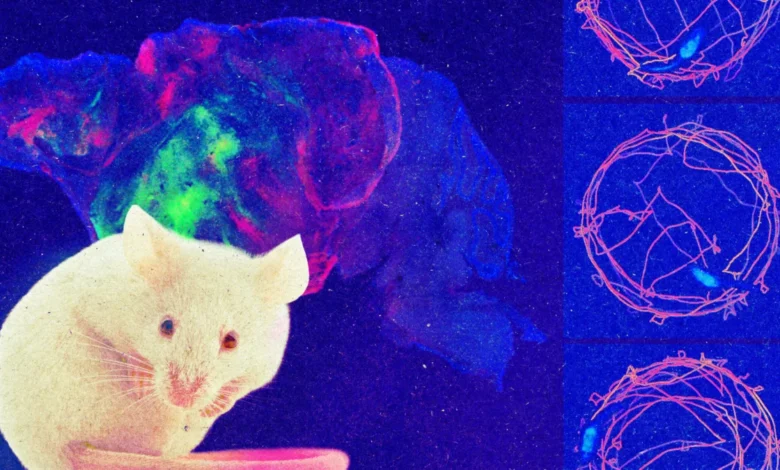
To evaluate the functional impact of this integration, the research team subjected the mice to standard behavioral assays, most notably maze navigation tests. The results were telling: mice that possessed the human neural grafts demonstrated superior memory retention and spatial navigation compared to their unmodified, brain-deficient counterparts. The control group, lacking essential neural tissue, exhibited notable cognitive deficits, failing to recall previously explored sectors of the maze. Conversely, the "xenocortical mice" showed a marked improvement, suggesting that the human tissue was not merely physically present but was actively contributing to the cognitive processes required to solve the maze.
Chronology of Neural Engineering Milestones
- 2013: The first reports of successful brain organoid development from human pluripotent stem cells are published, revolutionizing the study of brain development.
- 2022: The Pașca lab publishes findings in Nature showing that human cortical organoids can survive and functionally integrate into the brains of infant rats.
- 2023: Laboratory research begins exploring the potential for organoids to interface with digital systems, including basic machine-learning tasks and video game simulations.
- 2024: The current study introduces the "xenocortical" model, utilizing genetically deficient mice to provide a more receptive environment for human neural tissue growth.
- 2025: An international summit is convened to establish ethical guidelines regarding the oversight of human-animal neural chimeras.
Implications for Clinical Neurology
The primary objective of this research is not the enhancement of rodent intelligence, but rather the creation of a robust platform for drug discovery and the study of human-specific brain injuries. Neurodegenerative diseases such as Alzheimer’s, as well as complex psychiatric conditions like schizophrenia, have historically been difficult to study because animal models rarely capture the nuances of human neuronal pathology. By utilizing human cells in a living organism, researchers can observe how these cells react to treatments in a real-time, three-dimensional environment, potentially bypassing the current limitations of clinical trials.
The field of "organoid therapy" has already seen proposals for using these tissues as replacement parts to treat stroke victims or individuals with traumatic brain injuries. As scientists learn to better control the integration of these tissues, the possibility of using patient-specific stem cells to "patch" damaged areas of the human brain becomes a long-term, albeit distant, research goal.
The Ethical Red Lines
Despite the scientific promise, the research has invited intense scrutiny regarding the moral status of these chimeric organisms. The possibility that a non-human animal could, through the introduction of human tissue, acquire aspects of human consciousness or cognitive capacity is a primary concern for bioethicists.
Pașca himself has been at the forefront of this discourse, having convened a group of ethics experts last year to draft guidelines for the oversight of neural organoid technology. He acknowledges the "yuck factor" and the legitimate fear that "organoid therapy clinics" could emerge to prey on vulnerable patients with unproven and potentially dangerous treatments.
However, Pașca maintains that the current experimental model carries minimal risk of conferring human-like consciousness to the mice. The biological disparity between human and mouse neurons, coupled with the significant difference in brain volume, suggests that the human cells remain subservient to the host’s overall neural architecture.
"One of the things that I see as a very clear red line is doing this experiment in a primate," Pașca stated during the release of the report. The evolutionary distance between humans and monkeys is significantly smaller than that between humans and mice. A monkey with a substantial volume of functioning human neural tissue could, in theory, experience a significant shift in cognitive capacity or behavior, raising profound moral questions about the rights and status of such an animal. Consequently, the research community remains largely unified in the view that primate neural chimera experiments are currently unjustifiable.
Broader Impact and Future Outlook
The "xenocortical mouse" model represents a collision between rapid technological progress and the slower evolution of ethical consensus. As scientists like Carsten Charlesworth of Stanford have noted, the ability of human neural tissue to grow and form functional connections across a species barrier is, in itself, a historic scientific achievement. It forces a reassessment of the definition of individuality and the boundaries of species-specific cognition.
As the technology advances, the regulatory environment will likely need to shift from passive observation to active, standardized oversight. The challenge will be to maintain the balance between the pursuit of medical breakthroughs that could alleviate human suffering and the need to preserve the sanctity of the human cognitive experience. For now, the xenocortical mouse stands as a powerful, if provocative, testament to the ability of modern science to reshape the fundamental architecture of life. Whether this technology will one day provide the key to curing the most intractable diseases or remain a cautionary tale of biological overreach remains a question that the next decade of research will be tasked with answering.