AI-Powered Global Initiative Releases 3D Protein Structures for Over 2,800 Viruses to Supercharge Pandemic Preparedness

When the SARS-CoV-2 virus emerged and rapidly escalated into the COVID-19 global health crisis, the scientific community possessed a critical head start. Decades of foundational research on coronaviruses meant that researchers already understood the pathogen’s key proteins well enough to design life-saving vaccines in record-shattering timeframes. However, infectious disease experts and epidemiologists have long warned that the next global health emergency may not afford humanity a similar advantage. Unknown pathogens could emerge unexpectedly, leaving researchers scrambling to decipher novel molecular structures from scratch.
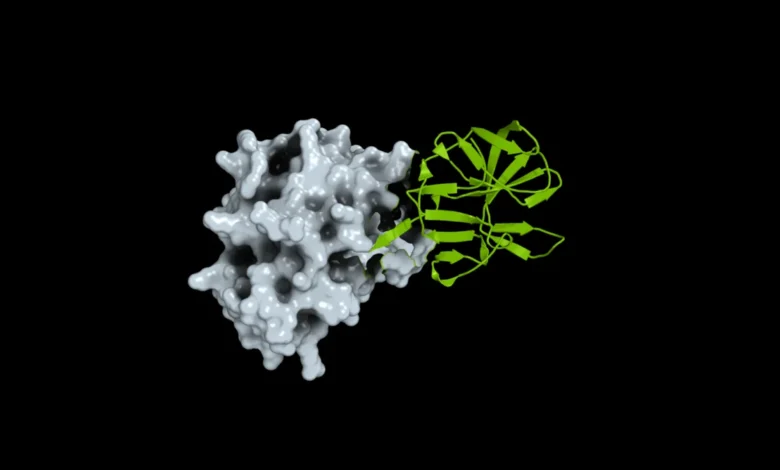
To fundamentally alter this paradigm and build a proactive defense shield against future biological threats, a formidable coalition of leading global research organizations has taken decisive action. Spearheaded by NVIDIA, Google DeepMind, and the European Molecular Biology Laboratory’s European Bioinformatics Institute (EMBL-EBI), alongside other prestigious academic and scientific institutions, the coalition has publicly released predicted three-dimensional structures for the protein complexes of more than 2,800 viruses. This massive dataset is now openly and freely available to scientists, clinicians, and researchers worldwide through the AlphaFold Database, effectively democratizing access to crucial structural biology at an unprecedented scale.
The release of these intricate structural predictions arrives at a critical juncture for global health policy. According to risk analyses published by organizations such as the Center for Global Development, there is a roughly 50 percent probability that the world will face another catastrophic pandemic as severe as COVID-19 by the year 2050. By systematically mapping the proteomes of viral families known to infect humans—ranging from common-cold pathogens to high-consequence emerging threats like Mpox—this collaborative initiative aims to stockpile essential biological knowledge well before the next novel pathogen crosses the species barrier or sparks an outbreak.
Chronology of a Breakthrough: From AI Innovation to Global Repository
The technological foundation of this monumental dataset rests upon years of relentless advancement in artificial intelligence and accelerated computing. The journey began to accelerate significantly with the advent of Google DeepMind’s AlphaFold2, a revolutionary AI model capable of predicting how linear amino acid sequences fold into complex, functional three-dimensional protein shapes with atomic accuracy.
While AlphaFold transformed structural biology by predicting individual protein structures, viruses present an even more complex challenge. Most viral proteins do not operate in isolation; instead, they assemble into sophisticated protein complexes—groups of interacting molecules that execute the core functions of viral replication, host cell invasion, and immune evasion. To scale AlphaFold2 inference across thousands of viral proteomes, the project utilized the NVIDIA BioNeMo Inference Runtime. This GPU-accelerated computing framework allowed researchers to compress workflows that traditionally required years of painstaking laboratory work into mere minutes.
The chronology of this milestone reflects a concerted, multi-year convergence of high-performance computing, structural biology, and global scientific philanthropy. Following the initial breakthroughs in protein folding prediction, Google DeepMind and its partners expanded the AlphaFold Database to encompass hundreds of millions of structures. The integration of these 2,800 viral complexes represents the latest evolutionary step, timed strategically to coincide with high-level international discussions on pandemic prevention, preparedness, and response, such as meetings convened by the World Economic Forum during the United Nations General Assembly in New York City. Furthermore, to empower the broader scientific community to continue this work independently, NVIDIA has openly released the BioNeMo Structure Prediction Pipeline, a fully optimized, GPU-accelerated workflow enabling researchers to generate high-confidence structural predictions for their own specific targets.
Shedding Light on Uncharted Biological Territory
One of the most striking revelations of the newly published dataset is the sheer volume of uncharted biological territory it brings to light. Approximately 30 percent of the protein-protein interactions included in the database are entirely new to science, exhibiting structural configurations and interaction shapes that have never been documented in the Protein Data Bank, the traditional global repository for experimentally determined protein structures.
For decades, determining the physical structure of a protein required exhaustive experimental methodologies, such as X-ray crystallography, nuclear magnetic resonance spectroscopy, or, more recently, cryogenic electron microscopy (cryo-EM). These processes are notoriously resource-intensive, often demanding years of specialized labor and hundreds of thousands of dollars per structure. By leveraging AlphaFold2 optimized on NVIDIA GPUs, researchers can now bypass these initial bottlenecks, generating robust structural hypotheses in minutes that can subsequently be validated through targeted experimental testing.
This capability fundamentally alters the nature of biological research, transforming it from a process of discovery in the dark to an era of hypothesis generation driven by comprehensive digital libraries. As noted by digital biology experts at NVIDIA, equipping the global scientific community to investigate protein interactions at the complex level—rather than isolating single molecules—marks a profound leap forward for the entire discipline.
Perspectives from the Scientific Frontlines
The implications of this open-access dataset resonate deeply with virologists and structural biologists who have spent their careers navigating the limitations of historical data scarcity.
Joe Grove, a professor of molecular virology at the Medical Research Council-University of Glasgow Centre for Virus Research and a key collaborator on the project, reflected on the stark contrast between past research environments and the tools available to today’s generation of scientists. “When I did my Ph.D., there were no structures for any of the proteins we were investigating. It was like working in the dark—we had to guess what was going on,” Grove explained. “When the next pandemic happens, there may be something that comes out of the blue, and we’ll be lacking the knowledge we had for COVID. What we’re trying to do is stockpile some of that knowledge ahead of time. This dataset is a powerful tool for all the researchers doing their Ph.D.s now, giving them high-quality structural data that’s going to accelerate fundamental science.”
From an institutional perspective, leaders emphasize that open science is an absolute prerequisite for global health equity. Jo McEntyre, interim director of EMBL-EBI, underscored the vital role that accessible data plays in empowering researchers across diverse geographical and economic landscapes. “Making this data open is critical for understanding viral diagnostics and developing treatments and vaccines,” McEntyre stated. “The dataset also covers lesser-studied viruses and lowers the barriers for scientists in low-resource settings who are confronting outbreaks firsthand.”
Global Collaboration and the Broader Coalition
The breadth of the coalition behind this initiative reflects a truly international, cross-sector commitment to safeguarding global public health. Alongside NVIDIA, Google DeepMind, and EMBL-EBI, the collaborative network includes the Coalition for Epidemic Preparedness Innovations (CEPI), Seoul National University, Sungkyunkwan University, the Swiss Institute of Bioinformatics, and the University of Glasgow.
This diverse partnership pooled computational resources, biological expertise, and infrastructural capabilities to ensure that the resulting dataset is both comprehensive and rigorously validated. By integrating these predictions into the AlphaFold Database—which now houses more than 260 million protein and protein complex predictions covering virtually every cataloged protein known to science—the coalition has established an enduring public asset.
Implications for Diagnostics, Therapeutics, and Global Health Security
The release of these viral protein complex structures carries profound implications for the future of medicine, biotechnology, and pandemic response. Armed with high-confidence structural predictions, virologists can more rapidly identify conserved viral epitopes—regions of a protein that remain stable even as a virus mutates. This knowledge is invaluable for the rational design of broad-spectrum antiviral drugs, diagnostics that can differentiate between closely related pathogens, and universal vaccines capable of neutralizing entire viral families rather than single strains.
Furthermore, by removing financial and technical barriers to structural biology, the initiative democratizes innovation. Researchers in developing nations, academic laboratories with limited funding, and small biotech startups now possess computational capabilities that were once restricted to elite pharmaceutical giants and heavily funded national laboratories.
As the global community continues to grapple with the lessons learned from COVID-19, initiatives like the AlphaFold Database Pandemic Preparedness Portal represent a paradigm shift from reactive crisis management to anticipatory resilience. By mapping the invisible architecture of thousands of viruses before they spark the next global emergency, science is actively constructing an unprecedented molecular defense network for humanity.
Related posts: