GitHub’s latest strategic pivot marks a transition from simple autocomplete tools to a sophisticated, agentic ecosystem designed to orchestrate the entire software development lifecycle (SDLC). Unveiled during the annual GitHub Universe conference, these updates introduce a redesigned Copilot application and a novel "Copilot Projects" capability. These tools represent a significant shift in how enterprises approach AI, moving away from isolated coding assistance toward a unified platform where AI agents autonomously manage complex, multi-repository workflows.
The Evolution of the AI Developer Workspace
For years, GitHub Copilot was defined by its ability to suggest lines of code or assist in debugging within a local integrated development environment (IDE). The new, revamped app changes this paradigm by functioning as a centralized command center. Instead of requiring developers to toggle between Slack for communication, Jira for project management, and their IDE for coding, the new interface integrates these contexts directly into the AI’s workspace.
This evolution addresses a long-standing pain point in enterprise engineering: context switching. By enabling agents to access project specifications, design mockups, internal meeting notes, and telemetry data, GitHub is attempting to reduce the cognitive load on developers. The app is no longer just a coding companion; it is a project management orchestrator that can analyze application performance, participate in design discussions, and draft pull requests based on high-level goals rather than line-by-line instructions.
Copilot Projects: Orchestrating Autonomous Agents
At the heart of this update is the new "Copilot Projects" feature, which allows for the delegation of complex, multi-repository tasks. A developer can now provide a project roadmap, and the system will partition the work, assigning specific components to parallel AI agents. These agents can operate across different repositories, executing tasks such as dependency updates, API migrations, and large-scale refactoring.
This functionality is particularly timely. As organizations struggle with "technical debt" and the rapid pace of library deprecations, the ability to automate mundane, repetitive tasks across an entire codebase offers a clear path toward increased velocity. However, this level of automation brings new complexities in governance and quality assurance that CIOs and engineering leads must address.
Industry Implications and Strategic Shifts
The move toward an agentic development environment is creating a ripple effect across the IT sector. Analysts suggest that this standardization is a major play for enterprise dominance. By embedding these capabilities directly into the GitHub ecosystem, the company is positioning itself to become the primary control plane for AI-assisted development.
Amit Kumar Jena, AI development head at Kanerika, notes that this shift fundamentally alters the role of the software engineer. "We are seeing a transition from developers as primary authors of code to developers as architects and validators," Jena stated. "The professional focus is shifting toward defining the scope of work, providing agents with the necessary context, and validating the architectural integrity of the output."
From a management perspective, Pareekh Jain, principal analyst at Pareekh Consulting, highlights that this shift could significantly reduce "tool sprawl." For CIOs, the ability to enforce consistent governance policies across all AI-driven activities from a single dashboard provides the oversight necessary for compliance in regulated industries. Abhishek Satapathy, a principal analyst at Avasant, adds that this unification allows for better cost control and standardized security protocols, which have been difficult to manage while teams experimented with disparate, third-party AI tools.
Governance and Security Challenges
Despite the potential for increased productivity, the move toward autonomous agents introduces significant security and operational risks. The ability of an agent to independently modify repository code necessitates a robust "human-in-the-loop" infrastructure.
Security experts emphasize that enterprises must treat AI agents as privileged identities. This includes:
- Granular Access Control: Restricting agent access to specific repositories rather than granting blanket permissions.
- Branch Protection Policies: Ensuring that no agent-generated code can be merged into production without explicit human approval.
- Auditability: Integrating agent activity logs into existing Security Information and Event Management (SIEM) systems to maintain a clear trail of which agents modified which files, and why.
Without these guardrails, the potential for unauthorized changes or the accidental introduction of vulnerabilities increases, particularly when multiple agents are working in parallel on shared codebases.
The Coordination Paradox
While parallel execution promises speed, it also introduces the "coordination paradox." Recent academic research, such as the 2026 arXiv study titled CooperBench: Why Coding Agents Cannot Be Your Teammates Yet, indicates that AI agents currently suffer from a roughly 30% decline in success rates when collaborating compared to working in isolation.
When agents act in parallel, they may inadvertently modify the same files, rely on outdated API contracts, or introduce conflicting architectural patterns. For large enterprises, this means that the time saved in coding might be offset by time spent resolving merge conflicts and debugging integration issues. Furthermore, the volume of pull requests generated by multiple agents could overwhelm existing CI/CD pipelines, creating a bottleneck in the review and testing phase.
Jena points out that the cost factor is equally critical. "Poorly defined tasks can lead to runaway AI consumption," he warned. "CIOs must implement strict budget caps per project and designate clear human ownership to prevent ‘zombie’ agent sessions from consuming unnecessary credits."
Advanced Review: The "Max" Tier
To mitigate some of the risks associated with AI-generated code, GitHub has introduced the "Max" tier of its review capabilities. Unlike standard AI reviewers, which utilize a single model, the Max tier employs a multi-agent system. Different models independently review the code, and an "aggregation agent" synthesizes these findings, identifying discrepancies and checking for accuracy before flagging issues to human developers.
This tiered approach—Lite, Balanced, and Max—allows organizations to choose their level of scrutiny based on the risk profile of the application. However, this also brings a new cost structure. With Max reviews costing significantly more in AI credits than their counterparts, organizations must develop a triage strategy to determine which code changes warrant high-level scrutiny and which can be managed with lower-tier tools.
Financial and Operational Realignment
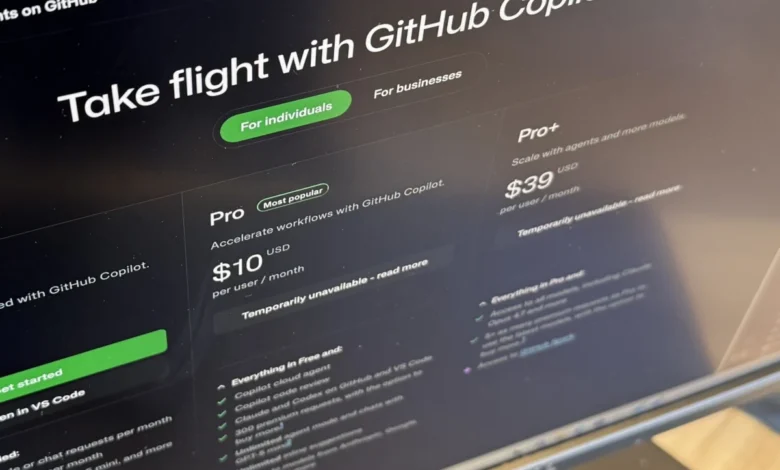
The transition to an AI credit-based consumption model represents a fundamental change in how GitHub monetizes its platform. By bundling Copilot into GitHub Enterprise subscriptions and moving to a usage-based model, GitHub is effectively removing the friction of per-seat licensing. This facilitates broader internal adoption, as teams no longer need to justify individual subscriptions to experiment with AI-driven workflows.
This economic model, however, requires a new level of financial literacy among engineering leads. As AI usage becomes a variable cost, monitoring the "return on investment" (ROI) of agentic workflows will become a standard operational requirement.
Looking Ahead
As GitHub continues to push the boundaries of what is possible with AI agents, the development community stands at a crossroads. The promise of the new Copilot ecosystem is a future where developers are freed from the drudgery of boilerplate code and manual coordination, allowing them to focus on high-level system design and creative problem-solving.
Yet, the successful adoption of these technologies will rely less on the raw power of the underlying models and more on the maturity of the organizations implementing them. As Satapathy notes, "The technology is reaching a point of sophistication where the constraints are no longer technical, but organizational."
The coming year will be a critical testing period. Enterprises that successfully implement rigorous governance, invest in human-centric validation workflows, and master the art of managing AI credit consumption will likely see a profound acceleration in their development velocity. Those that rush into full autonomy without the necessary safeguards may find that the coordination costs of managing these digital agents outweigh the benefits they provide.
For now, GitHub’s latest offering provides the blueprint for the next era of software engineering—an era defined by the partnership between human intuition and the high-speed, parallel execution of the agentic workforce. Whether this partnership leads to a new golden age of productivity or a surge in technical complexity remains the central question for the industry as it begins its transition into 2026 and beyond.