Bridging the Gap: Transforming Raw Industrial PLC Data into Contextualized Asset Intelligence

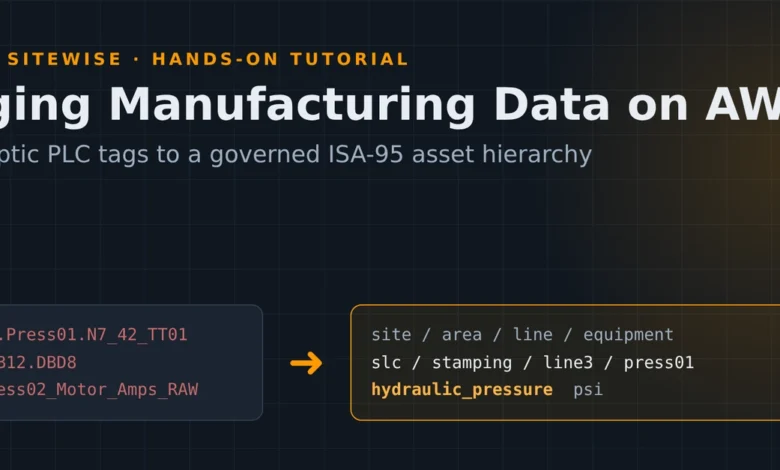
In the complex landscape of modern industrial automation, data is abundant, yet its utility is frequently undermined by a fundamental lack of structure. Every plant floor relies on Programmable Logic Controllers (PLCs) that communicate via cryptic tags—identifiers such as N7_42_TT01—which often serve as memory addresses rather than descriptive labels. While these identifiers are sufficient for the machine-to-machine communication required for assembly line operations, they represent a significant obstacle for data science teams and operational technology (OT) analysts. A single plant may generate tens of thousands of such tags, leaving engineers to manually decipher whether a specific signal represents a temperature, a pressure threshold, or a simple cycle count. This disconnect between raw machine output and actionable business intelligence is a persistent challenge that organizations must solve to remain competitive in the era of Industry 4.0.
The core of this issue lies in the transition from simple data collection to true "tagging" in an industrial context. Raw tags are inexpensive to capture but prohibitively expensive to interpret. True value is unlocked only when each data point is enriched with comprehensive context: the specific site, production line, machine identity, measurement type, and standard unit of measure. Without this layer of metadata, large-scale data analysis becomes an exercise in frustration, as data teams must spend upwards of 80% of their time cleaning and labeling data before it can be used for predictive maintenance or process optimization.
The Architectural Shift Toward ISA-95 Standards
To address this, leading industrial organizations are increasingly turning to cloud-native architectures that implement the ISA-95 standard. This international standard for enterprise-control system integration provides a common vocabulary and structure that most industrial facilities already recognize. By defining assets within a hierarchical framework—Site, Area, Line, and Equipment—engineers can move away from memory-address-based queries toward semantic data retrieval.
The proposed solution involves utilizing AWS IoT SiteWise as a central hub for this contextualization. In this architecture, raw data flows from OPC UA servers—the industry standard for machine communication—into a SiteWise Edge gateway. This gateway creates individual data streams for every variable. However, these streams remain unassociated until they are mapped to an asset model defined in the cloud. By maintaining this mapping in a version-controlled CSV file and deploying it via infrastructure-as-code, organizations ensure that the "source of truth" for their data hierarchy is auditable, reviewable, and resilient to personnel changes.
Implementing the Contextualization Workflow
The transformation process begins with the establishment of a rigorous naming convention. A well-designed mapping file serves as the bridge between the chaotic "raw" world of the PLC and the organized "logical" world of the enterprise. For instance, while Press01 and Press02 might use entirely different, vendor-specific nomenclature at the PLC level, both can be mapped to a standardized "hydraulic_pressure" property within the AWS cloud. This abstraction allows developers to build dashboards and ML models that query the asset hierarchy directly, effectively decoupling the analytics layer from the underlying hardware implementation.
Technically, this process relies on defining asset models in SiteWise, which function as digital blueprints for machinery. By utilizing CloudFormation templates, organizations can define these models once and instantiate them across multiple production lines or facilities. The integration of external IDs is a critical component of this process, allowing for seamless API interaction and ensuring that downstream systems can reliably locate and query data by asset name rather than by arbitrary, vendor-defined memory addresses.
Scaling Through Automation and Infrastructure-as-Code
The true power of this approach is revealed through automation. A Python-based synchronization script can ingest the mapping CSV and dynamically bind incoming data streams to specific asset properties. Because the script is idempotent, it can be integrated into a CI/CD pipeline, allowing engineers to add new machinery by simply committing a new row to the CSV file. This workflow mirrors modern software development practices, bringing the reliability of Git-based version control to the typically static and manual world of industrial configuration.

For organizations operating at scale, the ability to define metrics at the model level provides an exponential increase in efficiency. Once raw measurements are mapped, SiteWise can automatically compute rolling averages, maximums, and other key performance indicators (KPIs) at the equipment and line levels. A line-level metric, for example, can aggregate the "hottest" press on a production line without requiring custom code for each new machine added to the facility. This automated rollup functionality ensures that as a factory grows, its data visibility scales proportionally.
Strategic Implications and Operational Benefits
The implications of adopting a standardized tagging architecture are profound. By abstracting the complexity of the factory floor, manufacturers can leverage the full suite of cloud analytics tools—including SQL-based query engines, business intelligence platforms like Tableau or Power BI, and advanced machine learning models—without needing deep knowledge of proprietary PLC programming.
Furthermore, this methodology solves the "vendor lock-in" problem inherent in many legacy OT systems. If a controller is replaced or a sensor is upgraded, the only adjustment required is an update to the mapping file. The downstream dashboards, SQL queries, and predictive algorithms remain untouched, as they are pointed at the logical asset hierarchy rather than the physical signal. This provides a significant buffer against technological churn and reduces the cost of ownership for industrial digital transformation projects.
Considerations for Large-Scale Deployment
While the benefits of this structured approach are clear, successful implementation requires careful consideration of governance and operational realities. Security, in particular, remains a top priority. In production environments, gateways must be configured to securely interface with OPC UA servers, often requiring the use of encrypted communication and secret management for credentials. Relying on "TrustAny" configurations is suitable for laboratory settings, but enterprise deployments must prioritize certificate pinning and robust identity management to protect critical infrastructure.
Additionally, data teams must be aware of the billing structures associated with cloud-native industrial services. AWS IoT SiteWise, while powerful, is not part of the standard AWS Free Tier; it incurs costs based on message volume, metric computation, storage, and query activity. Organizations should design their sampling intervals and aggregation windows with these costs in mind, balancing the granularity of data required for operational excellence with the financial realities of large-scale cloud ingestion.
Looking Toward a Standardized Future
The transition toward a contextualized, model-driven approach to industrial data is no longer a luxury but a necessity. As the manufacturing sector faces increasing pressure to optimize for efficiency, sustainability, and rapid innovation, the ability to interpret machine data with precision becomes a core competency. The methodologies discussed—centering on ISA-95 hierarchies, infrastructure-as-code, and automated stream mapping—provide a robust, scalable foundation for the future of industrial intelligence.
By moving the burden of data interpretation from human analysts to a structured, cloud-based framework, organizations can finally realize the promise of Industry 4.0. The goal is not merely to collect more data, but to ensure that every byte of data generated on the factory floor is meaningful, accessible, and ready to drive informed business decisions. As these practices become standardized, the "cryptic tag" era of industrial computing will inevitably give way to an era of clear, contextualized, and actionable asset intelligence.