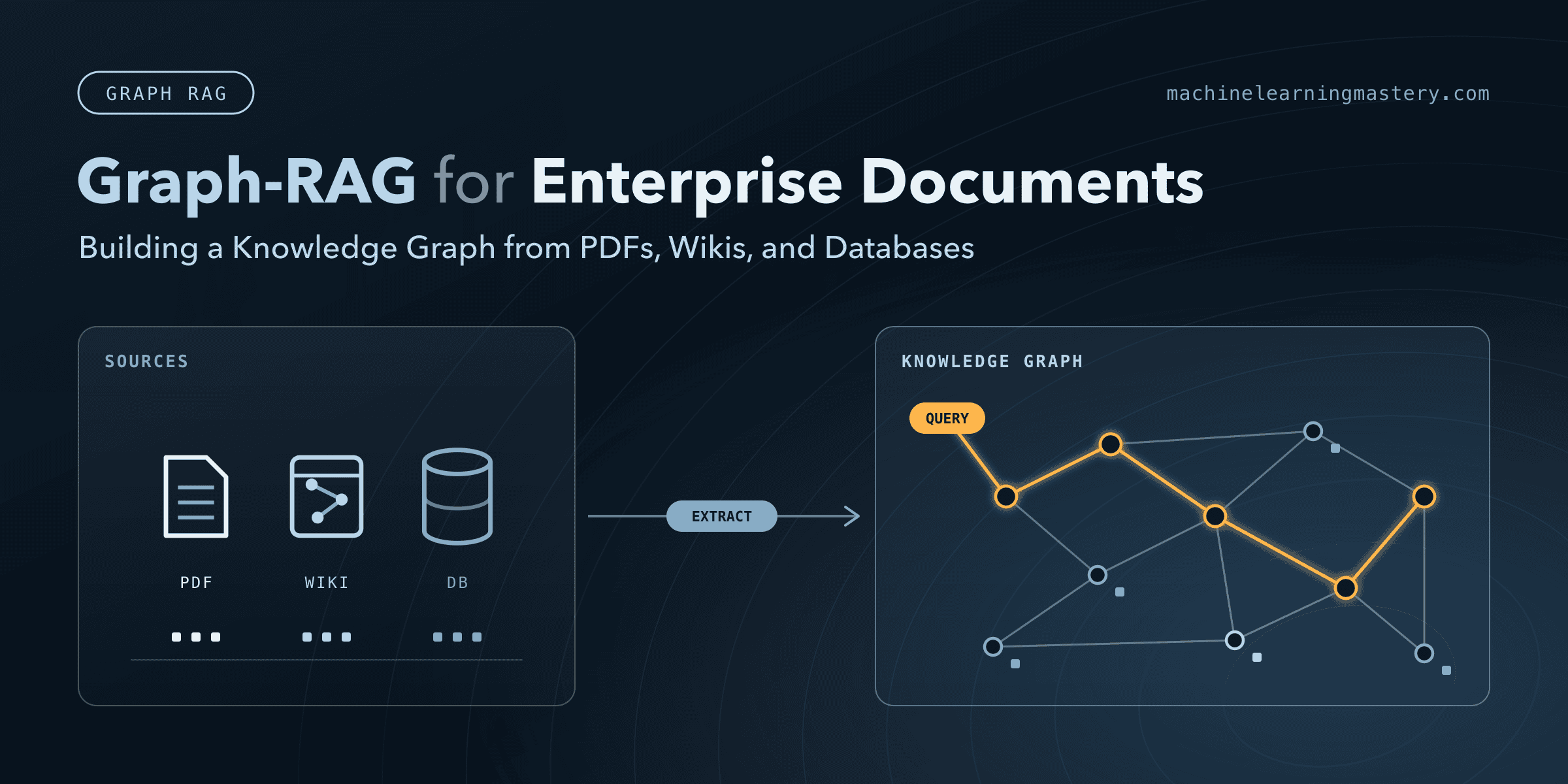
Graph-RAG for Enterprise Documents: Building a Knowledge Graph from PDFs, Wikis, and Databases

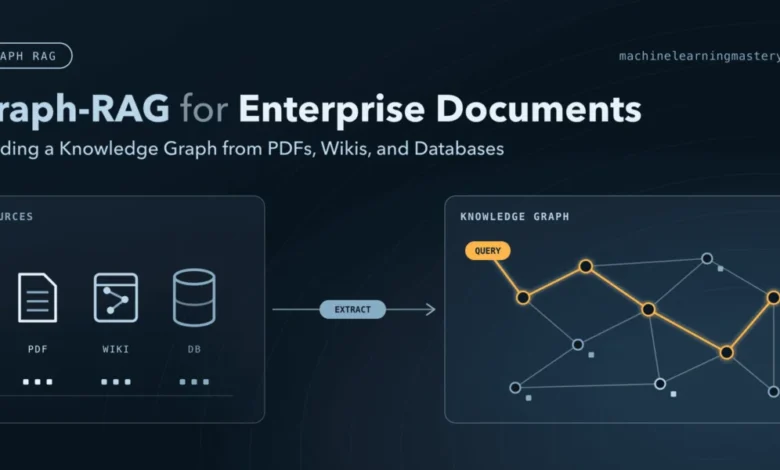
In the modern enterprise, the primary obstacle to effective AI deployment is not a lack of data, but the existence of conflicting information across disparate silos. When an AI assistant attempts to answer a query by aggregating knowledge from a live configuration management database (CMDB), a legacy wiki, and a repository of PDF documentation, it often falls into a trap of false equivalence. If these sources are treated with equal weight, the AI may prioritize outdated information found in a wiki over real-time data residing in a production database. To solve this, developers are increasingly turning to a deterministic, three-tiered Graph-RAG (Retrieval-Augmented Generation) architecture. This approach moves beyond traditional vector search by establishing explicit priority rules, ensuring that AI responses are grounded in the most reliable source available while still leveraging the narrative depth of secondary documents.
The Conflict of Data Persistence
The necessity for a tiered retrieval system stems from the inherent decay of corporate documentation. Consider a common scenario: an engineer inquires about the current on-call rotation for a payments service. The organization’s wiki, last updated four months ago, identifies an engineer who has long since transitioned off the team. Simultaneously, the production database—the system of record—contains the accurate, real-time assignment. In a standard RAG implementation that uses vector embeddings, both sources may be retrieved because they are semantically similar. Without a hierarchical structure, the LLM often struggles to adjudicate between the two, leading to "hallucinations" where the model synthesizes a blend of current and stale information.
Recent industry research underscores the severity of this issue. According to an IDC study sponsored by Neo4j, organizations that ground their generative AI models in graph-based context achieve a significant reduction in error rates. Specifically, firms adopting this methodology reported an average 44 percent reduction in hallucinations. In high-stakes sectors like life sciences, the impact is even more pronounced, with some companies reporting a drop in hallucination rates from 40 percent down to a range of 2 to 5 percent. These statistics highlight a growing consensus: structure is a prerequisite for accuracy.
Architectural Framework: The Three-Tiered Approach
The proposed architecture for a deterministic system classifies data sources into a hierarchical stack, effectively creating a "truth engine" that the AI must follow.
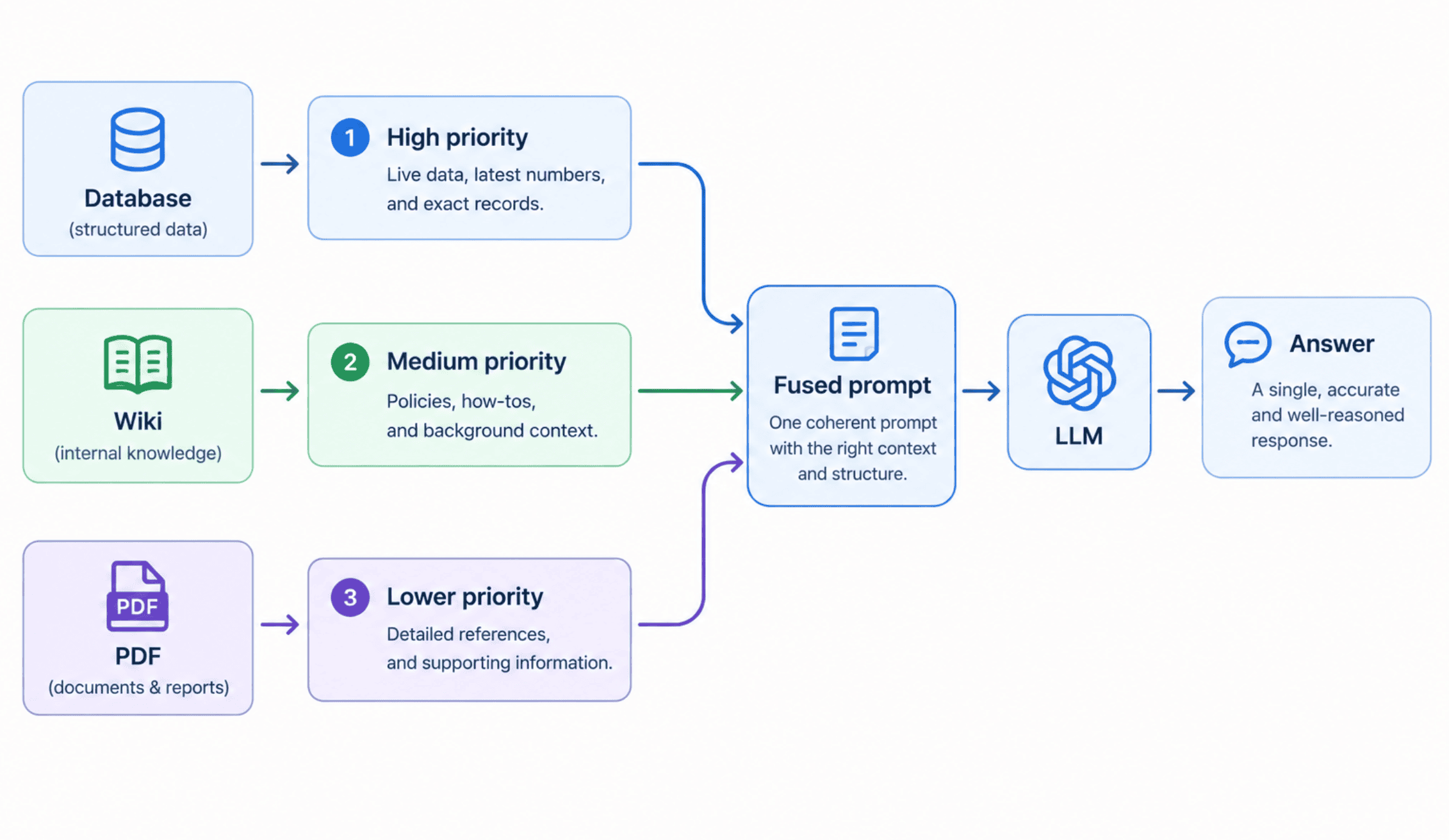
- Priority 1: The Absolute-Facts Graph (Live CMDB): This tier consists of structured data retrieved via SQL from a live service registry. Because this data is queried in real-time, it represents the absolute source of truth for variables such as service status, on-call assignments, and current versioning.
- Priority 2: The Background-Stats Graph (Wiki/Runbooks): Wikis provide crucial procedural knowledge, such as escalation paths or historical context. However, these documents are prone to "drift"—a state where the document remains unchanged despite operational shifts. Consequently, this data is relegated to a secondary tier.
- Priority 3: The Vector Fallback (PDFs/Unstructured Docs): This layer utilizes a vector database (such as ChromaDB) to house complex documentation like post-mortems or SLA agreements. These documents provide narrative context that cannot be parsed into rows and columns, serving as a repository for "how-to" information rather than "what-is" facts.
Implementation and Logic Flow
Building this system requires a specialized ingestion pipeline. For the CMDB, developers utilize a "Quad Store" (Subject-Predicate-Object-Context) model. This ensures that every fact extracted from the database is tagged with its origin (e.g., "cmdb"). By tagging the data at the ingestion level, the retrieval logic maintains provenance throughout the entire processing chain.
The process of query resolution is managed through a "fused prompt." When a user asks a question, the system extracts key entities (such as "payments-service") using natural language processing (NLP) libraries like spaCy. It then fetches all relevant facts from the three tiers. Crucially, the system prompt explicitly forbids the AI from acknowledging the conflict. It provides a set of strict constraints: if Priority 1 contains an answer, the model must ignore Priority 2 and Priority 3 entirely. By enforcing this hierarchy within the prompt, the developer effectively removes the model’s ability to engage in "opinionated" synthesis, forcing it to behave as a deterministic query engine.
Chronology of Data Integration
To ensure the system remains functional, the development lifecycle follows a structured path:
- Initialization: The CMDB is populated with live service data, providing the foundational Priority 1 layer.
- Prose Extraction: Regex-based parsers are applied to markdown wiki pages to convert prose into structured quads. This step transforms stale text into actionable metadata.
- Vectorization: PDF documents are processed through an embedding model. These are chunked into smaller, 500-character segments to ensure that retrieval remains precise and context-heavy.
- Federated Retrieval: At the moment of the user query, the system performs simultaneous lookups across all three stores, aggregating the findings into a single context window.
Implications for Enterprise AI
The shift toward deterministic RAG reflects a maturing industry perspective on generative AI. Early implementations focused on the "magic" of LLMs, often ignoring the necessity of reliable data pipelines. However, as enterprise use cases move from experimental chatbots to mission-critical operational tools, the focus has shifted to reliability and explainability.
One of the primary implications of this architecture is the shift in responsibility for accuracy. In a traditional RAG system, accuracy is often viewed as a function of the model’s size or training. In the Graph-RAG model, accuracy is a function of the underlying data architecture. This makes the system "auditable." If the AI produces an incorrect answer, engineers can trace the output back to a specific node in the graph, identifying exactly which tier provided the errant data.
Furthermore, the operational maintenance of such a system is significantly lower than that of fine-tuned models. Because the logic is held within the retrieval rules and the data stores, the system can be updated without the need for retraining or expensive GPU-intensive finetuning. If an on-call rotation changes, the update occurs in the database, and the AI immediately reflects the correct information the next time a query is made.
Future-Proofing and Scalability
As organizations transition these systems into production, the complexity of data management will naturally increase. While the current model relies on SQLite for simplicity, the architecture is designed to scale. Switching to a distributed database like PostgreSQL for the CMDB or utilizing a purpose-built graph database like Neo4j allows the system to support larger, more interconnected datasets.
Access control also emerges as a critical consideration. In this architecture, it is essential that the data is filtered before it reaches the prompt. By applying security headers to the retrieval process, administrators can ensure that sensitive information is never surfaced to unauthorized users, regardless of how the AI attempts to interpret the data.
The move toward deterministic AI is not merely a technical preference; it is a business imperative. In a landscape where an incorrect instruction can lead to system downtime or security vulnerabilities, the capability to guarantee the provenance of information is invaluable. By treating data as a hierarchy—where structured reality always triumphs over stale documentation—enterprises can harness the reasoning power of LLMs without sacrificing the accuracy of their core infrastructure. This approach effectively turns the AI from a creative writer into a precise, reliable, and strictly governed knowledge management tool.