Breakthroughs in Organ Preservation Technology Pave the Way for Global Organ Banking and Enhanced Transplantation Success Rates

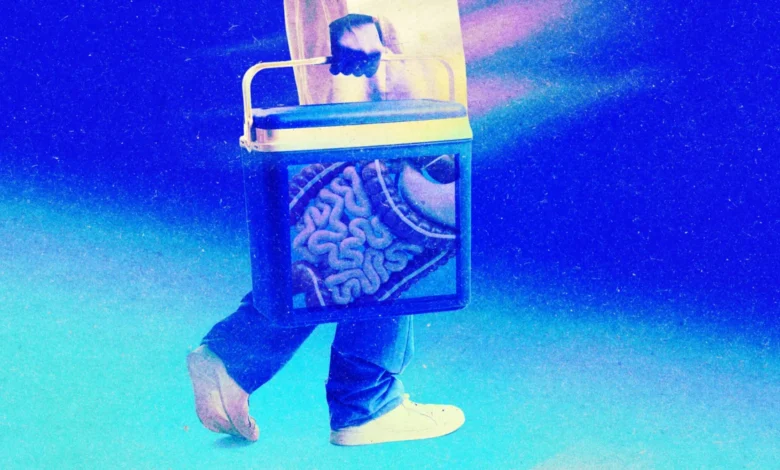
The field of transplant medicine is currently witnessing a paradigm shift as researchers bridge the gap between short-term organ storage and the long-held dream of indefinite organ banking. For decades, the primary barrier to successful transplantation has not been the surgical procedure itself, but the unforgiving biological clock that begins ticking the moment an organ is removed from a donor. Under current standard protocols, donor organs are preserved on ice, a method that slows metabolic decay but fails to stop it. This limitation results in a "race against time" where hearts and lungs must be transplanted within four to six hours, and kidneys—though more resilient—rarely survive beyond 24 to 36 hours. The consequences of this narrow window are dire: thousands of potentially life-saving organs are discarded annually because they cannot reach a compatible recipient in time.
However, recent milestones in supercooling, vitrification, and machine perfusion are offering a glimpse into a future where organs can be stored for days, weeks, or even years. These advancements promise to transform organ transplantation from an emergency, middle-of-the-night scramble into a scheduled, optimized medical procedure. By extending the shelf life of human organs, doctors could conduct more rigorous tissue matching, reduce the incidence of organ rejection, and transport biological material across continents, effectively creating a globalized network for organ exchange.
The Supercooling Breakthrough: Extending the Life of Pig Kidneys
In a study recently hailed as a "landmark achievement" in the field of cryobiology, a research team led by Matthew Powell Palm of Texas A&M University successfully demonstrated the ability to supercool pig kidneys and reimplant them without the loss of function. Pigs are the preferred model for this research because their organs are remarkably similar in size and physiological complexity to those of humans.
The technique utilized by Powell Palm’s team involves maintaining the organs in a liquid state at sub-freezing temperatures—specifically -4°C (25°F). Unlike traditional freezing, which allows for the formation of jagged ice crystals that puncture cell membranes and destroy vascular structures, supercooling prevents the phase transition from liquid to solid. The researchers achieved this without the use of high-concentration cryoprotectants, which are often toxic to tissues.
The results of the study indicated that kidneys stored via supercooling for several days performed significantly better upon transplantation than those kept on standard ice. This success suggests that supercooling could soon provide a middle-ground solution for organ storage: it is less technically demanding than full cryopreservation but far more effective than simple refrigeration. If translated to human medicine, this could extend the viability of kidneys from one day to nearly a week, providing ample time for cross-matching and logistics.
The Mechanics of Cryopreservation and the Challenge of Ice
To understand why these breakthroughs are so significant, one must understand the primary antagonist in organ preservation: ice. When biological tissue freezes, water molecules arrange themselves into a crystalline lattice. In the confined space of a cell or a blood vessel, these crystals act like microscopic shards of glass, shredding the delicate internal machinery of the organ.
To combat this, some researchers are turning to cryopreservation through vitrification. This process involves cooling an object so rapidly—or using such high concentrations of "antifreeze" chemicals—that the water never has the chance to form crystals. Instead, it enters a "glassy" or amorphous solid state. Vitrification is already a cornerstone of reproductive medicine; human eggs, sperm, and embryos are routinely cooled to -196°C in less than two seconds. These biological units can remain in stasis for decades, as evidenced by the recent birth of a healthy baby from an embryo that had been frozen for over 30 years.
However, scaling this process from a microscopic cluster of cells (an embryo) to a complex, multi-layered organ (a kidney or heart) has proven incredibly difficult. The primary issue is thermal stress; larger masses do not cool or thaw uniformly, leading to cracks and structural failure. Furthermore, the high concentrations of cryoprotective agents needed to prevent ice formation can be chemically lethal to the organ’s cells if not removed perfectly during the rewarming process.
The Cryonics Frontier: Lessons from Brain Preservation
The pursuit of long-term storage has also intersected with the controversial field of cryonics—the preservation of human bodies or brains after legal death in the hope of future revival. While mainstream science remains skeptical about the possibility of reanimating a whole human, the techniques used in cryonics are providing valuable data for organ preservation.
A notable case involves Stephen L. Coles, a renowned gerontologist who died in 2014 and opted for the cryopreservation of his brain. His procedure, performed at the Alcor Life Extension Foundation in Arizona, involved perfusing the brain with cryoprotective chemicals and cooling it to -146°C. Years later, cryobiologist Greg Fahy studied samples of Coles’s brain and observed that the cells appeared to "bounce back" and regain their shape upon rewarming.
Despite this structural recovery, experts like Powell Palm warn that physical integrity does not equate to biological viability. "There are so many ways those neurons could be toast," Powell Palm noted, emphasizing that while the cells might look intact under a microscope, their internal chemistry and connectivity may be irrevocably damaged. Nevertheless, these experiments provide a testing ground for the chemical "cocktails" that may one day allow for the long-term vitrification of transplantable organs.
Machine Perfusion: Mimicking the Living Body
While some scientists look toward the extreme cold, others are finding success by keeping organs "alive" outside the body. Machine perfusion is a technology that circulates oxygenated, nutrient-rich fluids through an organ at near-physiological temperatures. This method essentially tricks the organ into thinking it is still part of a functioning circulatory system.
Over the last decade, machine perfusion has moved from experimental labs to clinical reality. It is now frequently used to sustain livers and kidneys for up to 24 hours, allowing doctors to "recondition" organs that might otherwise be considered too marginal for transplant. By flushing out toxins and providing a steady supply of oxygen, perfusion machines can actually improve the quality of an organ after it has been harvested.
Innovation in this space is accelerating. Researchers in Valencia, Spain, recently developed a perfusion system nicknamed "Mother," specifically designed to preserve human uteruses. The device successfully kept a uterus functional for 24 hours outside the body, a feat that could expand the availability of uterine transplants for women with uterine factor infertility. Similar devices are being adapted for even more complex structures, including eyeballs. Recent experiments have shown that perfusion can revive metabolic activity in the retinas of dead donors, a breakthrough that brings the medical community closer to the possibility of whole-eye transplants to restore sight.
Chronology of Organ Preservation Milestones
- 1960s: The adoption of "static cold storage" (ice) becomes the standard for organ transport.
- 1980s: Development of the University of Wisconsin (UW) solution, a specialized fluid that extends the viability of organs on ice.
- 2000s: Clinical introduction of machine perfusion for kidneys, allowing for longer storage and assessment of organ health.
- 2014: Cryopreservation of Stephen L. Coles’s brain, providing a case study for long-term neural tissue stasis.
- 2023-2024: Rise of "normothermic" perfusion, allowing organs to be kept at body temperature rather than chilled.
- 2025 (Projected/Reported): Success in supercooling pig kidneys for multiple days without ice damage, marking a new era in sub-zero storage.
- 2026 (Reported): Successful revival of cellular activity in donor eyeballs and the successful 24-hour maintenance of a human uterus via the "Mother" device.
Strategic Implications and the Future of Medicine
The successful implementation of these technologies would fundamentally rewrite the rules of healthcare. Currently, the organ transplant system is defined by scarcity and geographic limitations. A heart donated in California is unlikely to reach a patient in New York because the transit time exceeds the organ’s viability. If organ banking becomes a reality, this geographic barrier disappears.
Furthermore, long-term storage would allow for "immunological optimization." Currently, many transplants are performed with only basic blood-type and tissue matching because there is no time for more sophisticated testing. With weeks of storage time, doctors could use gene-editing tools like CRISPR to "cloak" an organ from the recipient’s immune system or perform advanced HLA (Human Leukocyte Antigen) matching to ensure a near-perfect fit. This would significantly reduce the need for lifelong immunosuppressant drugs, which carry heavy side effects.
The economic impact is also substantial. By reducing the rate of organ discards—currently estimated at over 20% for kidneys in some regions—the medical system could save billions of dollars in long-term dialysis and chronic care costs.
As researchers like Powell Palm and his colleagues continue to refine chemical cocktails and cooling protocols, the "buzz" in the field is palpable. The transition from preserving organs for hours to preserving them for weeks is no longer a matter of "if," but "when." The goal of a "Great Organ Bank" is moving out of the realm of science fiction and into the halls of modern surgical reality.