The Download: A Humanoid Robot Cleaning Service, A Massive Samsung Semiconductor Hub, And The $2.5 Trillion Tech Stock Sell-Off


The technology sector is currently navigating a period of profound volatility and structural transition, marked by a historic $2.5 trillion decline in market capitalization. This market correction, which saw the Nasdaq suffer its most significant single-day drop since April 2025, has been precipitated by growing investor skepticism regarding the sustainability of the generative AI boom and broader concerns over regulatory intervention in the tech industry. As financial markets recalibrate, the tangible applications of artificial intelligence—ranging from domestic robotics to advanced semiconductor manufacturing—continue to evolve, albeit amidst an increasingly restrictive political and economic climate.
The Market Contraction and the AI Bubble Debate
The recent financial turbulence, described by analysts as a "tech bloodbath," has hit the "Magnificent Seven" companies particularly hard, with those entities collectively shedding over $1 trillion in value. This sell-off has not been confined to domestic markets; it has triggered ripple effects across Asian and European exchanges, suggesting a global reassessment of AI-related valuations.
The primary catalyst for this shift appears to be a growing realization that the massive capital expenditures required for AI infrastructure may not yield immediate, scalable returns. For years, the promise of exponential growth in generative AI justified sky-high valuations, but as the 2026 fiscal year progresses, investors are demanding evidence of concrete profitability. Tesla and SpaceX, symbols of high-growth tech optimism, saw a combined decline of over $420 billion in market value following the 2026 midterm election results, which many analysts interpret as a broader reaction to the potential for shifting fiscal policies and increased oversight.
Regulatory Headwinds and the Political Shift
The economic cooling is paralleled by an increasingly aggressive regulatory environment. Following recent midterm election outcomes, Democratic lawmakers have signaled a unified intent to challenge the dominance of Big Tech. This legislative push is multifaceted, targeting everything from data center energy consumption to the rapid, often unchecked development of advanced AI models.
Senator Bernie Sanders has emerged as a vocal proponent of a national moratorium on the construction of new, high-energy-consuming data centers, citing both environmental concerns and the strain on existing power grids. Simultaneously, Representative Yassamin Ansari has proposed a formal pause on the development of frontier AI systems, arguing that the industry must be subjected to more rigorous safety audits before further scaling. These political maneuvers have already begun to impact corporate strategy; for instance, industry observers note that the climate of uncertainty is creating significant hurdles for Anthropic’s anticipated initial public offering (IPO), as prospective investors weigh the risks of looming government intervention.
Domestic Robotics: Between Innovation and Human Oversight
Amidst this macroeconomic backdrop, the practical implementation of AI in daily life remains a focal point of technological exploration. The recent emergence of humanoid-robot cleaning services, such as those piloted by the San Francisco-based startup Tau Robotics, illustrates the current limitations and aspirations of the field.
While these robots represent a significant engineering milestone, they are not yet fully autonomous. Current operations rely on "teleoperation," where human pilots remotely navigate the machines through integrated camera systems. This reality highlights a critical gap in the industry: the transition from laboratory prototypes to reliable, autonomous consumer products remains complex. The experience of testing these devices reveals that while they offer a functional glimpse into a future where domestic labor is automated, the technology requires extensive refinement in navigation, dexterity, and object recognition before it can move beyond a controlled service model.

Semiconductor Manufacturing: Building the Backbone of AI
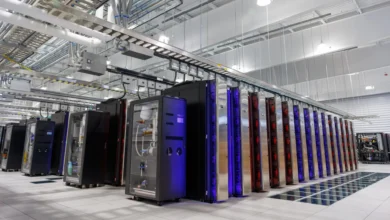
While the robotics sector focuses on the end-user experience, the semiconductor industry is scaling up the infrastructure necessary to support the broader AI ecosystem. Samsung’s massive investment in Pyeongtaek, South Korea, serves as the most prominent example of the physical scale required to sustain the AI boom.
The Pyeongtaek campus is a marvel of modern industrial planning. With three fabrication plants (fabs) already fully operational and a fourth nearing completion, the facility is currently constructing a fifth, even larger plant. This expansion is designed to meet the soaring demand for specialized memory chips, which are essential for training and running large-scale generative AI models. The scale of this operation underscores the reality that the "AI revolution" is as much about physical manufacturing capacity as it is about software innovation. However, the intensity of this expansion is now being scrutinized as the market questions whether the projected demand for these chips will hold steady in the face of a slowing global economy.
Cybersecurity and Emerging Industrial Risks
Beyond financial and regulatory challenges, the technological landscape is facing new, unexpected security vulnerabilities. The United States government recently issued a warning regarding an "ongoing cyber threat" targeting industrial refrigeration systems. This development suggests that as commercial infrastructure becomes increasingly interconnected—a trend often dubbed the "Industrial Internet of Things"—the attack surface for malicious actors expands into critical supply chain nodes. While Russia has denied any involvement in the series of hacks that have hit commercial freezers across Europe and North America, the incidents highlight the fragility of the automated systems that manage the world’s food and pharmaceutical cold chains.
Scientific Advancements and Global Trends
Despite the market downturn, scientific progress continues at a rapid pace. Researchers have uncovered new evidence of active volcanism on Mars, a discovery that fundamentally alters our understanding of the planet’s geological history and increases the likelihood of finding microbial life in subsurface environments.
Meanwhile, in the realm of public health, a new analysis of the economic impact of Covid-19 vaccines suggests their long-term value may be as high as $64 trillion—double previous estimates—emphasizing the high ROI of large-scale biomedical innovation.
In other corners of the tech world, the environmental impact of the digital age is becoming more visible. The Great Pacific Garbage Patch, a massive accumulation of marine debris, has begun to shift the color of the surrounding ocean water, a stark visual indicator of human-driven ecological change. Additionally, the aerospace sector is entering a new phase of experimentation with NASA unveiling the X-70 experimental aircraft, an initiative that remains shrouded in mystery but is expected to commence flight testing within the next two years.
Conclusion: A Period of Reassessment
As 2026 draws to a close, the tech industry is clearly moving from a period of unbridled optimism to one of hard-nosed reality. The "steamroller" of market correction, as described by financial analysts, has forced a reckoning across the sector. Whether it is the scaling back of luxury projects like the Tesla Cybertruck—which is reportedly nearing the end of its production cycle—or the pivot toward more sustainable, regulated AI development, the industry is undergoing a necessary maturation.
The path forward will likely be defined by a shift from speculative growth to functional, reliable, and secure technological deployment. As the initial excitement of the AI boom gives way to the challenges of implementation, regulation, and economic sustainability, the focus of the global tech sector will be on proving that its innovations can provide durable value to society, rather than just market volatility.